
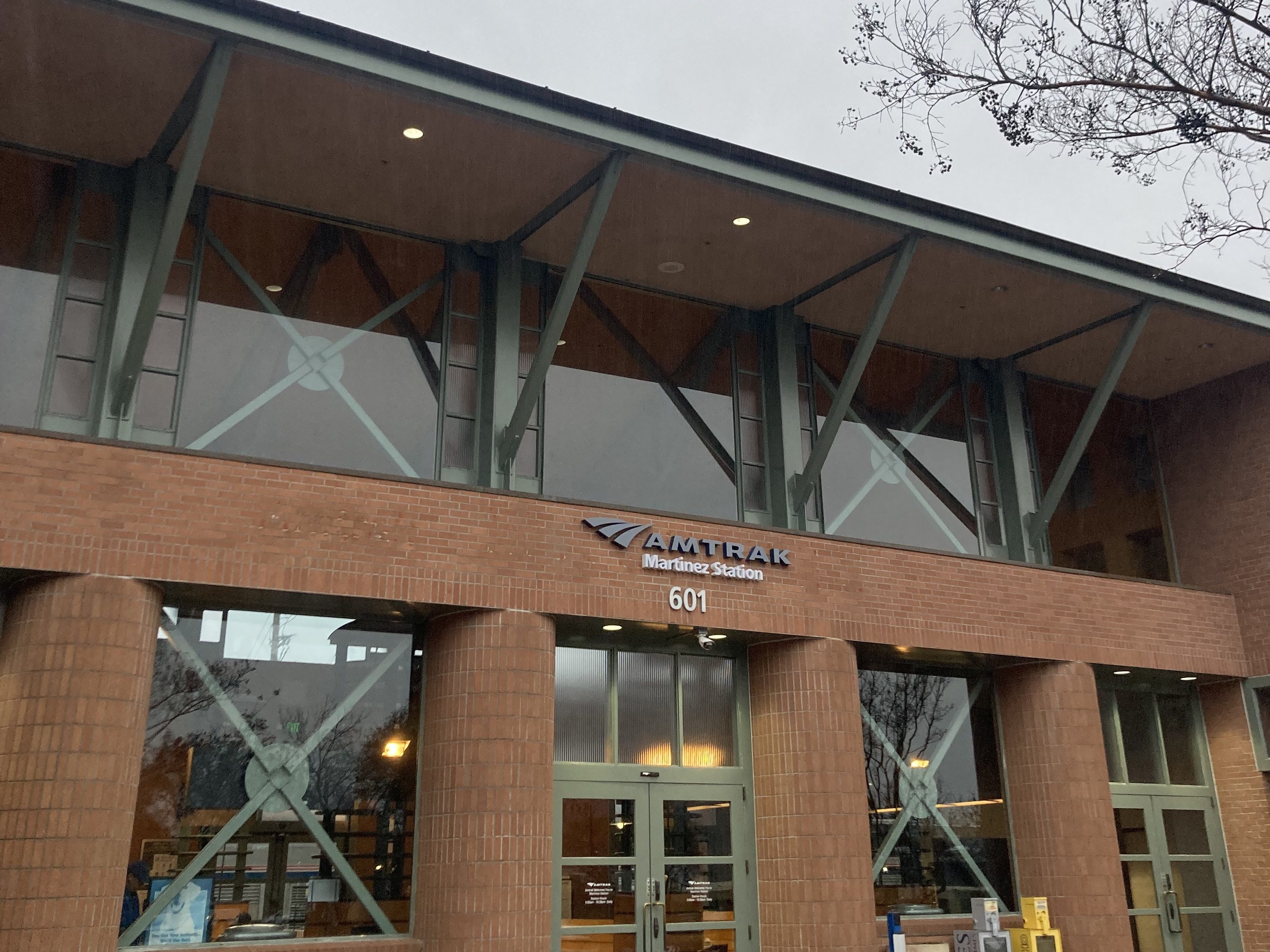
About a week ago, my girlfriend and I traveled down to Martinez to visit friends and (her) family. We took the train, I did some walking, and figured it would be a good time to spill some ink on everyone’s favorite public agency – The National Railroad Passenger Corporation (also known as Amtrak).
Amtrak was founded in 1970, because railroad companies were complaining about how much money they were losing by providing their legally mandated passenger services. In the pre-Amtrak days, the roughly 100 or so large railroads provided a smorgasbord of services between essentially every American city, but it wasn’t always great service. Competitors not wanting to share passenger terminals lead to places like Chicago having no less than six different intercity passenger stations (not counting things like the North Shore Line which ran from Milwaukee to Chicago and used the North Side Mainline of the Chicago L). All of this is to say that even during the passenger rail heyday, lack of coordination and anti-competitive practices meant high prices, and a lack of care for systematic concerns.
So in the early 1970’s when Amtrak was formed, it was expected by political insiders to be a short lived, last hurrah for passenger rail. It was set up to fail administratively speaking, and railroad executives treated it more as a bailout than anything else. They got out of the pesky passenger service, allowing (in part) for the extreme divestment in the physical infrastructure of the railroads themselves. Amtrak has proved to be far more popular than Richard Nixon intended it to be (reason enough to ride in my book), but the lack of respect that railroad companies give it has hamstrung it since its inception.
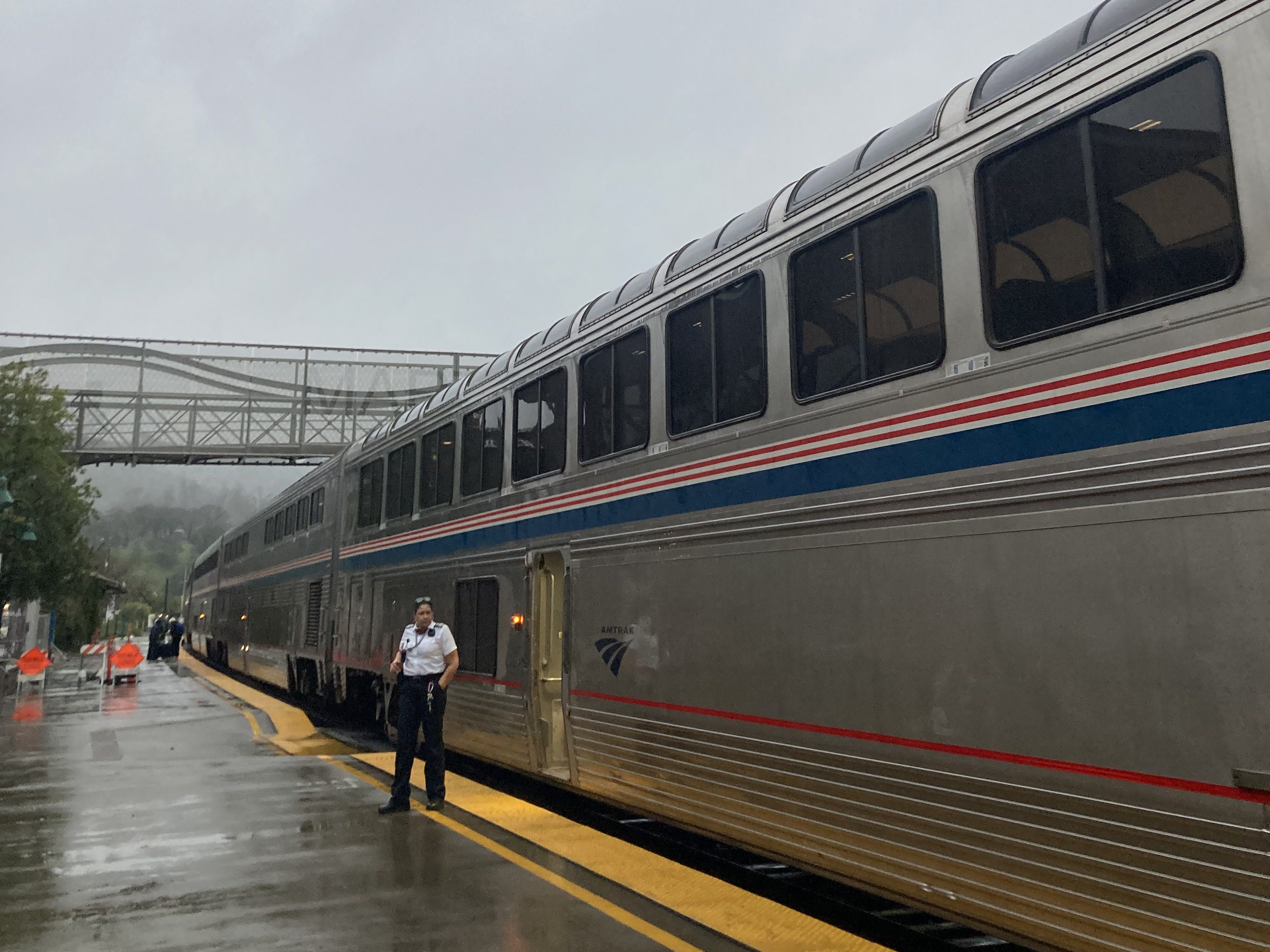
So our ride on the Coast Starlight took the scheduled 17 hours, 32 minutes. Which was fine (honestly! Really wasn’t bad at all!), but in 1950 Southern Pacific ran the Portland-Martinez route in 14 hours, 6 minutes. That is 3 hours, 26 minutes faster than Amtrak manages on the exact same tracks! And this story is pretty much the norm across the board – because the private railroad companies operate with impunity, Amtrak is forced to run terrible schedules. These terrible schedules make people think train travel is necessarily slow and cumbersome – rather than a result of specific issues.
Realistically, the issue of freight train interference is only part of the problem though. I would guess that Amtrak likely would not be able to get in the range of Southern Pacific’s Shasta Daily timetable even if they had full priority. Train speed issues relating to declining track quality (and FRA regulations), along with horrible boarding procedures don’t give me a whole lot of confidence in Amtrak running a tight schedule. In the rest of the civilized world, passengers wait on a train platform for their train, then board, then have their tickets checked.
On the way back, our train ended up leaving Martinez about ten minutes late because the boarding procedure involved the conductor manually assigning each passenger a seat after they waited in line. The whole process took forever, and felt demeaning – plus the conductor still had to come around and scan our tickets once we got onto the train! I get that it’s a long distance route, but the boarding process really should be better, and it’s not like it would be hard to do. Just announce a platform and let people pick from whatever seats are available once they board.
For track speeds/maintenance, there is less that Amtrak can do to improve this. Since they don’t own the tracks themselves (outside the Northeast), maintenance is at the whims of the host railroads (who have basically spent the last decade doing as little actually railroading as possible). Let’s take a quick peak at OpenRailwayMap in the Willamette Valley
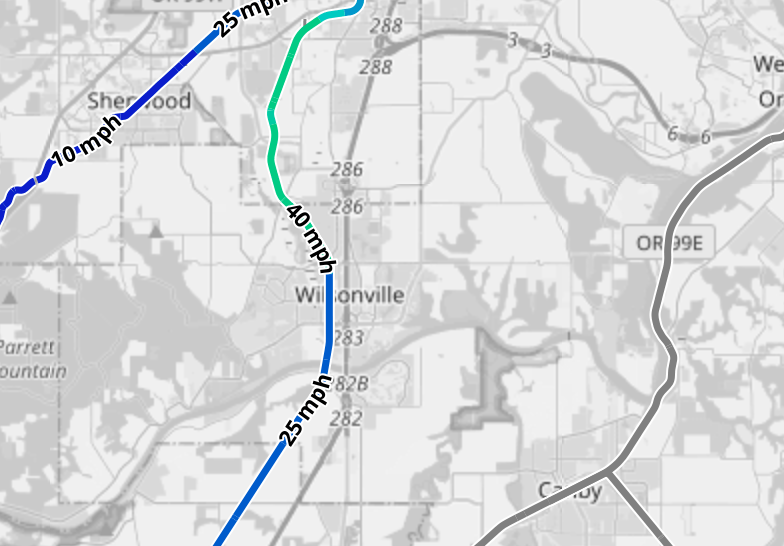
Here we see 3 rail lines. At the top left corner is a Portland & Western branch line that sees very little traffic. In the middle, is the former Oregon Electric (Rest In Peace) which currently hosts the TriMet WES service between Wilsonville and Beaverton, and Portland & Western south of Wilsonville (they operate freight on the WES line too). At the right, is the UPRR mainline – the speed data is missing, but it is 80 MPH for the most part I believe.
What’s immediately obvious to me is that railroads purposefully will not maintain track if there are no passenger services on it. Worse track condition is correlated with higher derailment rates, so there is a real safety issue here. I haven’t done an in depth analysis, but I would really be interested to see how passenger service impacts track quality in general. I think it’s reasonable to assume that passenger service leads to better track quality personally though.
What Does It All Mean?
It means you should take Amtrak. Sure, I spent most of the time here talking about problems that Amtrak faces – but you won’t be in a position to advocate for better rail service until you get out there and experience it. Improved passenger rail service needs passengers – consider a train next time it makes sense! Plus, it’s fun. It’s intellectually engaging to understand this country through the lens of a train ride. And when you get to the station, you can enjoy a brief walk through a historic downtown centered around a train station.

 City Hikes
Leave a comment