
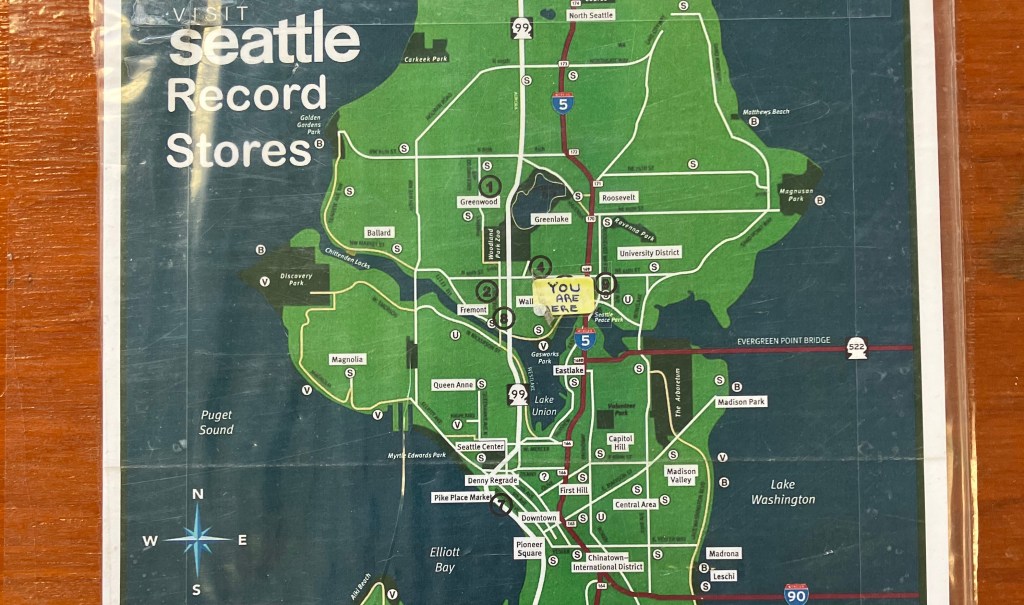
Last weekend, I spent another weekend in Seattle. We made the trip up with plans to see a concert (which annoyingly got postponed day-of), but of course I got a lot of steps in while I was there as well. The walks were as lovely as ever, but it wasn’t all good news.
The Good
For starters, Seattle is beautiful. Especially on a clear day, the views and vibes are hard to beat. Tahoma sits on one horizon, with the Olympics on the other. The skyline is beautiful. The architecture is varied, eclectic, and mostly pretty interesting. The foliage is as just as picturesque as any other part of the Pacific Northwest.

There are some great neighborhoods too. I find Fremont to be one of my favorites, and my long Sunday walk took me there from Mark and Shelby’s place in Central District. It was a gorgeous sunny day, and my route through Fremont (and Wallingford) showed me some of the best parts of the city. I stopped at a lovely record store on 45th (I bought Let’s Get It On), I poked around the Fremont Vintage Mall with Olivia, and I even found a public bathroom in a pinch (San Francisco could never).
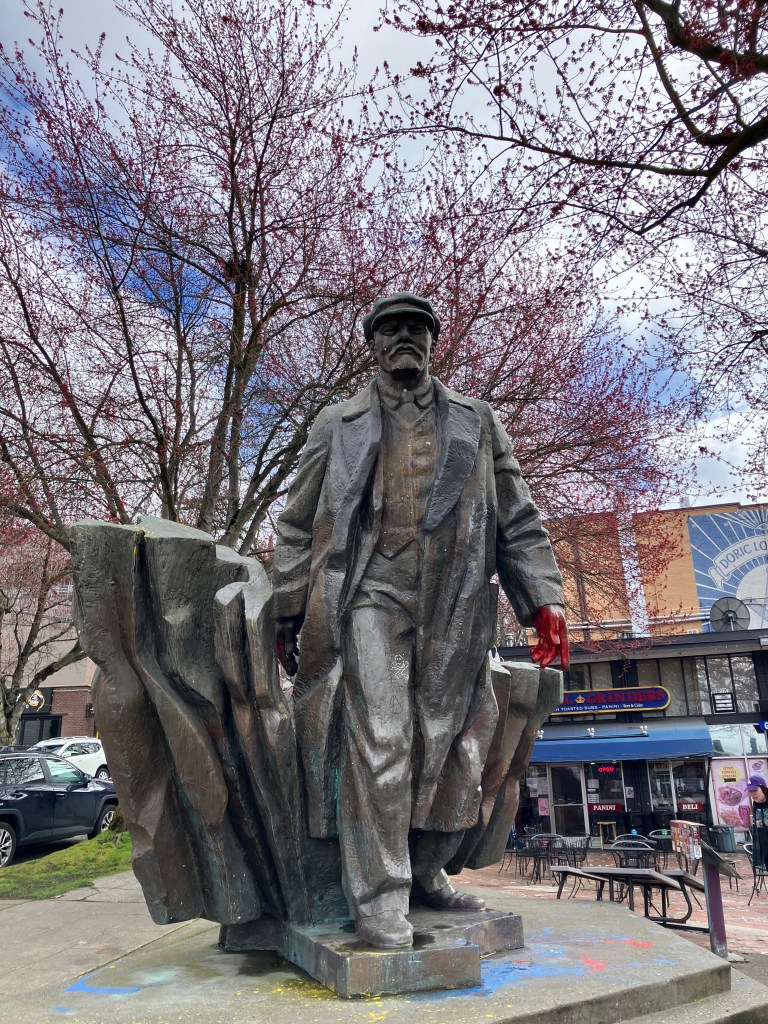
Earlier on the trip, Shelby and I walked Bodhi around the ship canal and through Fremont too. The Fremont Bridge is easily my favorite Fremont Bridge in the Pacific Northwest (sorry Portland, I can’t get behind our massive freeway bridge). We stumbled on the statue of Lenin, which was equal parts unexpected and strange. I still can’t believe some guy thought it would be a good centerpiece to a Slovakian restaurant.


And if you need to go a medium distance, let me talk to you about King County Metro. The bus service is to die for. It seems to me that the base frequency is about 15 minutes for the lowest-service buses in town. In other words, the worst buses in Seattle are about as frequent as the best buses in Portland. And man people ride the hell out of them too. I’ve never been on a bus even close to empty in Seattle. It’s almost like people use bus service when it’s convenient for them. They also have trolleybuses! Which you all should know I am a huge fan of.
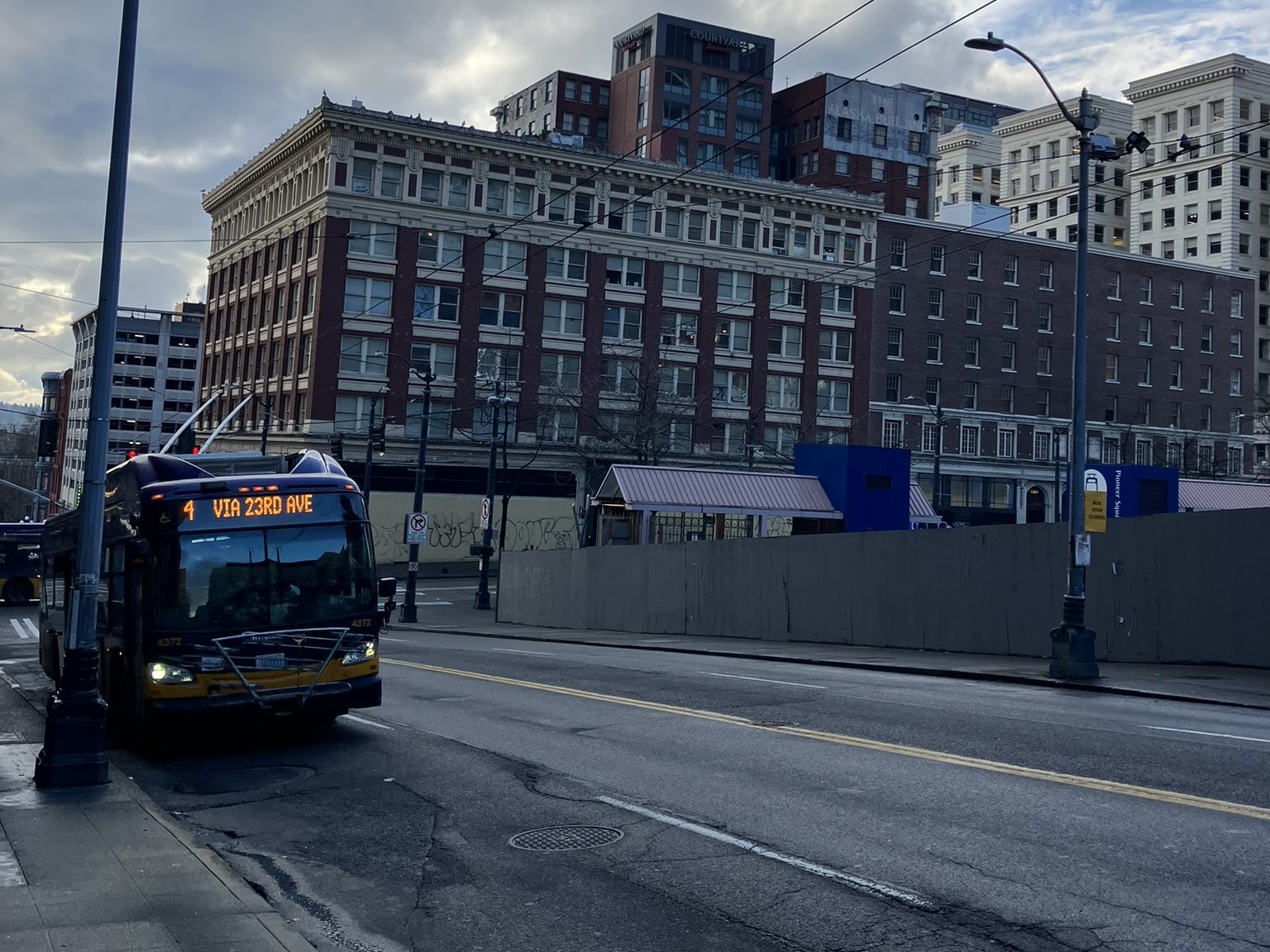
Good bus service complements city exploring very well though. It’s easy to walk further when you can be confident that a bus will show up to whisk you back home if you’ve had enough. Or if you underestimated how hilly Seattle is and need a lift up to the top. Sure, you could U*er home. But knowing the bus network of a city lets you understand its internal logic in a way riding in a cab just can’t. Plus it’s cheaper, and I love a good deal.
The Bad
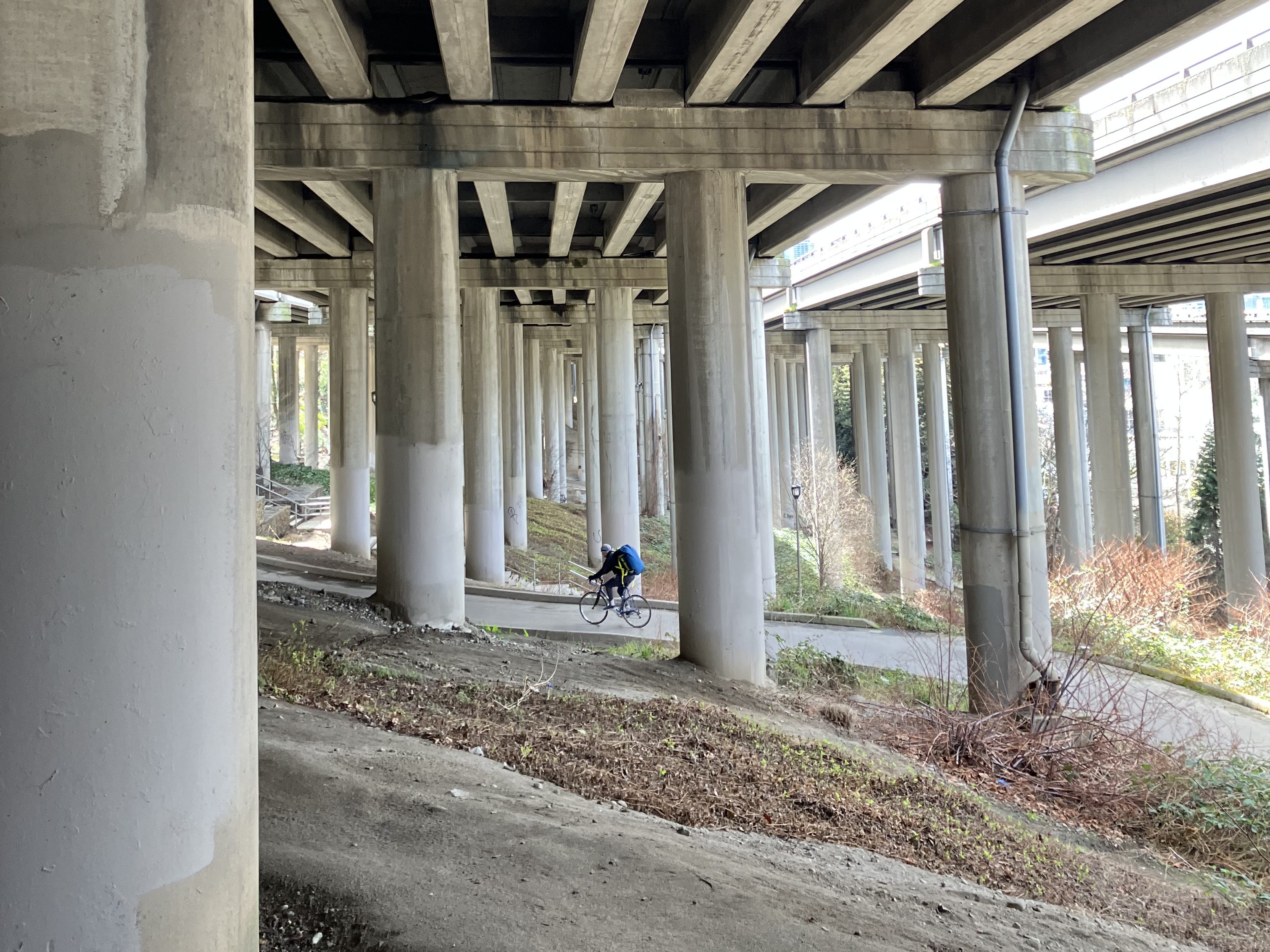
It is not fun to get between neighborhoods in Seattle. There are huge physical barriers – man-made or otherwise. On my long Sunday walk, I had to scurry down a very steep hill, navigate a very hostile street, cross under a sickeningly large freeway, cross a freeway on-ramp, and then scurry down another very steep hill just to get between the central areas of Capitol Hill and Eastlake – which are ostensibly next to each other. Not for the faint of heart, but interesting in its own right. I-5 is a huge barrier for foot travel just like in Portland, but it’s got to be twice as wide as it is in Portland. Not ideal.
But even without questionable urban freeways, there is something that always feels a bit hostile about walking between neighborhoods in Seattle. They are far away from each other, at least to me. I can chalk some of this up to unfamiliarity, distances always feel a bit longer when you haven’t walked them before. But I do think the sprawly nature of Seattle plays a role as well. Fremont was an 8 mile walk away. Similar one-way walk distances in Portland would be like walking from Brooklyn (where I live) to Kenton. When I did that walk, I passed through at least a dozen distinct neighborhoods. On my Central District to Fremont walk I went through maybe four.
This “larger neighborhoods but fewer” model that Seattle seems to have isn’t worse than Portland’s “so many that it can be hard to tell them apart” model. I mean not many people really can tell the difference between Buckman and Kerns (I off course can, but this is a pro-Buckman blog). But it does make for a different sort of walking between many neighborhoods experience. And I’ve grown accustomed to the Portland model – so Seattle is a bit of a shock in that regards.

The topography also can make for some challenges for the unaware. You have to choose your roads carefully or you may wind up feeling a bit of vertigo from the sheer climbs. Or you may foolishly scurry down a washed out trail to connect with the one road going under I-5 (because you didn’t see the staircases marked on any maps).
It’s Still Fun Though
Despite the challenges walking in Seattle can pose, it’s a good way to get around. All the usual pedestrian perks abound. Stopping for pizza, records, books, or a farmers market is an obvious choice on foot. There is no real need to research places to go ahead of time, you can think on your feet and with your nose.
In Seattle, you are always rewarded with a view. The walking can be difficult, annoying, or even a bit scary – but it is always worth it. Every vista is sweeter after getting there on your own two feet. And every slice of pizza tastes better with a few miles in the legs. Those are simple facts of life, and Seattle makes it easy to enjoy them.

Seattle is a city we visit a lot, and may one day move to. I feel like I know it a little better every time I get the chance to wander around it. It’s been a very rewarding experience getting to know it better, and I’m thankful to have a couple of dear friends who moved there (even if I miss them down in Portland). My friends keep pulling me back, but so do the neighborhoods, sights, smells, and the unknown places just waiting to be explored. Til next time!


 City Hikes
Leave a comment