

If you’re like me, and you consider yourself a city lover you may have encountered a peculiar movement online: a group of loosely affiliated Twitter accounts posturing themselves as “YIMBYs” (short for Yes In My Backyard). They contrast themselves with the “NIMBYs” (Not In My Backyard), who blindly oppose new housing, transit, and/or changes to their sacred neighborhoods. To be clear, I’m not a NIMBY either. I think denser housing and more transit are broadly good things that make for more dynamic and interesting cities – especially as a pedestrian.
So what’s my beef with the YIMBYs? Does it all stem from the time one of them blocked me on Twitter for disagreeing with his take that Madison and DC are like so similar because they both have diagonal streets and are “pro development”? Do I just love being a contrarian and disagreeing with people on the internet? Am I just a hater? All the above, but there’s more to it too.
Local Context Matters
The latest “discourse” (hate that word!) around housing developments usually focuses on California. So let’s take a trip there, where a developer is proposing a 50 story apartment building in the Outer Sunset neighborhood of San Francisco. This particular area of the city is largely low rise, single family homes with a few slightly larger apartment buildings mixed in. The proposed development will have 712 apartments, and is across the street from the end of the L Taraval Muni line (and the zoo).
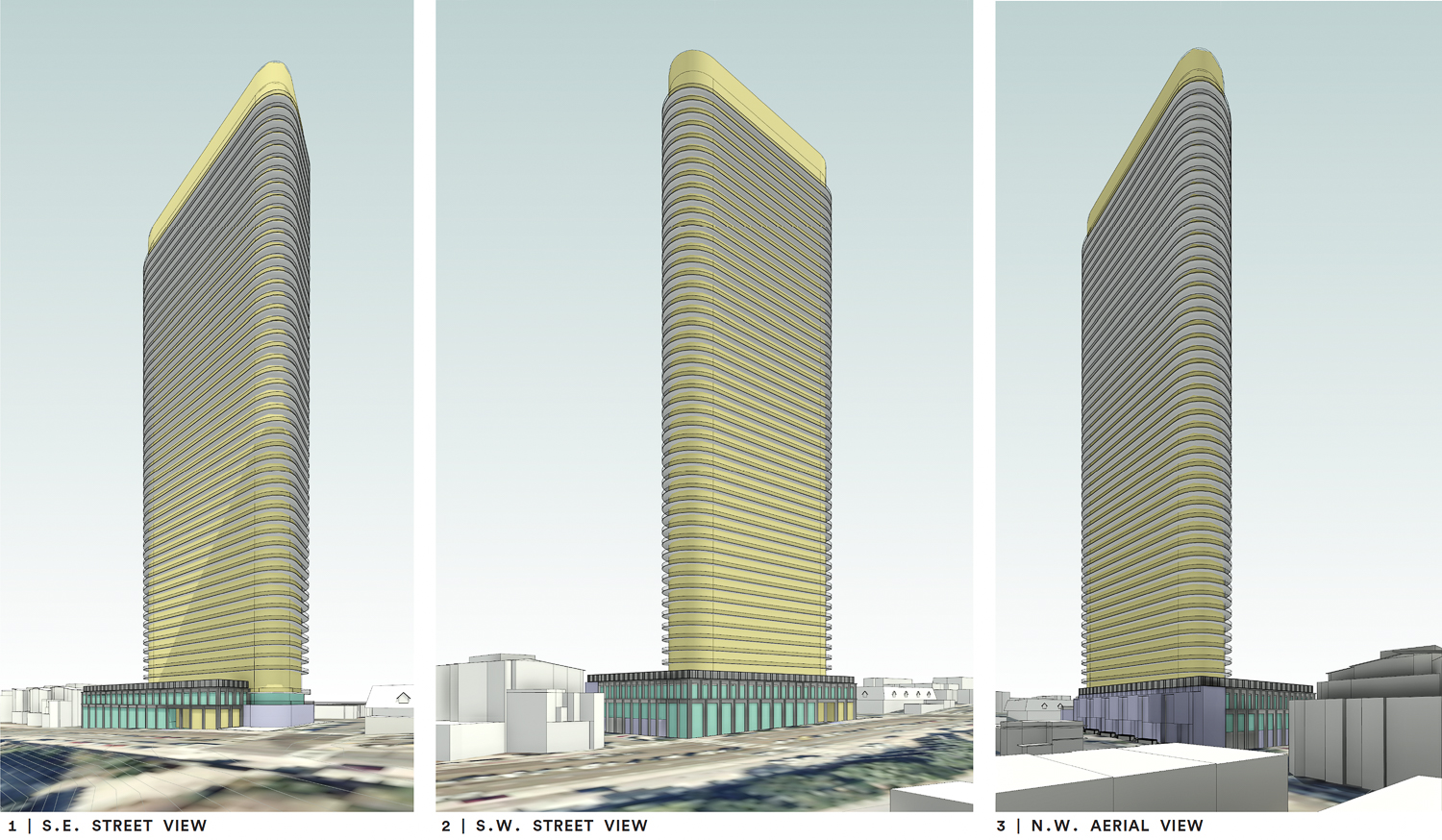
I have no issue with a developer building a large apartment building (in terms of # of units) anywhere in San Francisco. It’s a dense city with an acute housing problem. But I do question if projects like this are actually a good thing for the city in the long term. Part of what makes San Francisco an interesting and compelling city is its history and architecture, and this is a project that I think lacks respect for both of those. Sure, the Outer Sunset may not be the most compelling part of the city in terms of either history or architecture, but the context of the area should still play a role in what developments are made.
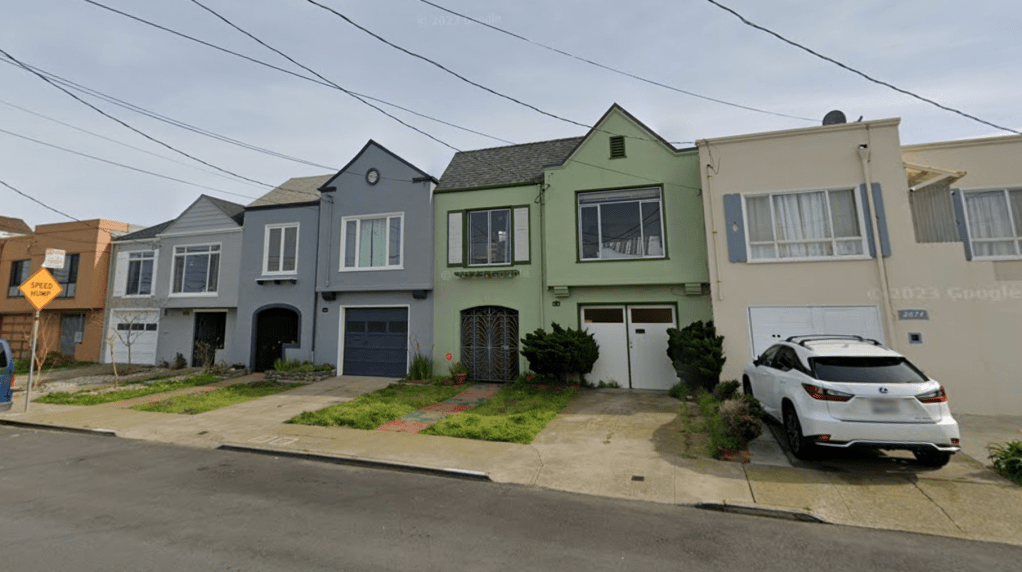
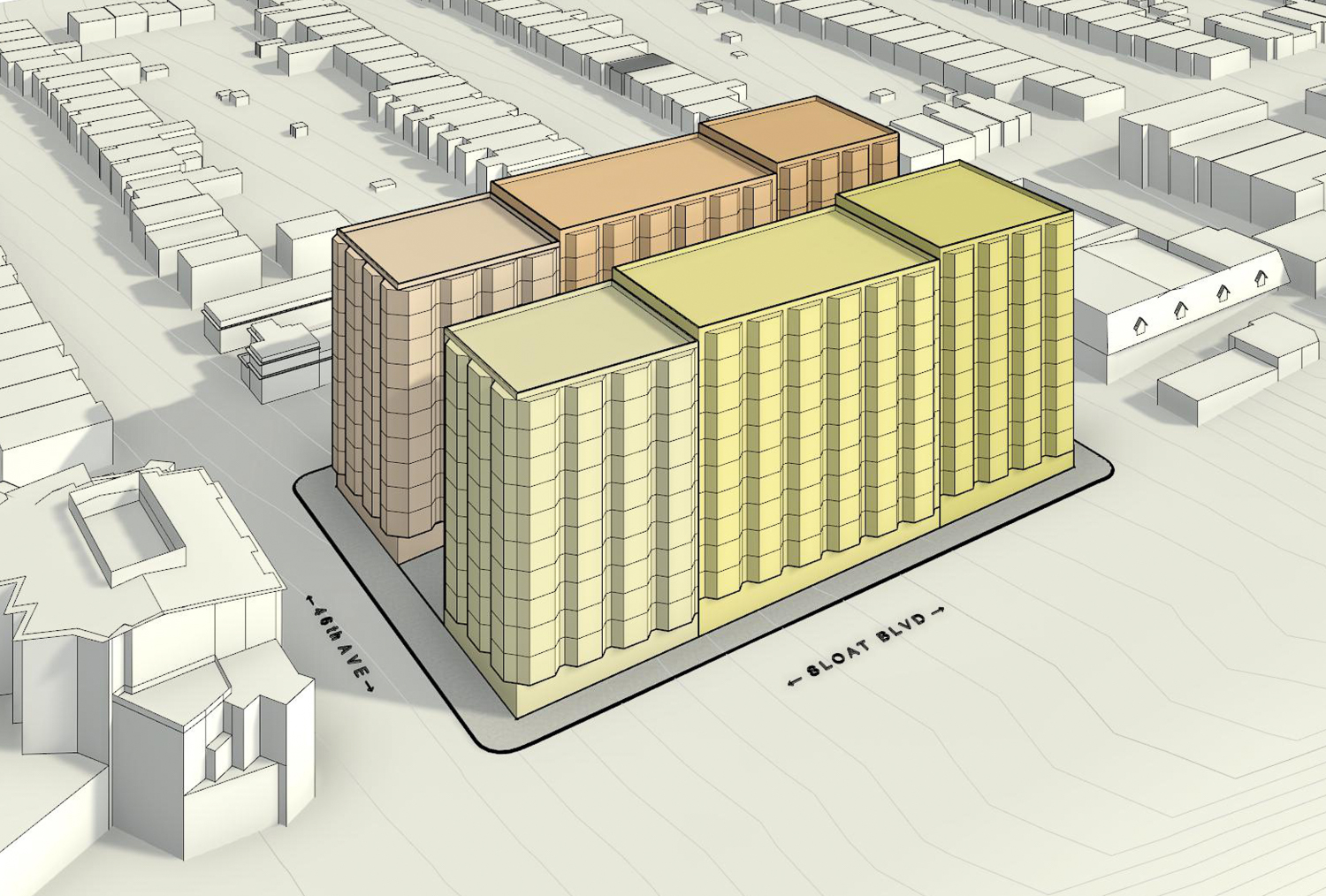
That isn’t to say that I think the Sunset is worth preserving in its entirety – it’s not. Just that apartment buildings should be developed in a way that at least pays some homage to the history and urban form that currently exists. I would certainly prefer the look of the “baseline” rendering more. It’s ten stories and would be less imposing (visually) and could be much more effectively integrated into the local context. Soulless glass towers on podiums just plainly do not fit into the local context of this neighborhood. A ten story apartment building taking up a block, with small shops and such below genuinely could – though I reckon the average San Francisco homeowner may disagree with me.
Urban Form Matters
Something I love about Paris are that the apartments are densely packed, but more or less all five stories tall. It makes for a lovely urban form – one where bakeries crop up on almost every corner and the density is high enough to support one of the truly great transit systems in the world.
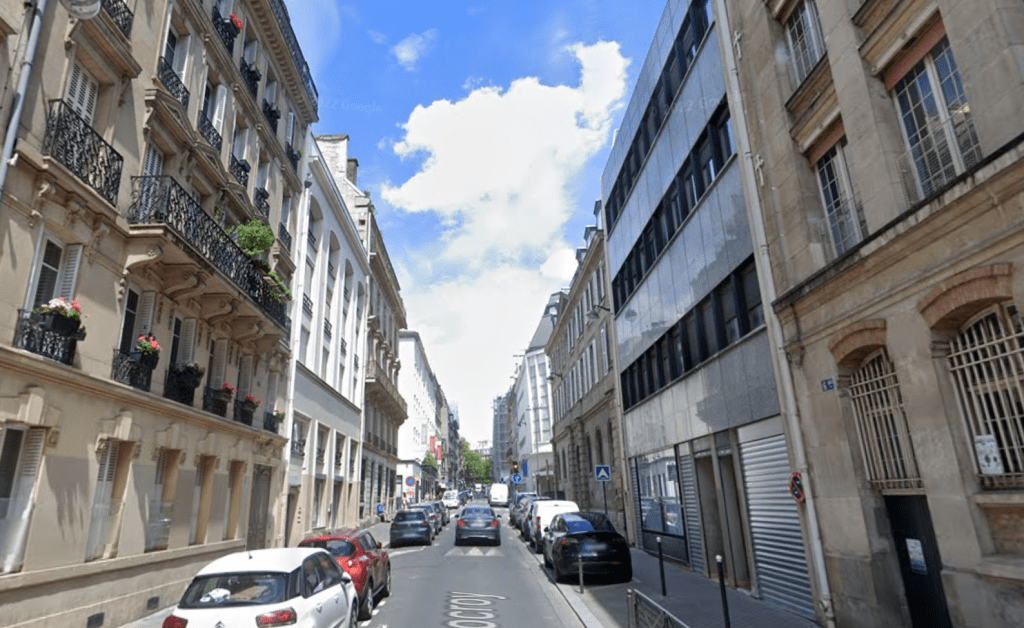
Could Paris be denser with Vancouver-style glass towers? Probably. But it doesn’t really need* to be. The entire city is five story apartment buildings, so the extreme contrasts of density that exist in typical US and Canadian major cities aren’t present. This is a good thing, since single family homes directly abutting 50 story glass towers just do not make for cohesive urban form – and cohesive cities with a visible logic to them are genuinely better. Cities are chaotic and unwieldy places, out-of-context mega towers do nothing to improve that.
*Yes, it’s very expensive. More housing in Paris would probably be good, but I think the character of the city really is a significant part of the appeal, and there’s a balance to be struck to find that.
However, the mid-rise apartment (four to five stories) offers the best of both worlds – high density and cohesive form. Even in single family house areas, a four story apartment building can fit in quite nicely.
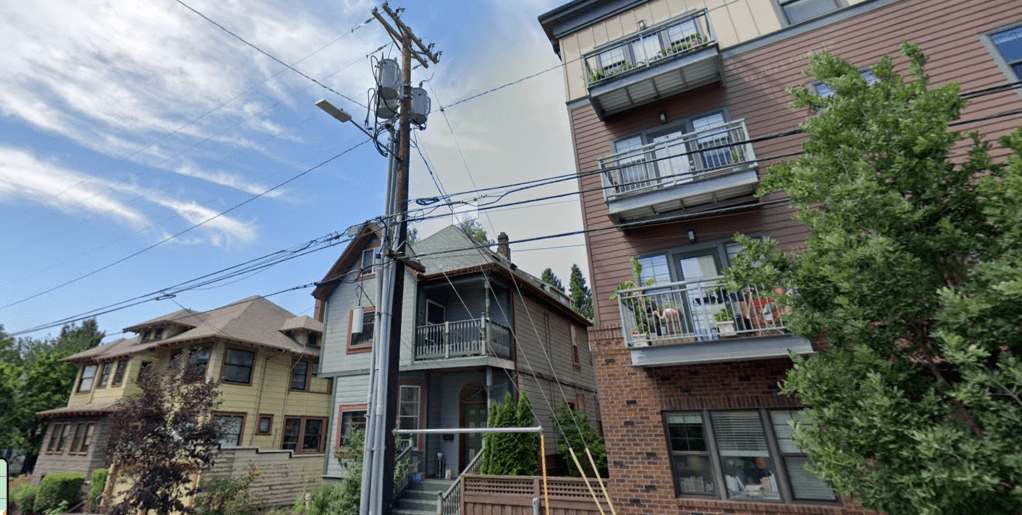
This building I used to live in at 20th and Morrison was not very visually appealing. And it was built over what I think should have been a historic landmark – the recording studio where Elliott Smith recorded Either/Or was demolished to build it. But it still contributes positively to the urban form of the area – and it was reasonably affordable by west coast city standards to boot ($1250/month for a 1 bed in 2021).
Unfortunately, US cities just aren’t really interested in having Paris-style development patterns. For the most part in Portland, the typical close-in neighborhood will allow four to five story apartment buildings only on major roads. Quiet neighborhood streets are still reserved for detached houses, forcing denser developments to cluster around major roads. There are reasons much more compelling than just “urban form” that this is bad, but it goes hand-in-hand with US ideas of segregation of uses. You always have to head to the “main drag” here – with the vibrancy and density – to shop or dine (at least outside of New York). And this makes our cities less interesting, less vibrant, and less compelling.
Higher density is worth pushing for – but it should have ambitions of higher-quality urban form outside of just “density for densities” sake.
Residential high rises can fit in to certain places very well. Places like Lower and Midtown Manhattan – where the skyscraper is already ubiquitous. Or the central core of various other US cities, where office towers abound and there is likely already the transportation infrastructure to support the higher residential density without too much additional investment. The Outer Sunset of San Francisco isn’t really that place yet, although it could be in the future.
That example of a 50 story tower in the Outer Sunset is hyperbolic. It’s in the very early stages of planning, and it may or may not be built. Certainly if the neighbors get their way it won’t. It’s also exceedingly unlikely to be actually affordable as well. Sure, 115 units will be designated as “low income” – but considering that means less than 80% of the median income of San Francisco ($100,000/household) that isn’t exactly promising. Based on all this, I think there are plenty of reasons to be at least moderately skeptical of this particular development – especially when the justification for a 50 story tower is “ocean views”. Not exactly something developers do to increase affordability.
Not All Developments Are Good
Enough housing talk though. Back in the 50s and 60s, the Freeway was the new technology of choice and millions of Americans were displaced in the name of progress. Some of the most destructive projects were only stopped by concerted efforts of neighbors resisting the mega projects destroying their collective backyards. I can say with confidence that every urban freeway project was misguided for a variety of reasons, but the destruction of neighborhoods remains one of the most important. And the principled opposition to them on those grounds is still, unfortunately, very relevant.
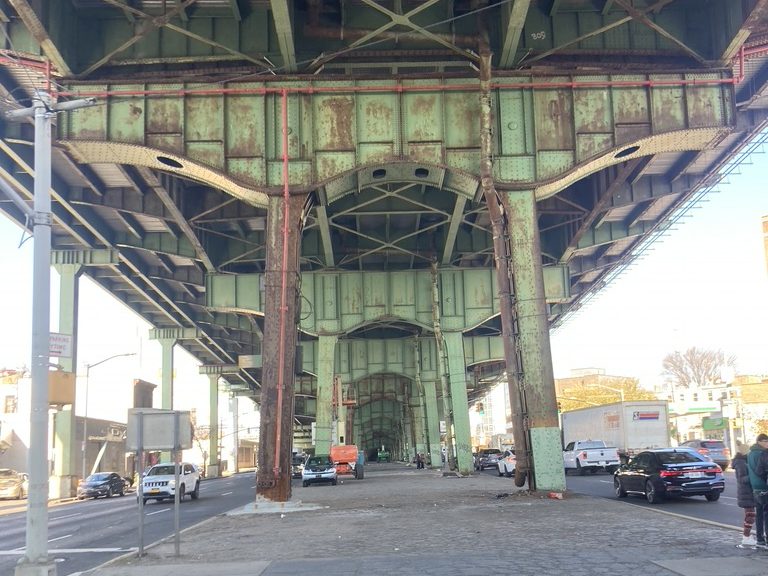
Every project in a city needs to be carefully weighed – and local voices matter since they are the people who are affected by changes. Determining what developments should proceed should be a careful dance between local, regional, and financial interests. Local voices are needed to avoid projects that genuinely harm the livability and character of places. Regional voices are needed since more people than just city locals are affected by city decisions. And since cities really do need to at least sniff a balanced budget, cost concerns need to factored in somehow.
Let’s consider the age-old “subway vs. elevated” rail transit paradigm. Typically, people have considered elevated trains to be unsightly and noisy, while subways are “out of sight, out of mind” and therefore better. But subways are usually far more expensive and can have some serious downsides related to this. They take longer to construct, and are typically harder to access – especially modern tunnel bored systems. Elevated trains (in my opinion) are cool as hell, better to ride (you can see things!), and cheaper to boot. We shouldn’t be afraid of putting trains on cute little viaducts over streets.
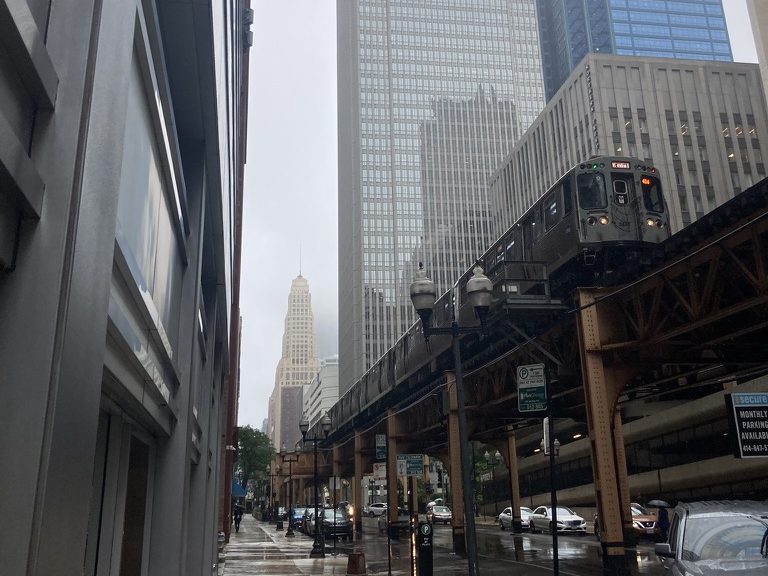
When it comes down to it, the “goodness” of any given development is never entirely knowable before it’s finished. Urban freeways universally failed to deliver anything resembling good to cities, but since so many were built so quickly the damage was done by the time the political pendulum swung against them. A measured approach should mean that fewer bad projects get built.
Reductive Us vs. Them Categories Are Bad
The extreme reductiveness of the YIMBY vs. NIMBY divide is just another in a long list of neat little categories that people sort themselves into. It’s nice to interact with various people who are only in your little bubble of urbanist types online. It can be refreshing to know that you aren’t crazy* for believing that cities are genuinely worth living in and loving. But as soon as you step into the real world, you will find people of all sizes – who likely do not fit into the category you’ve built for them.
*citation needed
People ultimately have complex, and sometimes contradictory views on the places they live in and are from. In my hometown, I would love for denser developments, especially in close-in neighborhoods (like the one I was raised in). But I would still have mixed feelings about seeing a plan for a 10 story apartment building on the southeast corner of Allen and Regent. Do I feel strongly about the Milio’s being preserved? No, even if I do have some fond memories of it.
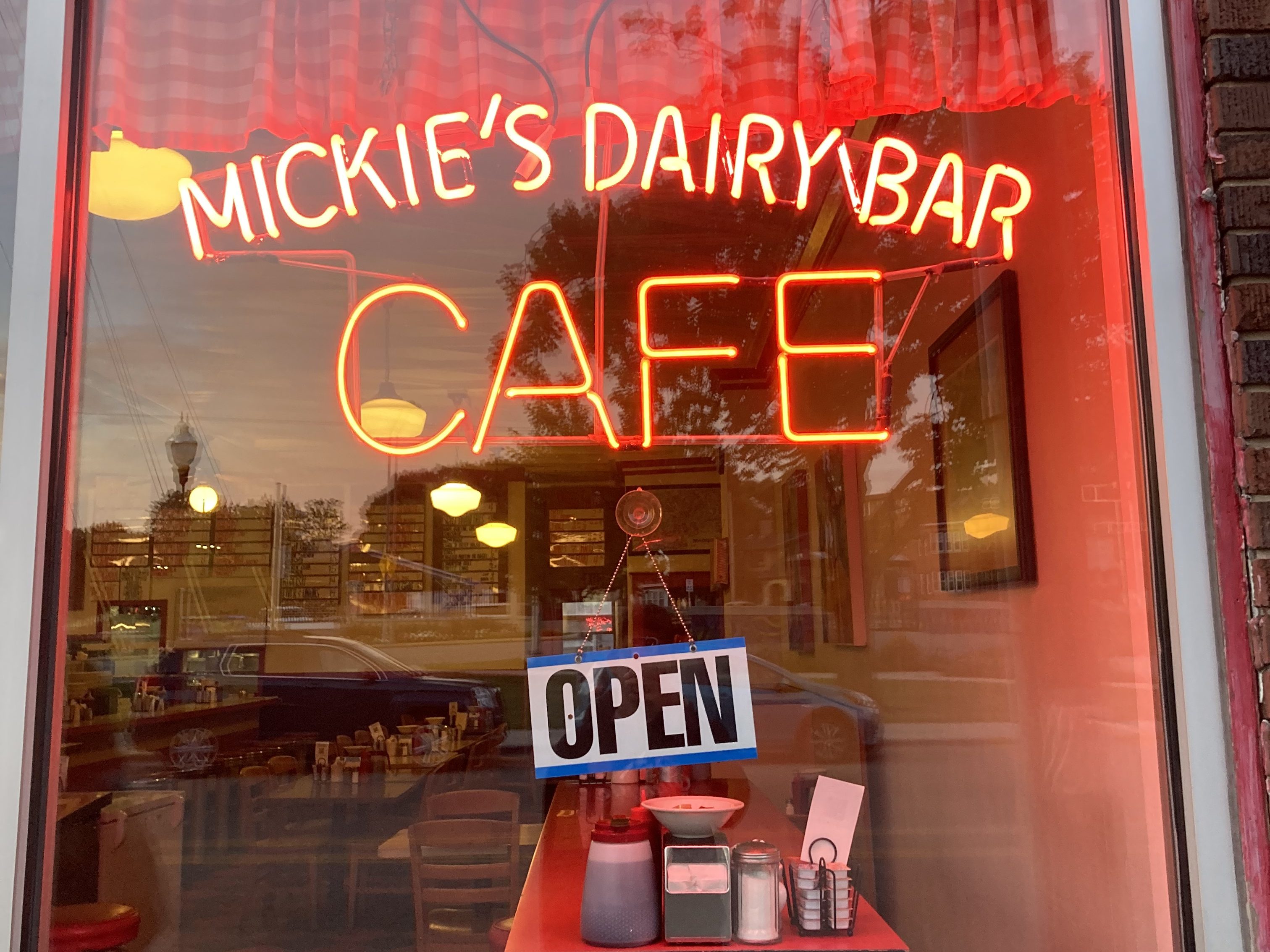
But that corner was a part of my childhood, a place where I walked to on the occasional lunch hour in high school. Those memories are part of how I think about my home. Every time a place I recall from childhood is lost to the inexorable tide of new development, I feel a bit sad. Sure, it’s nostalgic and unrealistic to think a place will never change but there are still places I would want to fight for – like the Essen Haus, Mickie’s Dairy Bar, Willalby’s, or the Crystal Corner. Places that define the city to me, that make me want to come home and stay there.
Every decision about development, preservation, and change is deeply personal for people. And you need to meet people where they are. Your neighbors who oppose a development now could be future allies on a different project – but they probably won’t be if you are an asshole to them. Life is collaborative, the law of the jungle means working together, and we are all in this together. Act accordingly, and be kind to the people you meet along the way.
 City Hikes
Leave a comment