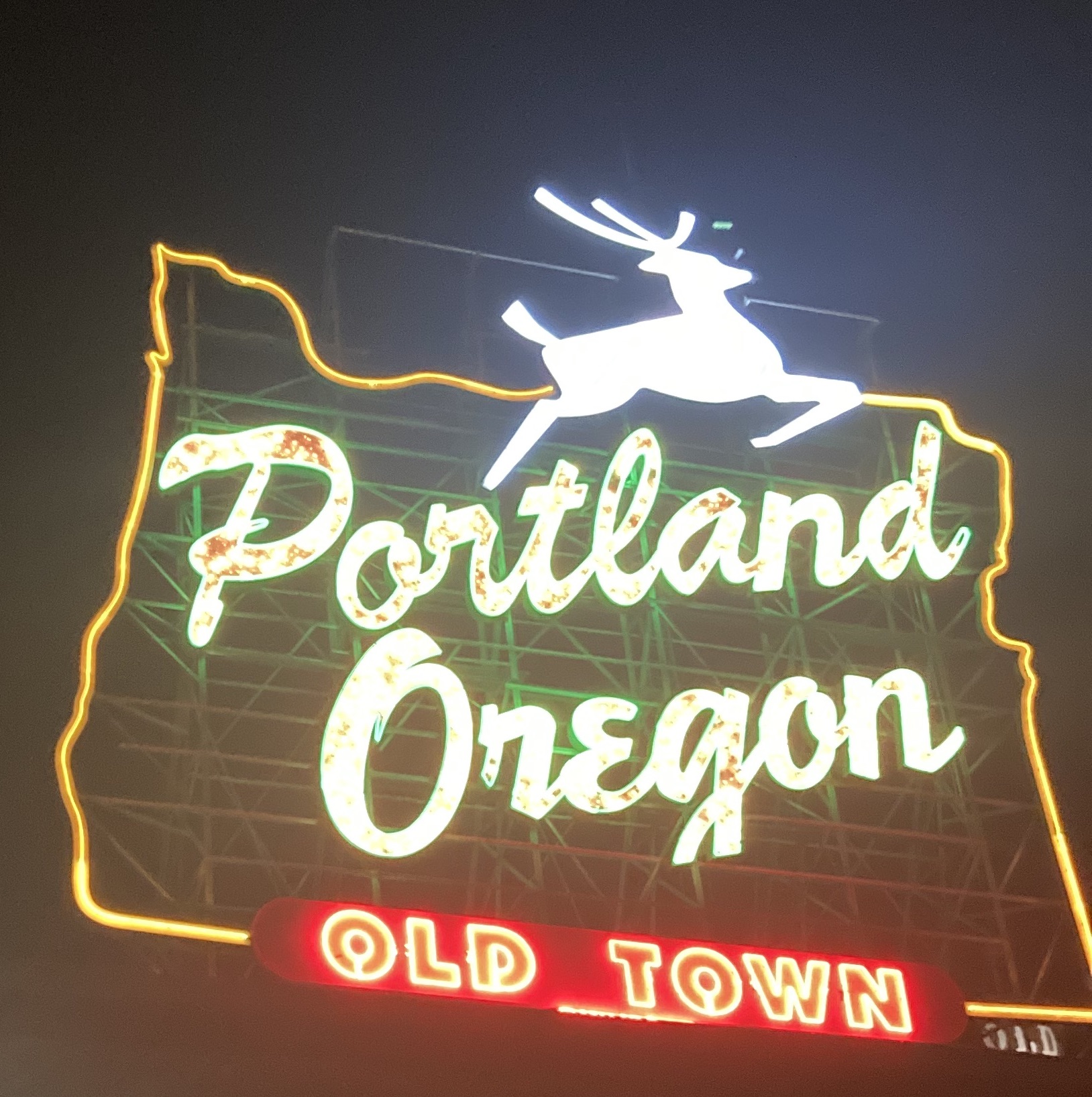
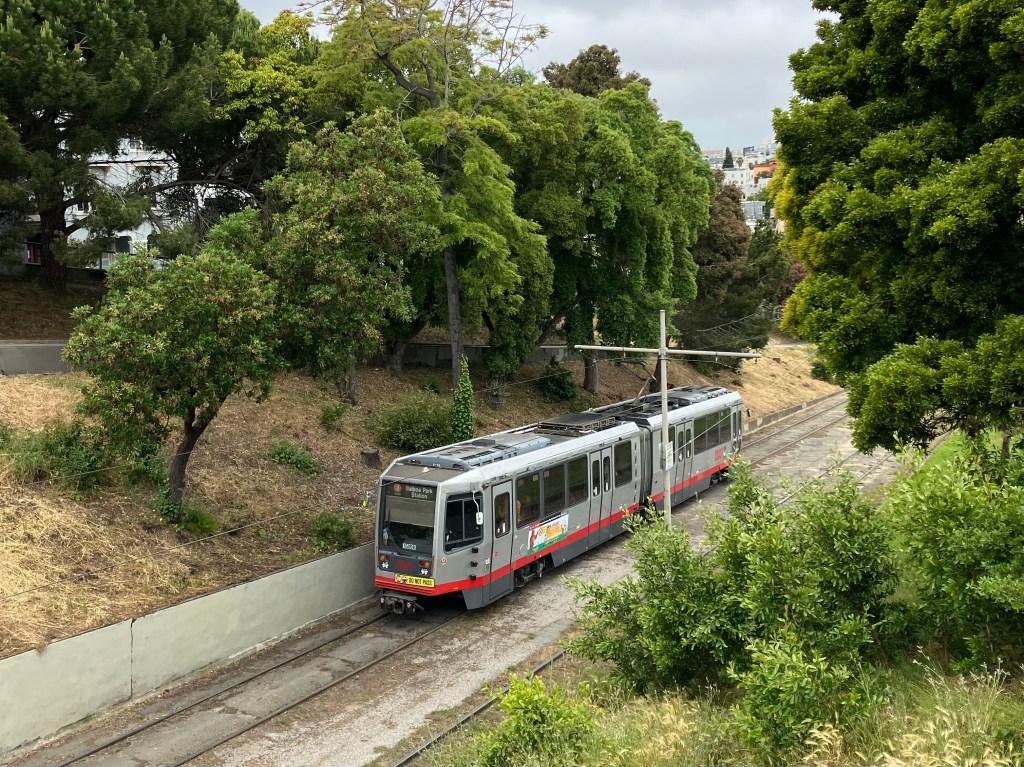
As you all know, Car Free May is a hugely popular social phenomena where humble citizens all throughout the country boycott both driving and riding in a car. Or it’s the wacky brainchild of a guy in Portland that had a total of two participants this year (me and Olivia). Either way June has changed her tune and I thought it would be a good time to reflect on a month well spent.
Considering that my lifestyle is fairly anti-automobile as it stands, why did I even do this? Isn’t taking the bus to work and walking to the grocery store enough to understand the world through a car-free lens? Maybe it is, but I wanted to know what it would be like to be truly bike and transit dependent, and I thought this would be the best way to find out. I found that there were mostly benefits though there were a few drawbacks as well.

The primary benefit wasn’t cost, ease, or even the joy of committing to an elaborate bit (despite those all being major pros) – no the real benefit from not using a car is a restriction of options. This is a bit of a counter-intuitive point, but I promise that I’m not gaslighting you. There is a pervasive attitude in the US is that you ought to be able to drive a car anywhere you like, at any time, for just about any reason. One only has to look at the discussion around Manhattan’s congestion pricing or at the lax DUI laws in Wisconsin to understand this. Broadly speaking, Americans consider mobility and automobility to be functionally the same thing – even in New York. Living without a car breaks you away from this pernicious false reality, and allows you to experience a place in an entirely different way.
It’s somewhat difficult to articulate what that “different” really means though. For me, I find that public transit allows me to experience the city through a lens more oriented towards the historical development patterns of the city than I would otherwise have. Let’s use my latest long walk in San Francisco as an example.
https://strava-embeds.com/embed.jsOne of my primary reasons for doing this walk at all was to see Octavia Boulevard with my own eyes. It’s a short segment of street in central San Francisco that once had an elevated freeway. Once I got there though, I was struck by the realization that I had in fact already been to that part of town. In 2019, I visited the city with a few friends and met up for coffee in the little park just north of Octavia.
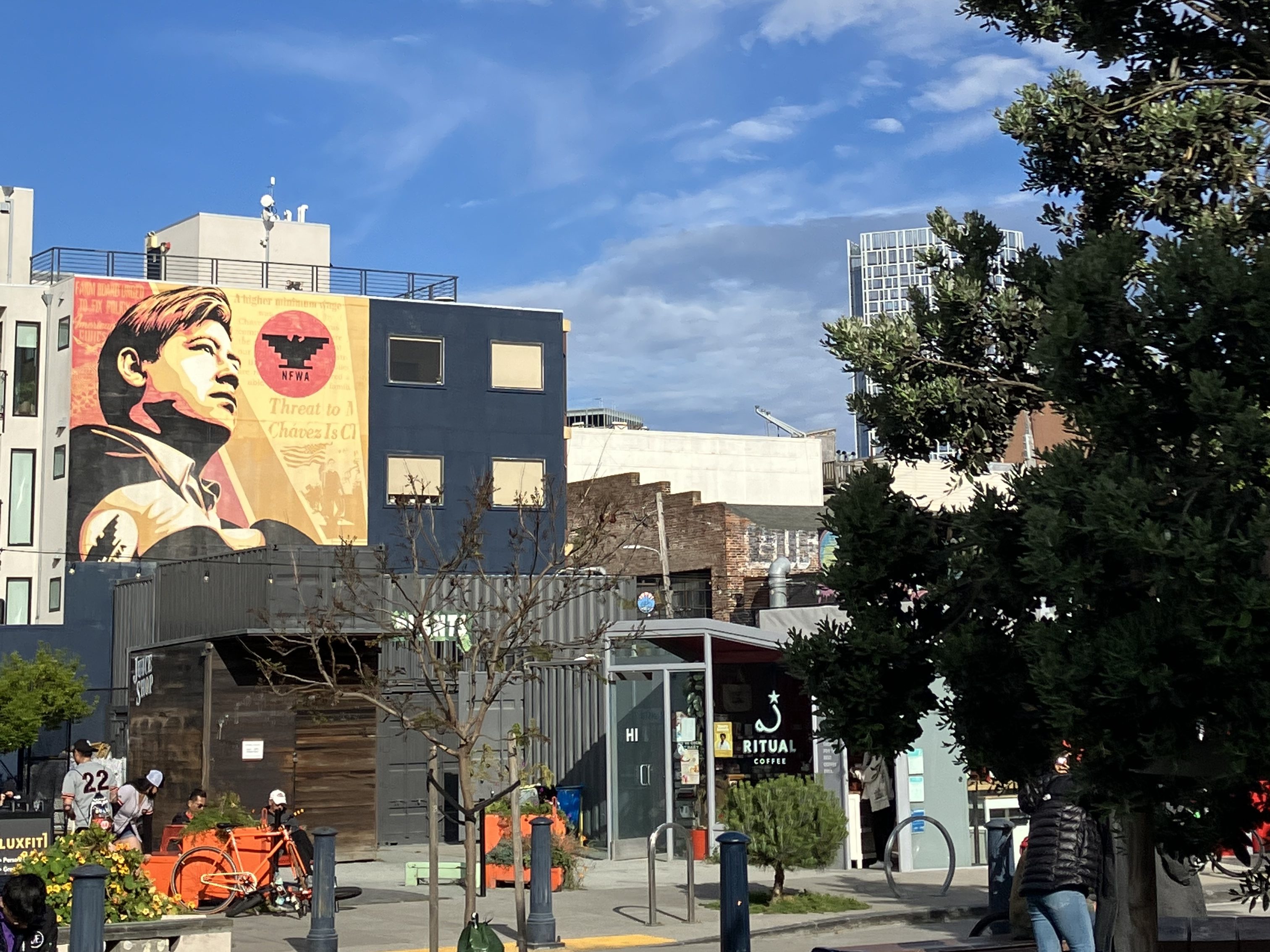
As someone who prides himself on his esoteric city knowledge, I almost feel embarrassed to admit that I didn’t understand the local context of a coffee shop that I visited four years ago. Maybe embarrassed is a tad harsh, but I’ve found this whole experience to exactly underscore what I mean by experiencing the city in an “entirely different way”. It was exactly because I had arrived to and left from the park in 2019 by Uber that allowed me to just come and go without having any retained knowledge of what that place really was.
And this is a serious drawback to car travel – a lack of understand of place. Cars simply move too fast and far to allow the user to come away from the experience with any deeper understand of place. Sure, I wouldn’t say most people come away from a bus ride contemplating the history of the route they just rode on (unless they had the misfortune of riding with me), but the less immediately convenient nature of the service lends itself towards more careful planning which I’ve found to be a good catalyst for understanding place.
It maybes goes without saying, but this lack of understanding leads people to have broadly less nuanced views of cities. A city becomes a series of cute places to go between with little regard for much else. Barriers for pedestrians like highways, steep hills, and rail yards no longer are such issue. When people can ignore these on the ground realities from their car, it means there isn’t enough political will to meaningfully change them. Again, the conflation of mobility with automobility breeds poor street conditions for pedestrians which in turn causes more people to drive. Living without a car can be a powerful catalyst for someone to advocate to change this unfortunate reality – I know it has for me.
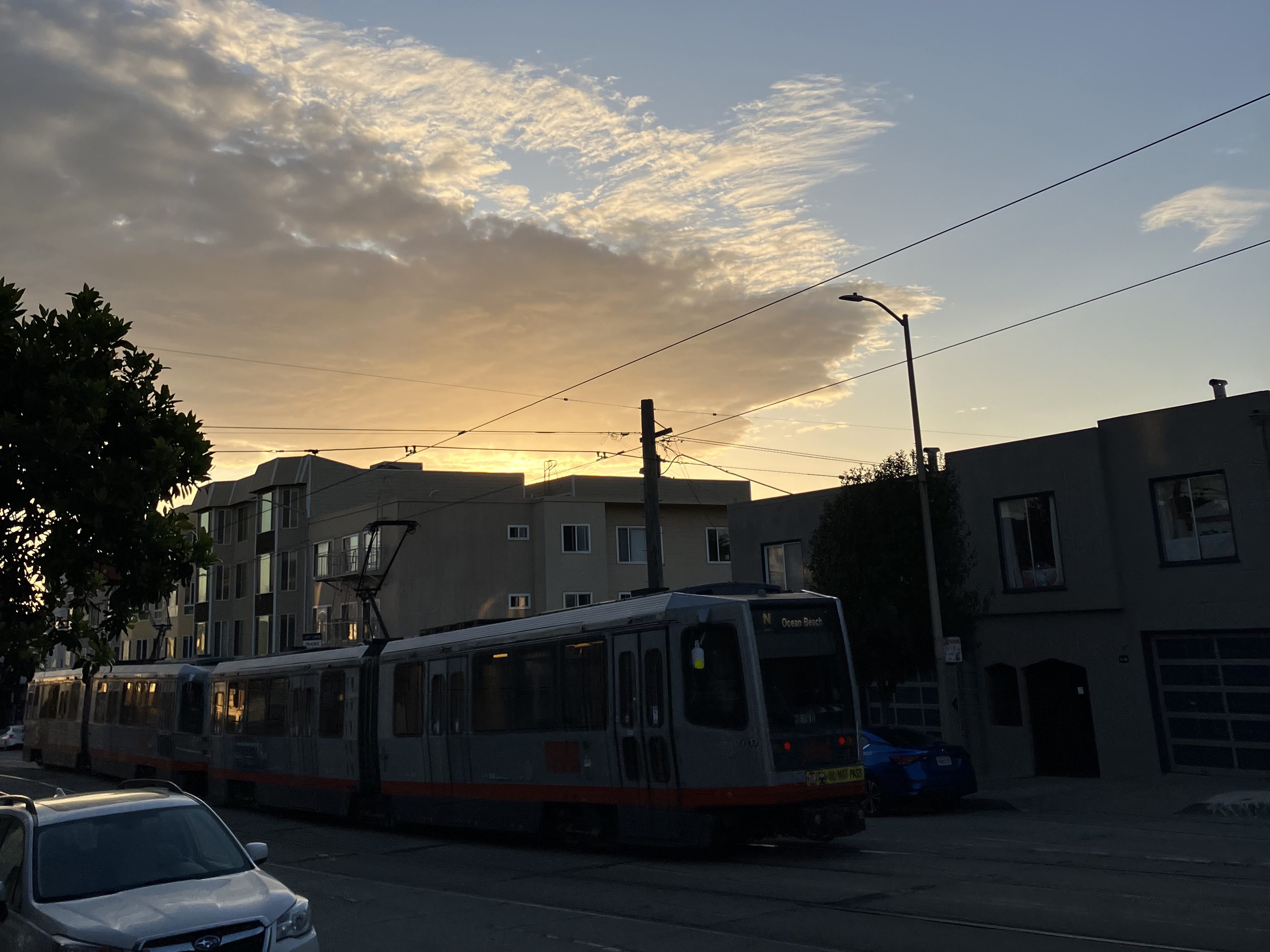
But maybe we’ve arrived at a fairly strange conclusion – that the less convenient nature of buses is actually a benefit rather than a drawback. But considering that the nature of planning a transit trip involves both walking to and from stops, waiting, maybe transferring somewhere, and tracking vehicles on maps I’ve found it gives me a much more thorough understanding of where I am. In my estimation, the minor convenience tax of figuring out how to use a transit system pays for itself – even if you never use it.
Of course, cost is a commonly fitted benefit for living car free, but notable for me saving money was a relatively small factor in why I enjoyed my car free month. This is notable because I’m a penny pinching son of my father, but also because cost is usually a primary benefit cited by the car-free advocate types. The usual argument goes something like “the average American spends $550 a month on their car, have you tried not spending that?”. And while I do think this is something worth considering, I also think that the benefits are fairly minor compared to the other benefits living without a car affords you.
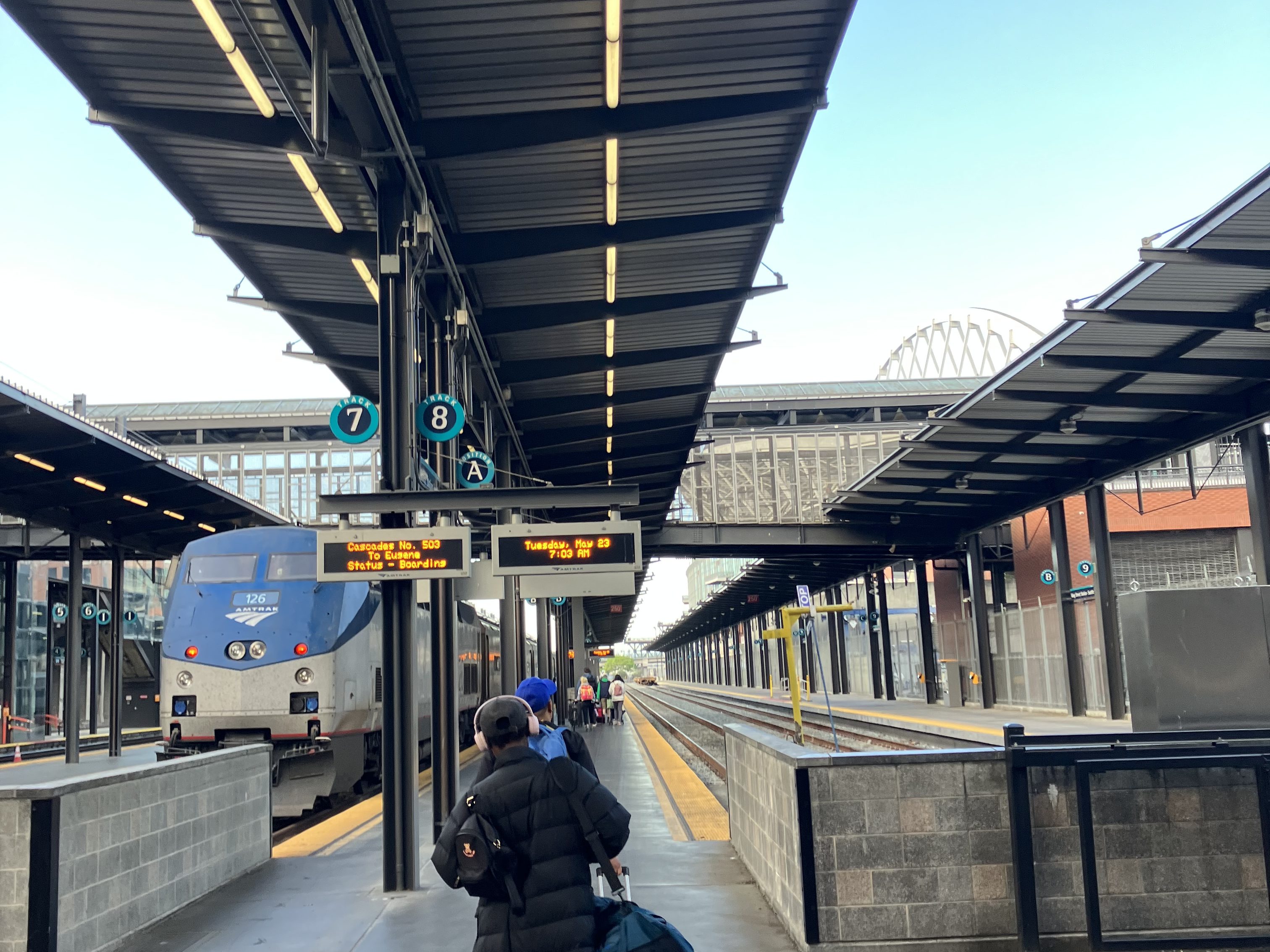
All of this is to say that owning a car is culturally ingrained in American society and fighting against that requires far more than slick accounting. People need to have compelling reasons to get rid of their cars, and frankly I find it to be a bit of a stretch to just say “you could save money”. I could also save money by living as a hermit, but that isn’t a very compelling reason to become one.
Were there drawbacks to my experience? Yes – though most of them were related to the somewhat silly refusal to even be a passenger in a car. But the lack of access to “outdoor amenities” was definitely a bummer. It’s exceedingly difficult to do anything outside of the city proper other than go on a bike ride. And while my love for long bike rides is well documented, the seemingly endless number of beautiful hiking trails within 100 miles of Portland were almost universally closed to me. I’ve spilled plenty of ink about this previously, but it’s a point I keep coming back to – I like to hike, and having a car is a prerequisite for that.

Luckily for me, I can have it both ways. I can continue to choose to live car free for the majority of my life, while using a car to go backpacking. I still want to plan some car-free trips – I’ve found a 30ish mile loop in the Columbia Gorge that I think can be done by bus – but the luxury of car ownership is still one I can afford (at least until my current car craps out).
May has passed, and so has my dogmatic insistence on not using a car at all. But I feel more strongly than ever in my resolve to live my life as a pedestrian, cyclist, bus rider, and train guy than ever. Making a visit from my Mom, a trip to Seattle, and a trip to San Francisco all work without a single car ride was a joy, and car free May gave me a flimsy excuse to do it. What’s more, I think that almost everyone could benefit from doing something like this – maybe even just for a day. You can wait for next May and become the third ever participant in Car Free May (I’ll even send you a plaque), or just do it now. Ditch the car and ride the bus – and enjoy yourself out there.
 City Hikes
Leave a comment