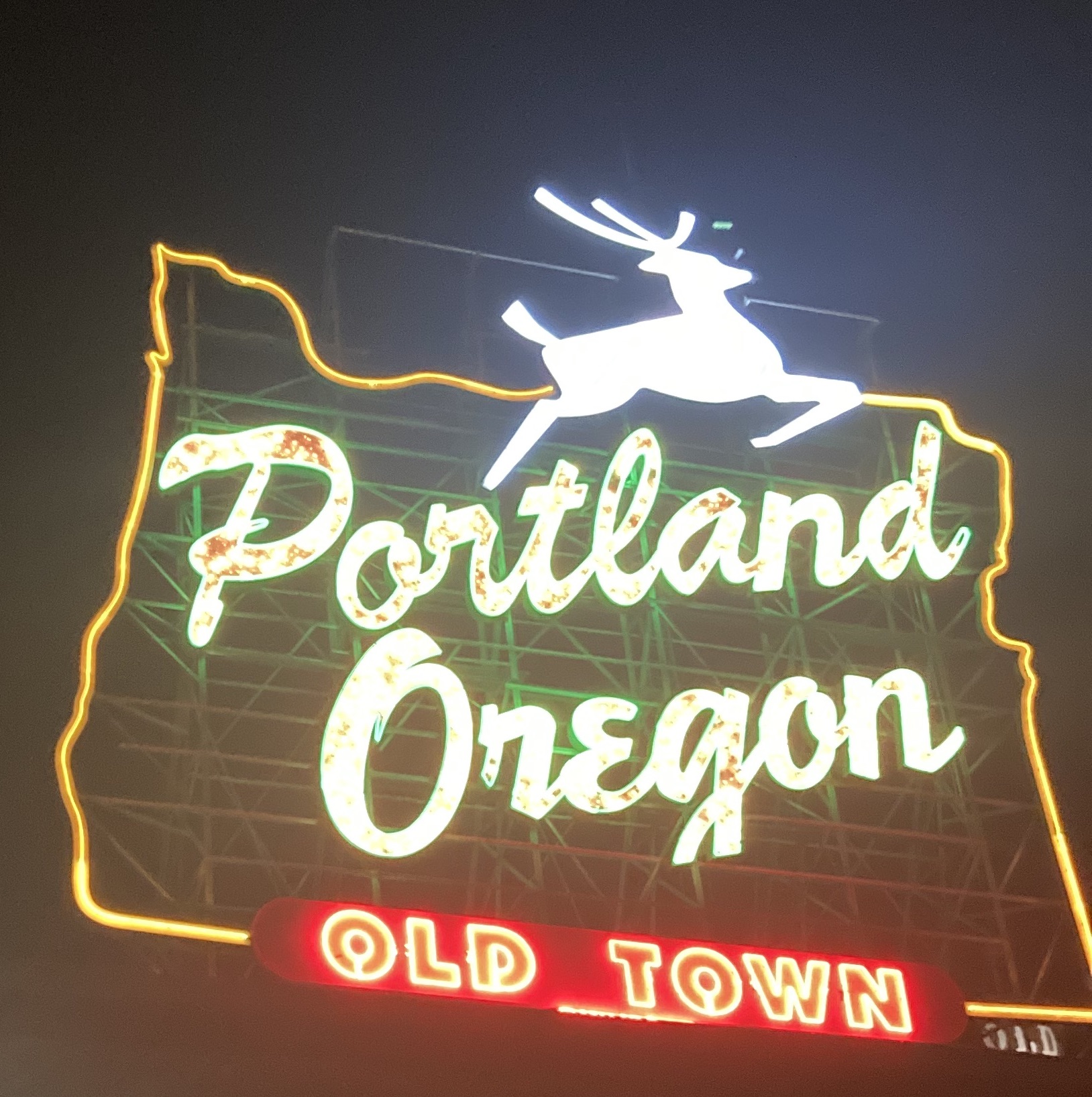
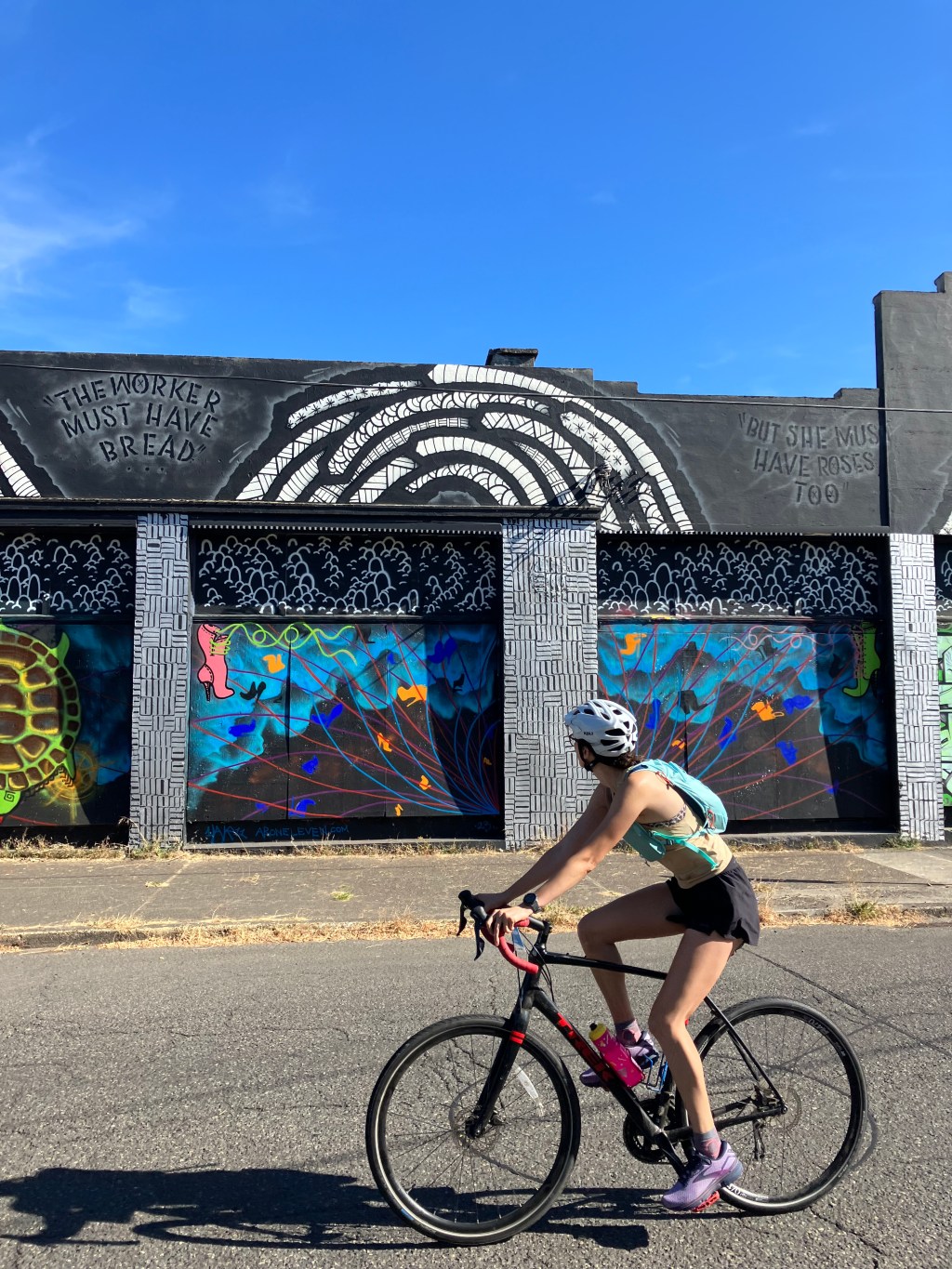
A few weeks ago, Portland played host to two high-profile bike events within a 12 hour span. The Portland World Naked Bike Ride, and the Bridge Pedal. Olivia and I attended both, and I felt that they offered an interesting contrast for more reasons than just the obvious clothing related one. But first, a bit of housekeeping – what exactly are these rides?
The World Naked Bike Ride
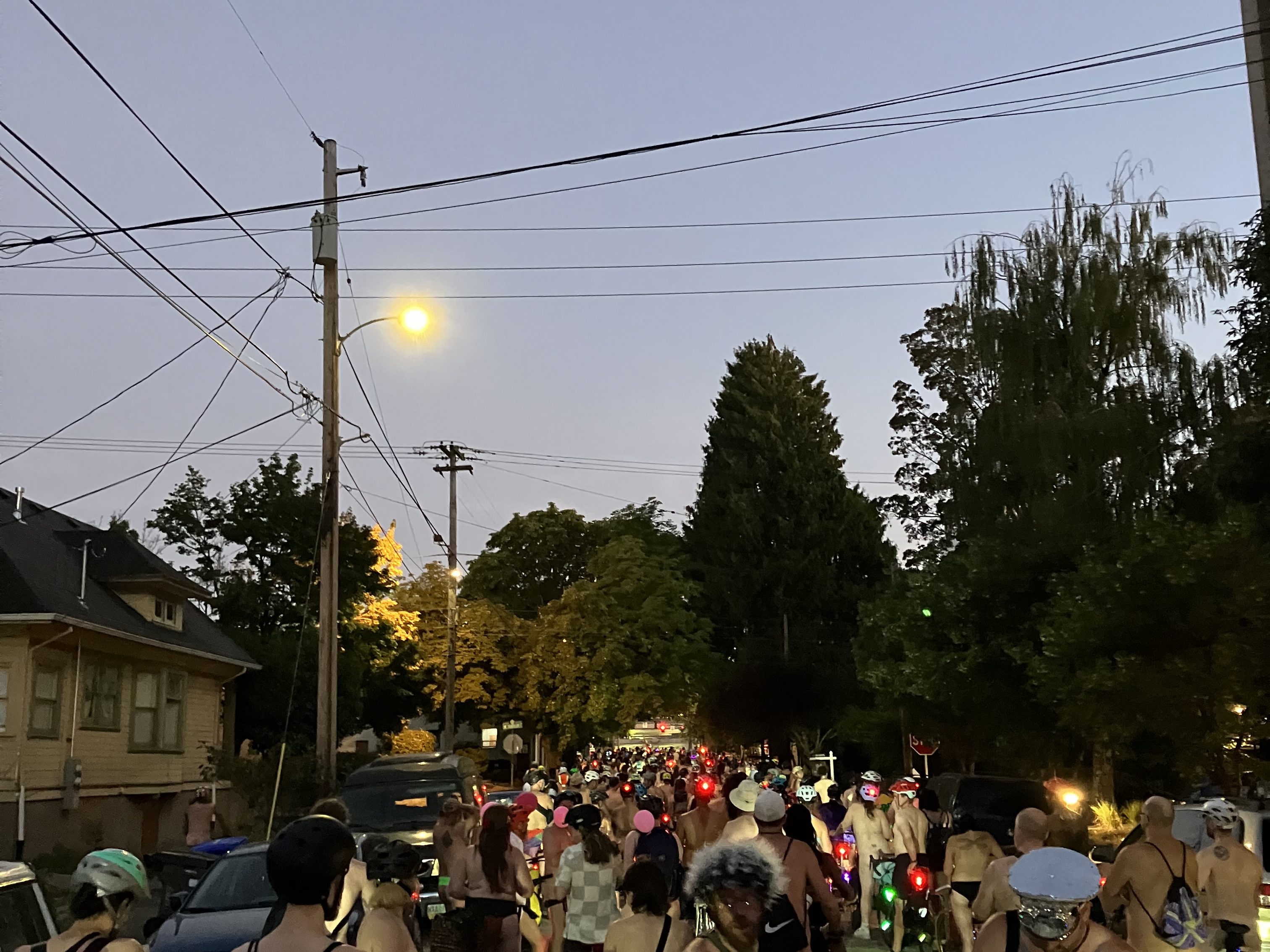
The Portland edition of the World Naked Bike Ride (WNBR) has been an annual event since around 2002. In general, it’s a protest against oil dependency and seeks to demonstrate the vulnerability and humanity of cyclists – though the Portland edition has plenty of elements of “people riding together for a good time” as well.
The ride here also is purportedly the largest, at around 10,000 participants annually, though the cited Travel Portland post does have quite a few things I’d raise an eyebrow at. And it’s got an interesting history, starting off with rides in the 200 to 600 range until 2008, when around 2,000 riders made it out. Since then about 10,000 people have participated each year and has become a part of the civic fabric of the city. It had official police support starting in 2009 and up until at least 2019, but I am fairly sure there wasn’t any police presence Saturday night (which is good, actually).
Based on this brief history, I think the Naked Bike Ride is an interesting case study into how 2010s Portland functioned and where it may be going now. Maybe it’s an example of power brokers in Portland leaning into a countercultural protest, hoping to skim some legitimacy for themselves by finding yet another quirky Portland thing to do though I admit that feels a little conspiratorial. But the official sanctioning of the ride by the city is still very interesting, and something to come back to at a later date.
But either way, the WNBR is a grassroots organization. Planned and led by local activists and drawing it’s ridership from all parts of this wonderful city.
Bridge Pedal
Sunday’s ride is a Portland classic in a different vein. The Bridge Pedal started in the late 90s, the brain child of State Rep Rick Bauman bemoaning that so many sweeping views in the city were gated to those in motor vehicles. It has always been an official event, requiring the state DOT to close the upper decks of the freeway bridges for a few hours. Around 20,000 people participate in one of the rides or walks annually, making it one of the larger bike rides in the country.
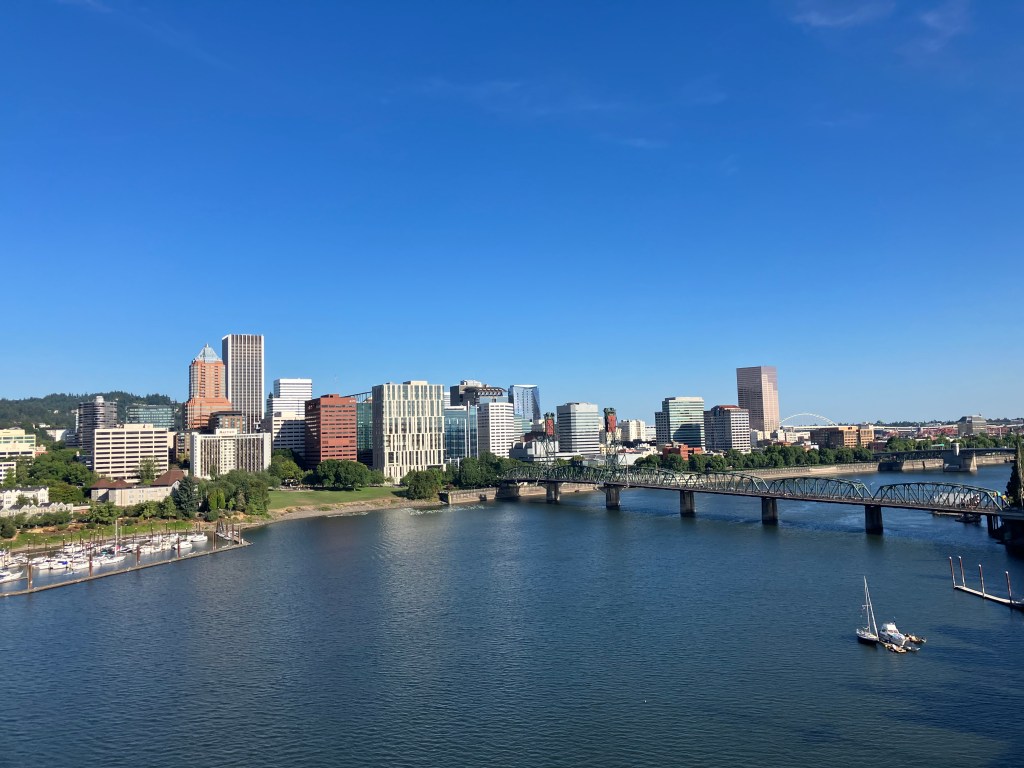
The route is pretty nice, and the views from the freeway bridges really are spectacular. It was absolutely worth my time, and I imagine that I’ll do it every summer I live in Portland from now on. But there’s more to be said about what it isn’t, and how events like it do exceedingly little to move the needle on active transportation.
Let’s take a deeper look into this by considering the primary marketing point this year – celebrating 50 years of the Fremont Bridge.
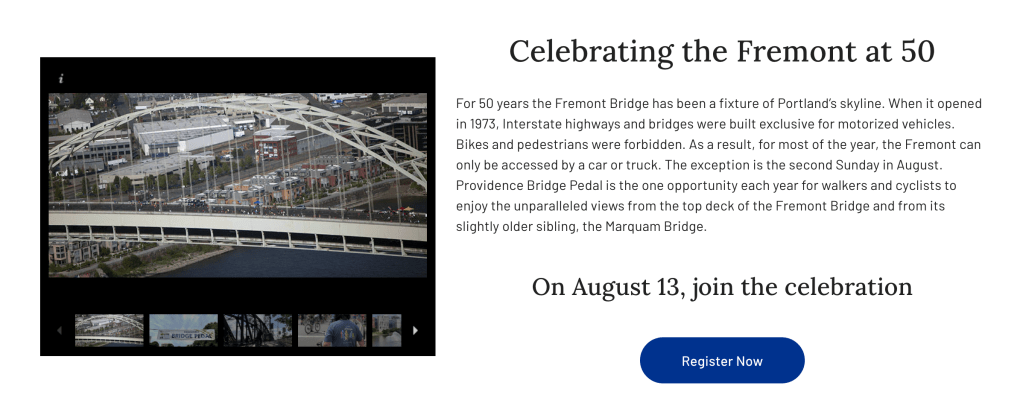
Something that strikes me about this description of the Fremont Bridge is how fatalistic it is. Bridge Pedal obviously is aware that riding a bike on the Fremont Bridge is an incredible experience, yet simply acquiesces to the status quo that bike and pedestrian traffic ought to be excluded every other day of the year. It’s not like there’s anything physically preventing the Oregon Department of Transportation from repainting the road to allow for a protected shared use path (even Caltrans has done something like this on the Richmond-San Rafael Bridge).
Evidently, suggesting something so radical (laughs) would get the someone at ODOT upset. So instead of hoping for a brighter future where everyone can use all of our treasured Willamette River bridges, we are supposed to just accept one morning per year. I think that’s a crying shame, but it’s not particularly surprising. The cost of working with institutional players is adopting their point of view. And of course, ODOT views the Fremont Bridge as a net positive for the city in its current form.
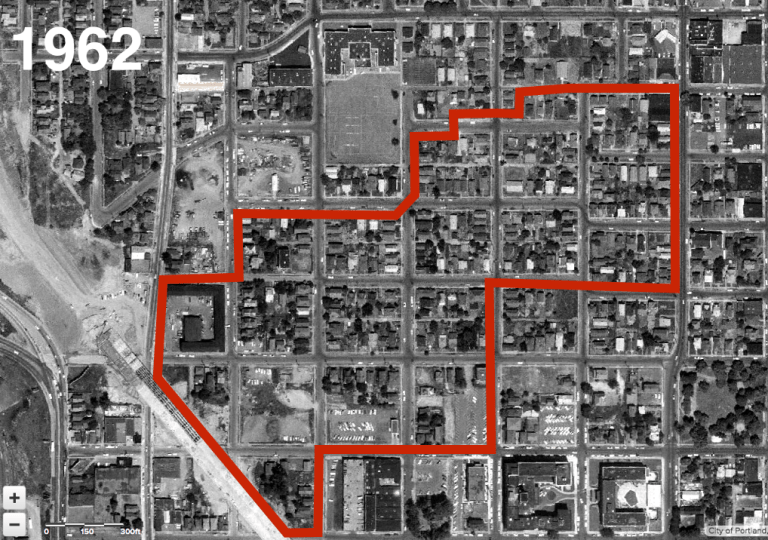
Which is bad for a myriad of reasons, but what’s important for the sake of the discussion here is more the capitulation to the status quo. And it’s exactly this that I found to be frustrating with Bridge Pedal. Yes – it’s a nice ride, but what the ride says in the larger social context is exactly the same 1950s era highway jingoism that has plagued US cities since Robert Moses’ parkways in the 1920s on Long Island. Roads are for cars, and you bike types should be happy that we let you on these bridges for 0.6% of the year for the low, low cost of $40.
I doubt that anyone else really had that thought come to mind, but it felt especially relevant to consider the broader social context and commentary that the Bridge Pedal makes when it’s the morning after the WNBR. The Bridge Pedal may not be trying to make a point, but that just means that it’s doing so by omission – which means support a status quo where the lions share of transportation funding is still focused on highways.

In contrast, the WNBR is brimming with social commentary. Both cycling and nudity share in being public expressions of vulnerability to some extent. When you’re riding a bike on a road without anything to physically protect you from motorized traffic you feel it in your soul. The social consensus around the road means that you are marginalized – literally riding in the margins of the road – and being nude magnifies this feeling. Some people may dismiss the nudity as flamboyant or frivolous, but it’s hard to overstate how important it is to emphasize vulnerability as a cyclist.
A lot of chatter in cycling circles in the UK apparently revolves around helmets and hi-visibility clothing, according to the Guardian. And much of the debate in that article involves how wearing a helmet changes both your perception of your own safety and how others see you. And I’m not really going to dwell on the helmet issue too much, but it’s an instructive reminder on how vulnerability plays a key role in societies understanding of cycling. The types of politicians who push mandatory helmets see themselves as ensuring that cyclists protect themselves from the dangerous conditions on the roads, while the folks against said bans see them as a band-aid offering meager protections while allowing unsafe road conditions to persist. In other words, they think that the most effective way to protect vulnerable cyclists is via systematic change.

And ultimately, systematic change is at the heart of the difference between the WNBR and Bridge Pedal. The former posits that cycling needs to loudly take up space and demand a better future, while the latter says that the status quo is fine, just be safe out there on a nice recreational ride. It’s evident which of these is more needed if you ride a bike in Portland, and it’s not more of the status quo. 99% of road space is still dedicated to cars, either by law or by custom, and this will not change without a serious shift in popular opinion.
Despite the overwhelming evidence on the high personal cost, environmental damage, and sprawl-inducing nature of the private automobile, it still occupies a hegemonic position in transportation. In Oregon, only about $400 million out of the $5.1 billion budget is earmarked for anything remotely non-automotive which works out to about 7%, most of which goes towards supporting public transportation and intercity rail. It’s most realistic to consider the cycling budget as a rounding error, and even that is being generous. It’s exceedingly unlikely that any changes in transportation will come from above.
Thus, the only option is to build the new world ourselves. Amsterdamers famously hosted die ins and organized a group called “Stop the child murder” to protest increasing deaths from automobiles. The “cycling utopia” that some creators choose to live in was created only via intense activist pressure – so take their complaints about urbanist activism with a healthy dose of skepticism. And this history of activism is the real lesson to learn from the Dutch. It’s nice to have bike paths that go over elementary schools and a holistic approach to traffic safety, but this was only possible after a campaign of direct action and citizen activism. The WNBR is a place where this legacy of bicycle activism is apparent, and is perhaps the highest profile event of its kind in Portland (since the death of Critical Mass at the hands of the PPB).

If you care about climate change (and you should), and you care about the tens of thousands of Americans who die each year from automotive violence (and you should) then you need to recognize the importance of events like the WNBR. People who rag on the WNBR for causing traffic jams (as if you had to go out driving on a Saturday evening), or being gross, or any number of other things miss a fundamental point about the world. Change does not happen unless it is created by people. If history’s arc bends towards justice, it is only on the back of the blood sweat and tears of everyday people fed up with the way things were.
The WNBR is an event that hopes to catalyze exactly the change that we need now. It’s worth supporting. And in contrast, the Bridge Pedal is just a nice way to spend a Sunday. There’s nothing fundamentally wrong with having a pleasant Sunday morning, but we shouldn’t have it distract us from a fight for a better future. A future where riding over a landmark in the city of Portland isn’t a once a year thing. A future where cycling is a first choice for everyone, rather than a quirky footnote. And remember, the future is yet to be determined – find a way to shape it if you can.
 City Hikes
Leave a comment