My whirlwind trip to LA has come to a close. It’s been a singular experience, with so many experiences I wasn’t expecting and so many moments that I’ll never forget. The skinny is that I both love and hate Los Angeles. It’s a city filled with intrigue, but one that has a peculiar brutality. My friend Connor referred to it as “a very tough place to live” – and I have to say I agree (despite not living here).
The Bad
There are some exceedingly obvious bad things about Los Angeles. For starters, the noise of cars and traffic is incessant. I thought I may have been tuning it out, but sitting here in a bookstore shielded from traffic and feeling my “mysterious” headache fade into the background I’m struck by just how bad it is. Of course the sprawling freeway network is infamous, but random streets in LA are 8 lanes wide too.
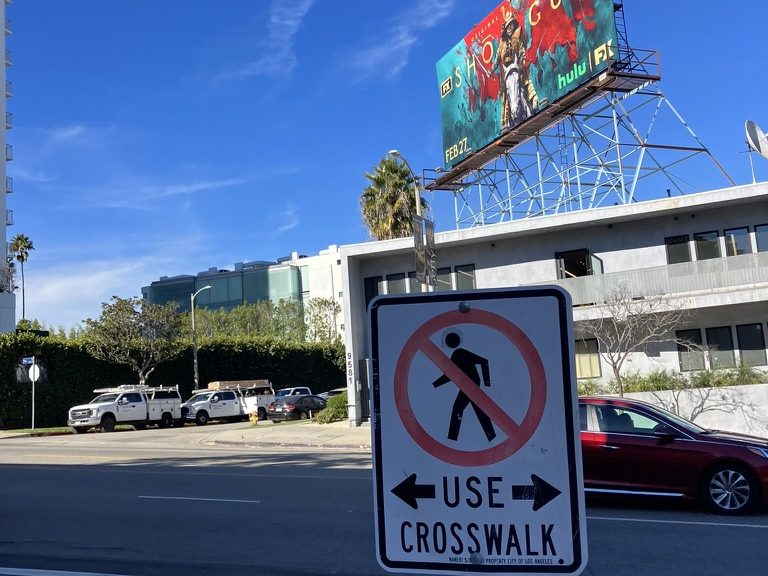
All of this makes walking rather unappealing and stressful. Every interesting road with shops and food is also 80 feet wide with 5 lanes of traffic and parking. Coming from Portland, it’s like if Division or Belmont were as wide as Powell, with twice as much traffic moving three times as fast. Even for the people like me, who enjoy a walk in a hostile place for the sake of attempting to understand a place through a novel lens it drags on you. I can only tolerate so much, and retrospectively my 16 or so miles spent on Pico Boulevard may have been a bit of a mistake for my health. But I did learn a great deal about the city in the process, so we will call it a wash.
It’s hard to overstate how much of a bummer this all is. As I’ll get into later, Los Angeles is a truly great city despite this problem. It’s just so eternally frustrating to see a place with so much good in it render itself questionably livable almost solely from of the private automobile and associated auto-orientation.

The Surprisingly Bad
Of course, I expected the sprawl and general car orientation. It is Los Angeles after all. But something I wasn’t expecting to be consistently annoyed about the lack of shade. Palm trees are emblematic of LA, but they really are not useful for providing shade. I guess it’s obvious if you think about it, it just had never occurred to me.
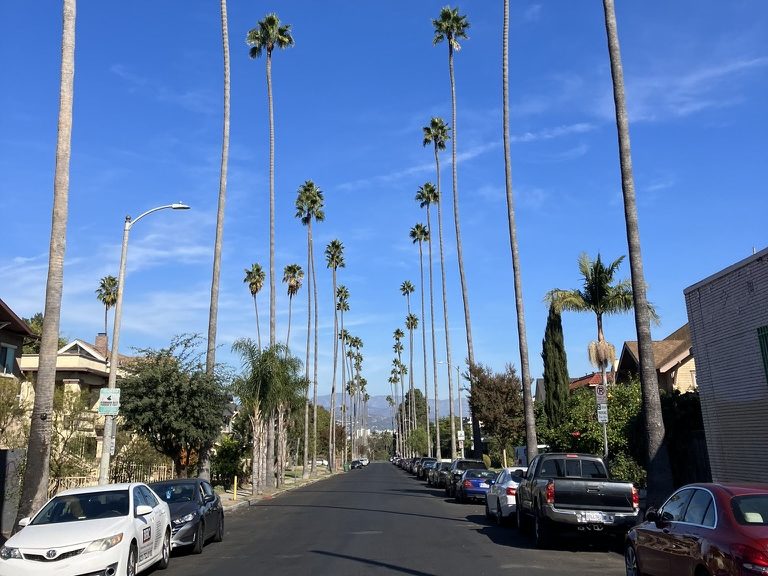
Tree cover is a big urban inequality issue, but the relative shadiness of trees matters too. And while this issue has the feeling of a nitpick, it’s genuinely a problem. The sprawly, car-oriented, and pavement oriented nature of LA and its location in a particularly sunny part of the world makes urban heat island a much larger issue than in other cities.
The Good
Even though most of the commercial corridors I spent time on (Sunset, Pico) were very wide with fast traffic, they still were wonderful places. I can’t count the number of incredible looking restaurants I walked by, and I can’t say enough good things about the urban fabric around Sunset in Echo Park – even if it was 5 lanes wide.
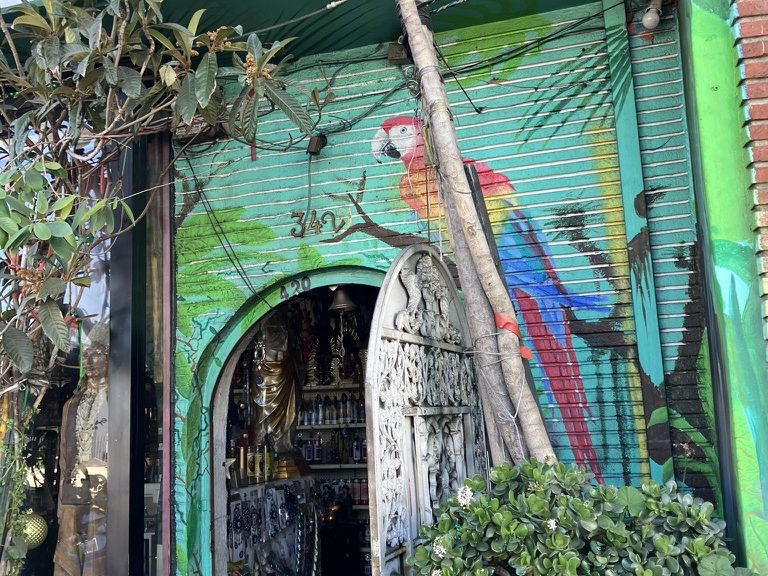
And on Pico, I talked yesterday about the enchanting smells of freshly baked conchas – but the street vendors making fresh tacos played a big role too. I’m a fan of street food, and LA has an embarrassment of riches. But beyond the street smells, the I found the typical low-slung buildings on Pico to be charming and the older more ornate buildings on Sunset to be lovely.
What’s more, there is a lot of public facing art in Los Angeles. This did not surprise me, as Olivia watched a fascinating documentary at the Clinton Street Theater from cinema legend Agnès Varda (Mur Murs) about the mural scene in LA in the early 1980s, but it was still lovely.

It’s nice to be in a city where there are lots of options for whatever your heart desires, all easily accessible via public transportation (more on that next!). But really, it’s just nice to be in a place with a lot of people and a typical major street in LA is typically bustling from my experience.
The Surprisingly Good
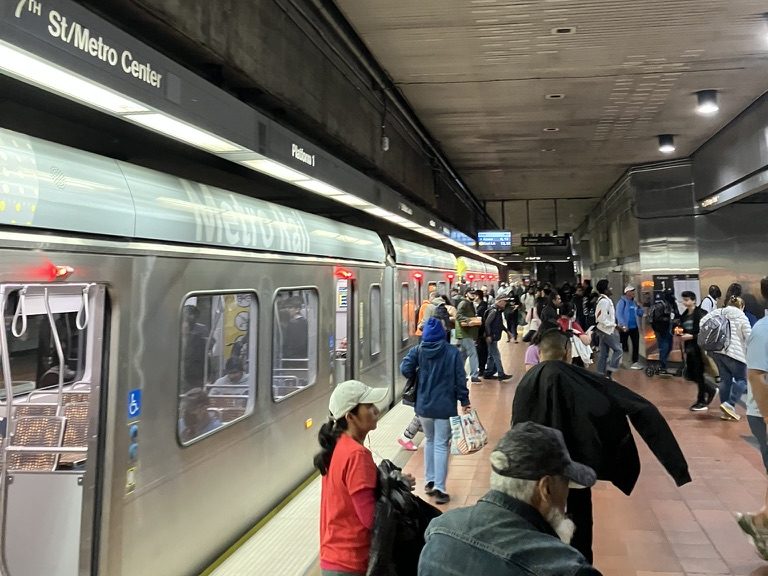
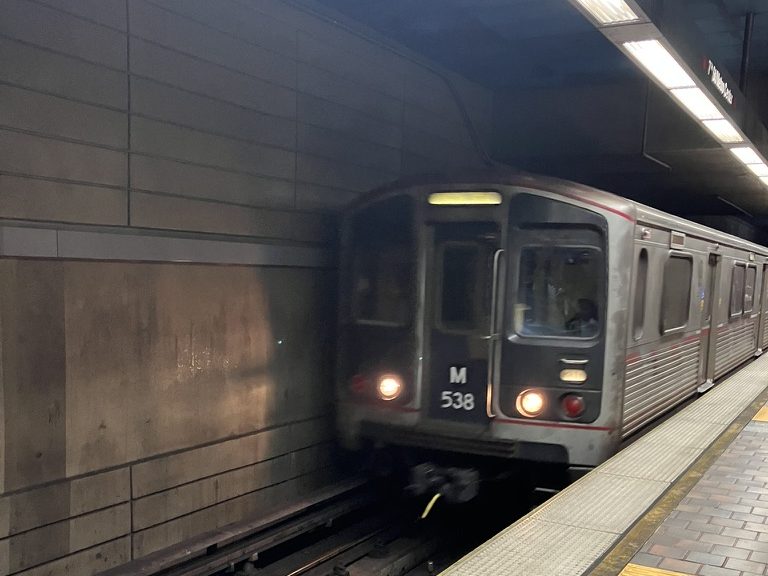
LA Metro is excellent. For a city that has a pretty poor reputation in the public transportation world – owing to the car-centric nature of the place – LA Metro really delivers great service. The new rail lines get a lot of press (well the kind of press I read anyways), and the portions that I read were mostly good. The B & D subway lines are great, even if there are persistent issues with late night service (20 minute headways at 10 PM is rough!). The two light rail lines (A & E) are good too, but sitting in traffic on a standing room only train because of a lack of signal priority is unbelievably frustrating. Nothing like delaying literally hundreds of people to spare mildly inconveniencing a dozen cars.
But the real star of the show is the city bus. I rode a half dozen of them while in town, and they were all well used and came very frequently. My most used bus, the #4 gets 8 buses an hour (every 7.5 minutes or so), with every 15 minute service lasting all the way to 2 in the morning. Maybe it’s not much by London, New York, or Hong Kong standards, but I would kill for bus service that good in Portland.
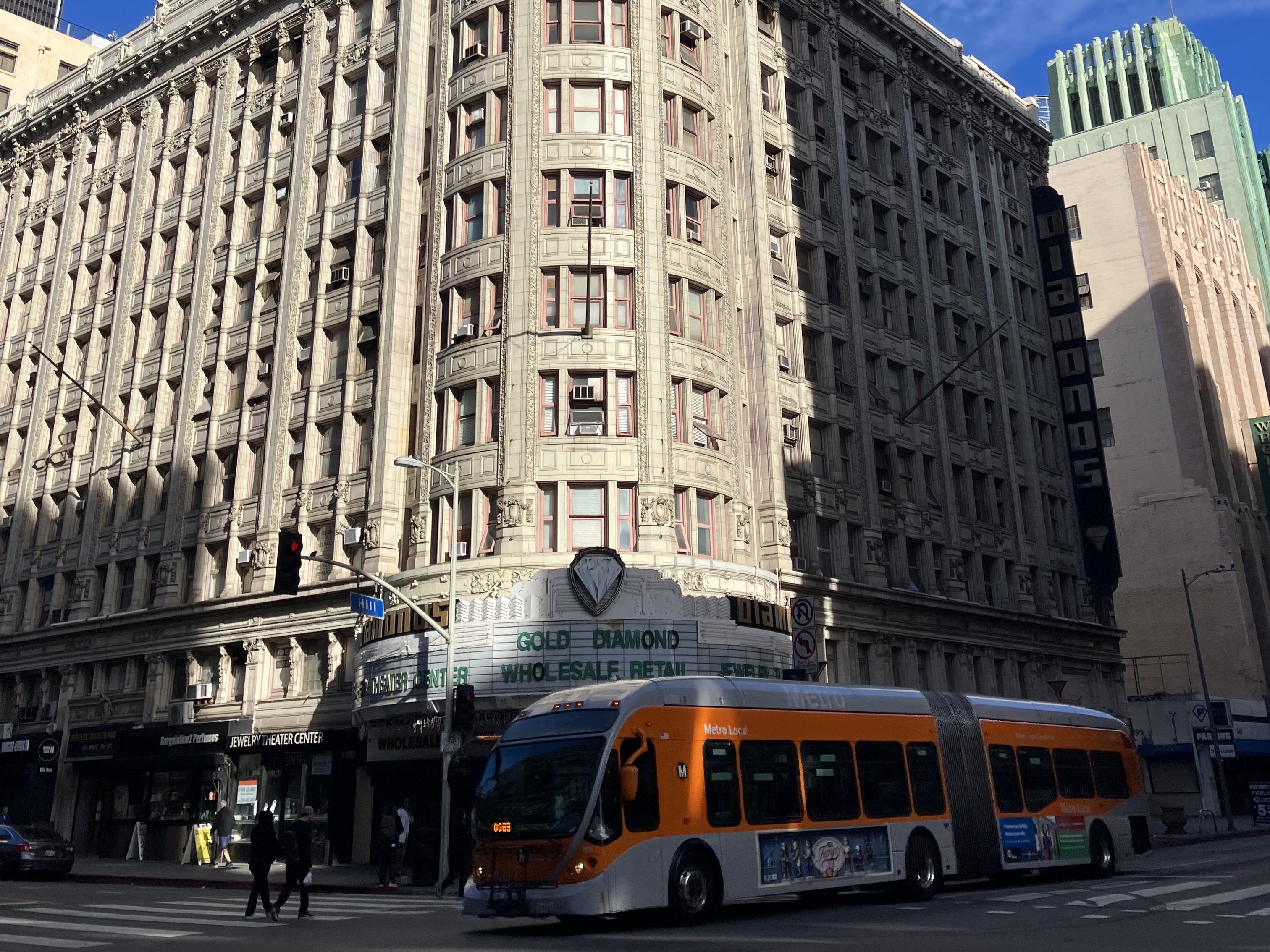
So much is written in urbanist spaces about the death of the streetcar, and rightfully so. Streetcars are awesome, and every city deserves scorn for letting their systems rot in preference of automotive interests. But it’s worth remembering that the humble city bus is the heir of the streetcar empire, and it should be treated as such. Basically every city still has a bus network, and it’s worth riding the bus as a way to learn more about the city you’re in.
In LA, I think the buses are excellent examples of places where everyone is on equal footing. And in hyper-capitalist Southern California, public spaces to congregate are few and far between. Having a space that gets you where you want to go and lets you mingle with everyone else is a service worth cherishing. Next time you’re in the area, I strongly recommend giving LA Metro a go.

What Does It All Mean?
Well I would sum Los Angeles up as a horrible place with all the markings of a great place. It has excellent public transportation, and tons of places where walking is a breeze. It has excellent weather, at least in the winter, and it probably has the best train station in the country this side of Chicago.
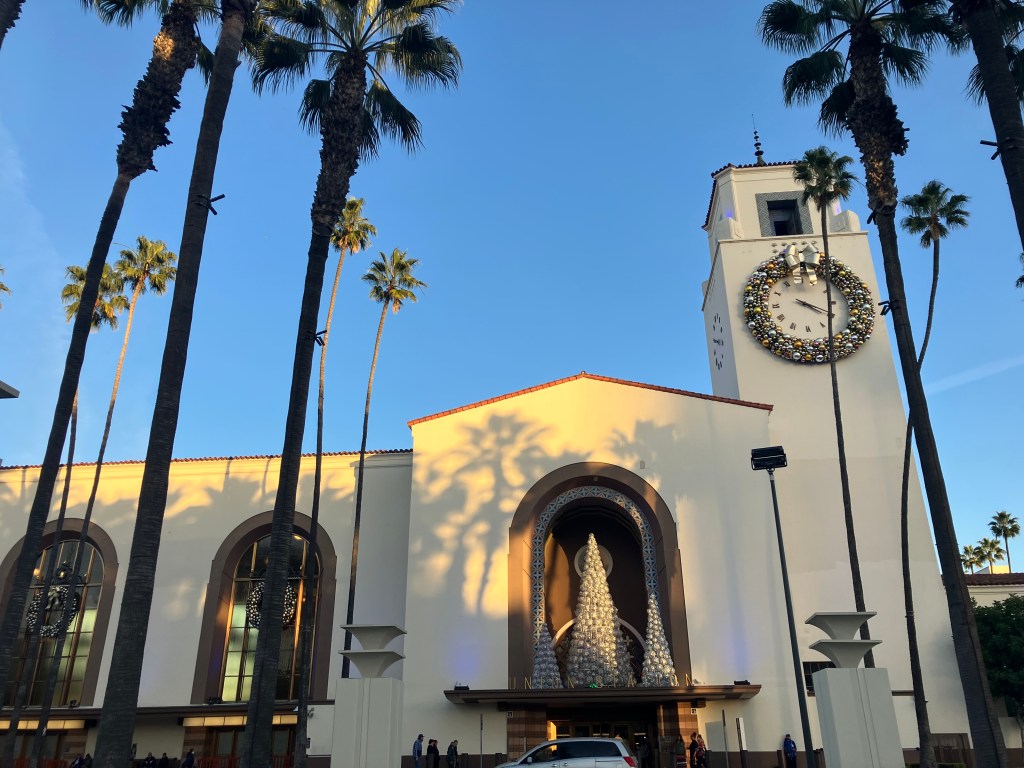
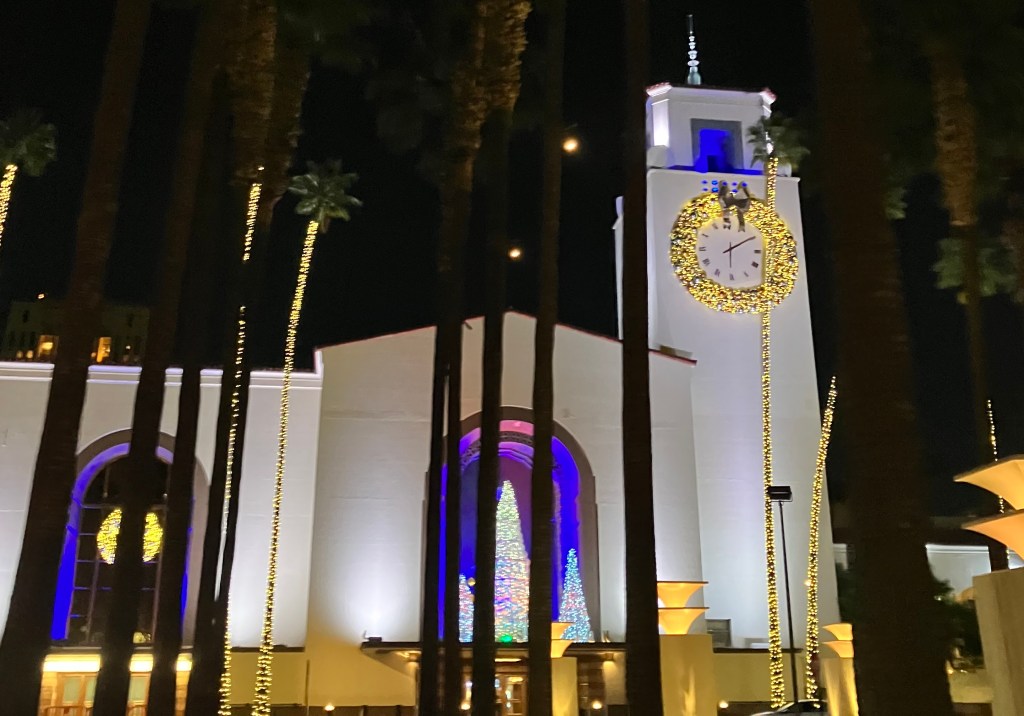
I’m not exaggerating about LA Union Station either. Wikipedia says it’s known as the “Last of the Great Railway Stations”, and I was genuinely blown away by how beautiful it was. But looks aren’t everything, LA is one of the few cities in the country to retain a genuinely useful historical terminal station. Metrolink runs six of its seven lines in and out of LA Union, and it’s the largest hub for Amtrak on the West Coast, with the regional Pacific Surfliner and the long distance Coast Starlight, Southwest Chief, Sunset Limited, and Texas Eagle. About 150 trains per day call at Union Station by my count, which makes me genuinely jealous of Angelenos.
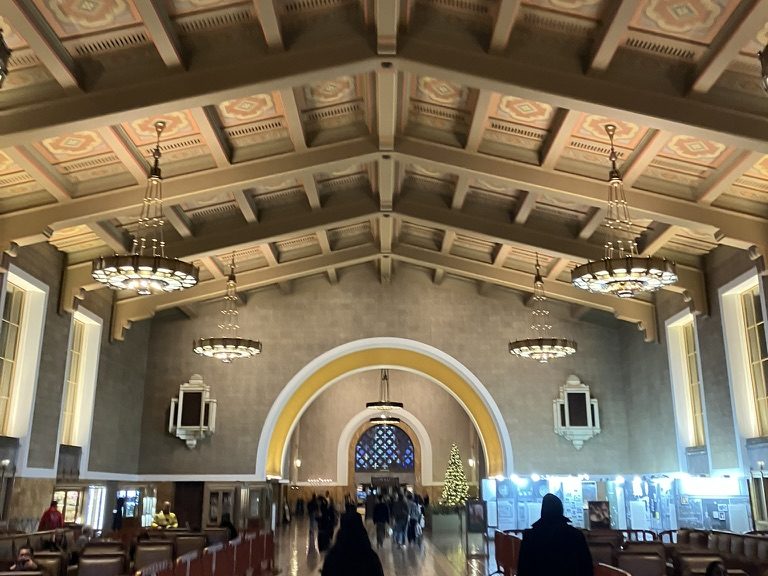
But not even the joy of a great train station can fix the extremely sprawly nature of Los Angeles. As much as I loved Pico and Sunset, they are still exceedingly dangerous streets for pedestrians, and drivers in Los Angeles are truly another breed. And even though I’m optimistic about the future of LA, I find it hard to believe that much will change. People talk a lot about how important it is to tie land use and transportation together in planning, and the extremely car oriented nature of so much of the Los Angeles metro area is reflected in far more than just wide roads.
It’s unfathomable to me just how huge Greater Los Angeles is. Lancaster to San Clemente is 132 miles driving, all of which outside a brief section of the Antelope Valley highway is all urbanized land. 132 miles gets you from Madison to Chicago! Growing up, we would drive 25 miles to my grandparents house in Sauk City and I felt like that was a long way to go. 25 miles driving in LA gets you nowhere, takes you a few hours, and presumably takes a few years off your life.
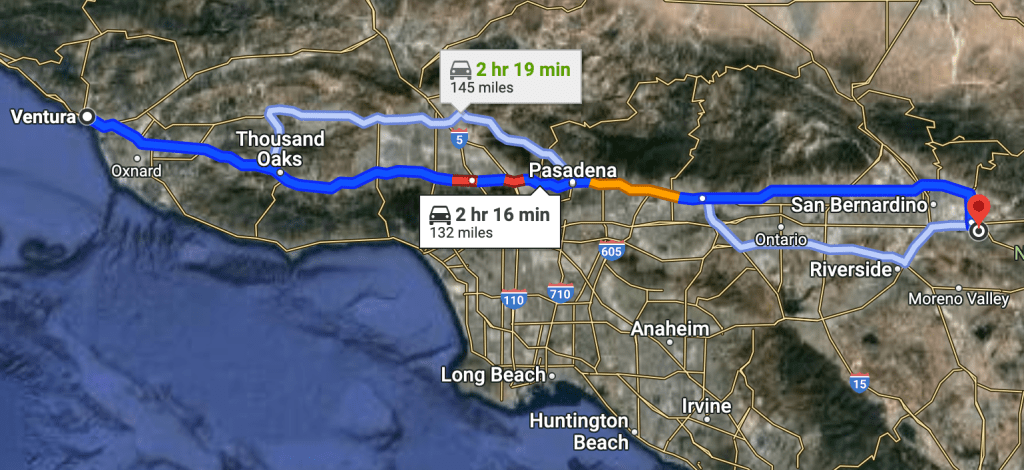
So what it all means is that LA is a great place to visit. There are so many interesting things to see, and so much great food to eat. If you want to get quality Mexican food, I imagine it’s the best place for that this side of the border (no shade to Phoenix). And if you like cool buildings, LA’s got plenty of that to go around too. If you like arts and museums there are plenty to satisfy you, even if I regrettably didn’t visit any.

There’s something for everyone – including me – but I could just never live in such a brutal place. But I’m so glad to have visited, and to have explored the city on my own terms. So much of what we all hear about cities comes through other people’s eyes. And if I were to believe them, I would have written Los Angeles off completely. I’m so glad I didn’t, and I look forward to visiting the city again in the future. Til next time!


 City Hikes
Leave a comment