
Shortly after moving to Portland, I watched a Wendover Productions video titled The Simple Genius of the Interstate Highway System. I had seen a few of their high production value educational videos before, and I was excited about one featuring a topic that I had a particular interest in. And whats more, the video features an analysis of a hypothetical involving Oregon! But my excitement quickly turned to dread, and it compelled me to leave a long comment detailing my annoyances with their analysis.
That was at least two years ago, but I still vividly recall reading bits about the history of Route 99, I-5, looking at if the Port of Portland was actually open for any shipping, and a whole host of other things. I wouldn’t call it that YouTube comment the spiritual beginnings of my blog, but I wouldn’t not call it that either.


What I found so frustrating about this video when I watched it was more some minor nitpicking, esoteric trivia, and a shallow analysis. Those things still deeply annoy me, but I’m not returning to a two and a half year old YouTube video just to rehash old complaints that any old 25 year old dork from Wisconsin could make. No, I’m looking at this entire experience with a set of fresh eyes and finding even more ways to be mildly frustrated with it.
So let’s begin with my original issues, shall we?
A Bad Understanding of West Coast Ports
The first issue I raise in my original comment is something that I found to be the most immediately glaring. In Wendover’s hypothetical, they were looking to ship manufactured products from Salem, Oregon out of the nearest West Coast port. A shallow analysis of Oregon’s economy non-withstanding, the team at Wendover choosing the port of Oakland for their example is extremely stupid. Yes, Oakland is a busy port – but would it surprise you to learn that there is a deep water port in the state of Oregon, less than 60 miles north of Salem? Or that there are two different ports in western Washington (Seattle and Tacoma) with more traffic than Oakland? Not to mention the three other choices for port in western Washington (Kalama, Longview, and Vancouver).
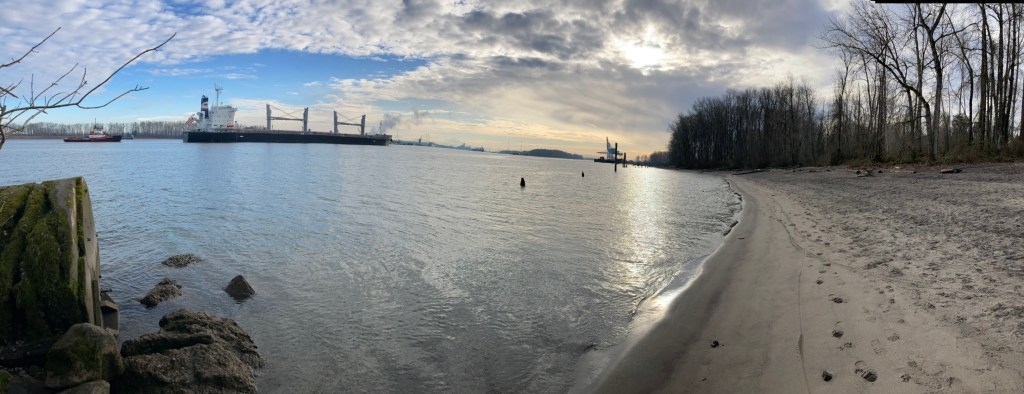
At first, I figured they excluded Portland because the container terminal has been out of service for years now. This isn’t mentioned (despite being interesting), and I could excuse someone for forgetting about the port of Kalama. But Seattle and Tacoma are major ports, both capable of handling larger ships than Oakland is! The port of Tacoma is less than 200 miles from Salem, while Oakland is nearly 600. In fact, I think this issue is probably more emblematic than anything of the issues in this video. It just makes no sense, and the deeper you look at it the less sense it makes.
A Bad Understanding of the History of US Roads
The video starts with a four minute monologue about Dwight Eisenhower’s famous road trip from 1919. The journey from New York to San Francisco took two months, and noted just how poor travel conditions were west of Nebraska. It’s relevant context, and is often cited as a birthplace of the Interstate Highway System – given Eisenhower’s particular interest in roads and his later championing of the Interstate Highway Act of 1956.
However, there’s an obvious thing missing here. In the years between 1919 and 1956, the US developed a system of roads that connected every major urban center with each other, with four routes connecting Illinois to Nebraska via Iowa. The US Highway System still exists, and you are undoubtedly familiar with at least some of its history. Route 66 famously carried migrants from the Dust Bowl to California, and earned a legendary status in the US cultural canon. And while these routes were generally developed by the states, there still was interstate and national coordination to do so.

But this is all mostly ignored, implying by omission that the road conditions in 1956 were just as dire as they were in 1919. In fact, many Interstate Highways (particularly west of Nebraska) simply subsumed existing US Highways. Even in Iowa, I-80 runs with the still-extant US 6 for large portions. It turns out connecting Davenport, Des Moines, and Omaha was always a priority for the state of Iowa, and this was reflected in both eras of road building. And the video makes a big deal about how the old highways were built and planned by states – ignoring that the Interstates mostly were too. The major difference is just that the federal government financed 90% of costs and set technical standards, while largely leaving the states to choose specific alignments as long as they fit the rough plan of where to go.
And it’s important to note, these original US highways primarily paralleled existing railroads. On the topic of Highway 6 in Iowa, it almost perfectly parallels the Rock Island mainline from Rock Island to Omaha. This meant that almost every small town in the US was (and still is) served by a US Highway, even if it was bypassed by state and federal highway planners in the 1950s. Towns that were served by a railroad but not a freeway had the most to lose, a point that someone could probably go in to far more depth on in a future blog post.

Here we arrive at an interesting point, one that is not brought up at all in the Wendover video. The Interstate Highway system brought economic ruin to many small towns, especially those that had oriented themselves to the roadside tourism in the prior decades. Because the Interstate Highway system was far more expensive in per-mile terms than the prior US Highways, not as many routes could be reasonably developed. The routes that did get built brought economic opportunity, though often at the cost of long standing urban form.
This generally meant that even in the rural places where development was supposedly most groundbreaking, the result were decidedly mixed. The real benefactors of the Interstate Highway system were not small town businesses or the median rural American, but land speculators, gasoline companies, and the large companies that have come to dominate the rural landscape in the following decades (Dollar Tree, Walmart, etc.).

This is all pretty bleak stuff, so let’s return to how this manifests in the section about exporting from Oregon. The lack of understanding of the history of the US Highway system is extremely obvious when detailing a non-Interstate Highway route between Salem and Oakland. Because the video has no understanding of the history of Route 99 (the predecessor to Interstate 5), the longer and more circuitous routing shown in the video avoiding the Interstate was found by simply plugging a route in to Google Maps and hitting “Avoid Highways”. This is shockingly shallow research, and if that’s the best that the team at Wendover can manage they ought to be ashamed of themselves.


This is all in the context of a video that is posturing itself as an educational video about US roads. The amount of information that is left out in favor of a rather unimportant historical event involving a dramatic army convoy across the country is staggering.
A Really Bad Understanding of the Impacts of Interstates on Cities
Near the end of the twenty minute video, the creators have a throwaway comment about how there were negative impacts on cities from the Interstate Highway System. A whole 37 seconds dedicated to the ravages of freeway planning in cities isn’t just frustrating, it’s intellectually dishonest – especially when the ad read at the end is 1:15. Literally every city in the nation was subject to extremely damaging freeway planning as a result of the huge cash infusion dedicated for road building.

The short term effects of this are extremely depressing, and being meticulously documented (especially as it pertains to the overt racism surrounding many intercity freeway projects) by Segregation By Design. Locally in Portland, I5’s routing in Albina has been the subject of consternation for decades, but little has actually been done to right the wrongs. And I405 displaced something like 1,100 households in the short 2.5 mile stretch between the bridges.
And while the short term effects are obviously bad, the long term impacts have also been bad. Traffic has not improved, but the sprawl encouraged by building freeways has effectively kneecapped public transportation outside of a few legacy cities that successfully resisted the worst parts of the freeway building bonanza. The effect of millions of miles of free to use roads spurred massive suburbanization, and drained cities of talent and taxes. But municipal finances are really the tip of the iceberg – even if NYC basically went bankrupt as a result of this process.

Sprawling land use patterns resulting from the highway bonanza made traffic in cities worse, thus creating the “need” for more and wider roads to handle all that demand. It’s difficult to wrap your head around how much land has been subsumed in the US for suburban development, but let’s take a look.
If residential densities had stayed consistent from the pre-Interstate era, there would be 42,500 fewer square miles of urbanized land. That’s enough land to house every National Park outside of Alaska (~31,000 square miles), with room leftover for the state of Maryland (9,707 square miles). Or enough room to house the entire state of Ohio. In any case, it’s a lot of land and none of this would have been possible without the Interstates.
Again, we have arrived at a very interesting and troubling place. Concluding that an area the size of the state of Ohio was functionally paved over because of policies like the Interstate Highway System feel me with a deep sense of anguish. And if we hope to undo the damage done, we need to be able to highlight exactly what has happened.
What Are the Stories We Tell Ourselves?
While the errors highlighted are egregious and largely unforgivable, the larger issue I take with this video is the framing. It’s bad enough to present the Interstate Highway System as good, but it’s made worse by the implication that it was inevitable. Citing* sources that say Oregon would lose 15% of its income if I5 was to disappear is to envision no other possibility for roadway improvements other than what we got in the 1950s and 1960s. It’s just not the question that anyone should be asking when evaluating the success or failure of the system.
*I can’t actually find the source on that 15% outside the video, and they didn’t respond to my email asking about it.
There’s a pervasive notion that cars just so happened to supplant trains and public transit as the de facto way to travel in the US; that it was some inevitable result of the historical circumstances of mid century America. In reality, auto manufacturers waged sophisticated propaganda, including the creation of the entire modern profession of traffic engineering. And it’s this propaganda that ultimately is why so many US transit agencies struggle for ridership, and why your bus gets stuck in traffic. Had normative street uses in the 1910s prevailed, transit would have been prioritized and we all would have been better for it.

If the story we tell ourselves as a society is that the Interstate Highway System is “Simple Genius”, rather than the end result of decades of dedicated carmongering propaganda then we have little hope for the future. If you haven’t noticed, there is a dire need for a more sustainable future and its clear that unlimited ownership of private automobiles with unfettered access to as much road space as they need can’t be apart of that.
If we are to believe what the YouTubers are saying, that educational content of this kind is simply an expression of intellectualism then we need to demand better. The responsibility of intellectuals is to speak the truth and expose lies, and this video has little in the way of truth and nothing in the way of exposing lies. Maybe now I can put to rest nearly two and a half years of being annoyed about it.
 City Hikes
Leave a comment