My hometown local transit agency recently opened a Bus Rapid Transit (BRT) line, and since I was home for a few days I figured I’d give it a ride and talk shop. If you can’t be bothered to read the whole thing, the answer to “is the new bus good?” is yes, but it could be better. With that out of the way, I think it’s useful to start with a (brief) BRT overview before we get into the specifics of the Metro Rapid A line.
BRT: What Even Is It?
I won’t bore you with the mundane deatils of the ITDP BRT scorecard, but in essence the difference between a bus and bus rapid transit comes down to having an exclusive right of way. A lot of hay is made about nicer stations, and larger buses, but the “rapid transit” aspect of BRT is really related to operating conditions.
In the 1920s, when the Van Sweringen brothers developed Shaker Heights with the Shaker Rapid, it was only really “rapid” because it had its own right of way from the leafy new suburb to downtown Cleveland. Was their approach to buy out an entire railroad empire to develop it justifiable? Maybe not, but the core tenant of rapid transit is speed, and speed comes from having as much control over the operating environment as possible. Every other aspect listed by Madison Metro should be understood as a “nice to have” – things that are still critical to providing transit riders with a quality experience, but not critical to the idea of rapid transit itself.
BRT has been all the rage in US transit planning for a while now since it’s cheaper than more robust rail-based rapid transit. Unfortunately, it’s more common to see projects die a death by a thousand cuts before any ground is broken. In Portland, the admittedly nice FX2 was supposed to be a full BRT line on Powell and Division, but ended up being just a bus in mixed traffic west of 205. According to one of my professors who worked on the project, this was done because Powell is just “too important for drivers”. Suffice to say, this would be classified as “Not BRT” by any sane person.
The Good
I only was able to squeeze two rides in – both originating at the University Bay station (the closest to my parents house). One went west, to Jack & Sarah’s house while the other went east, to Willalby’s.

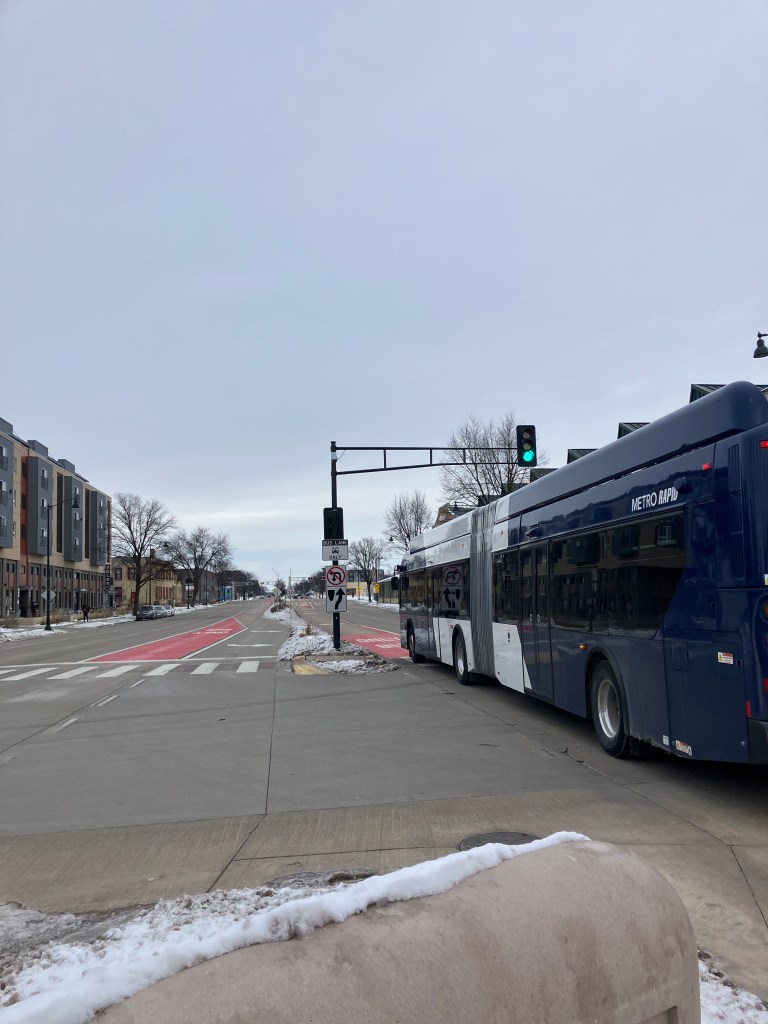
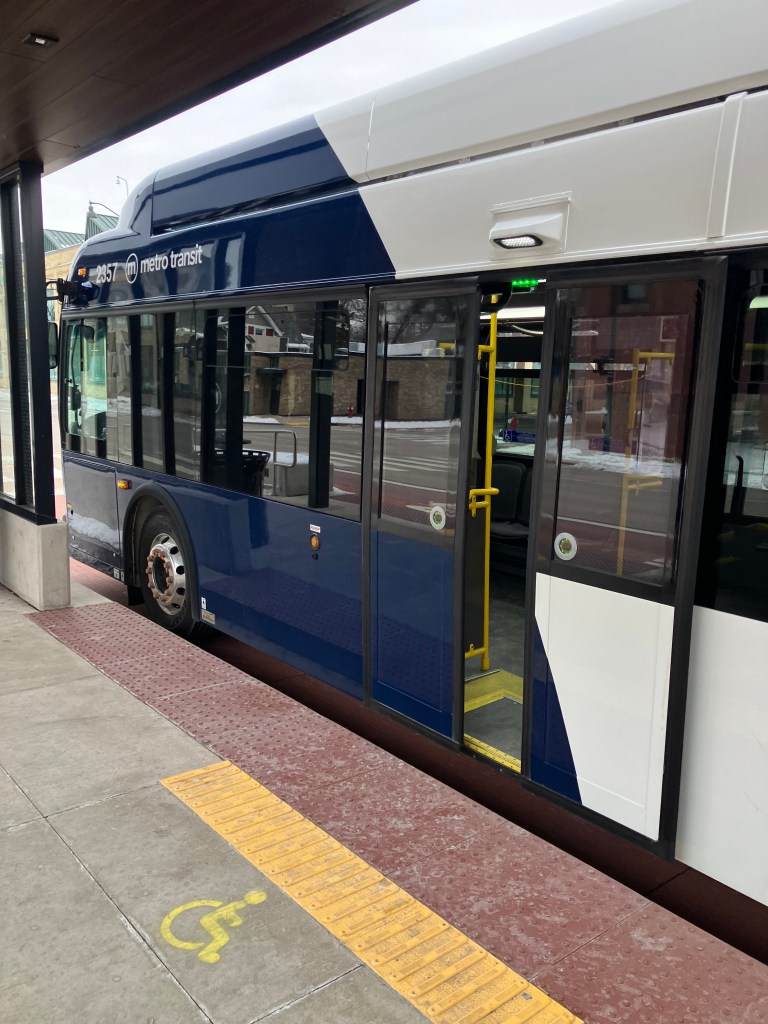
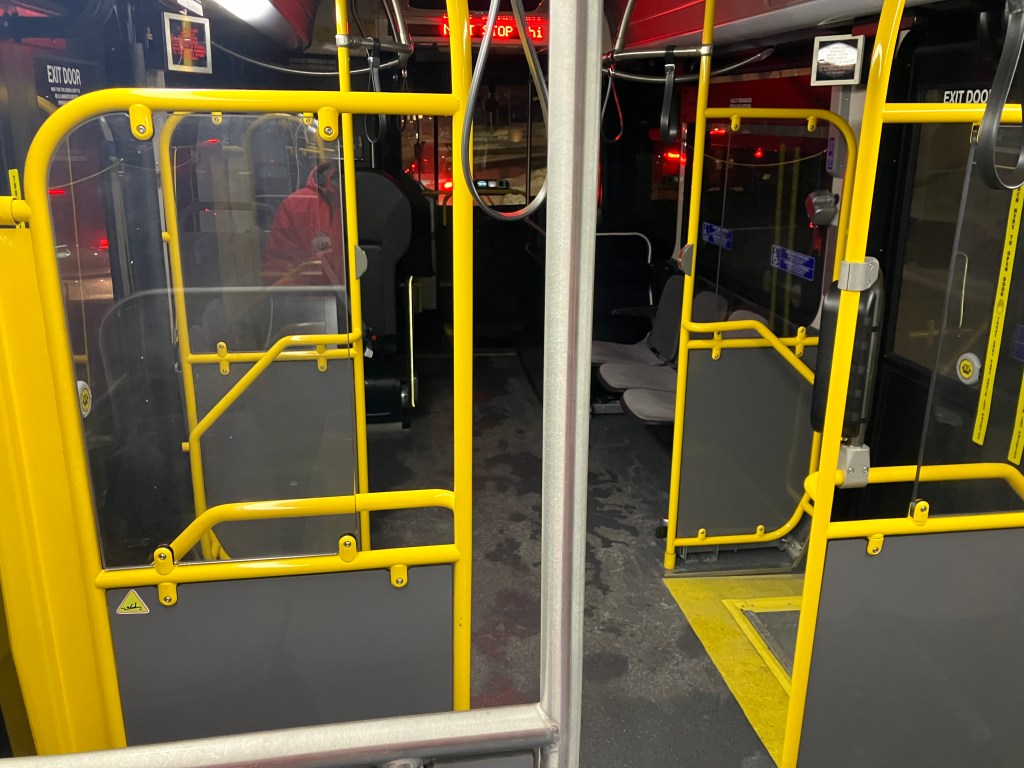
I was impressed with the buses themselves – you could really tell they were electric based only on the acceleration – and the stations were lovely as well. It’s nice to have a real solid bus shelter. And the trip time was also nice and speedy, despite (spoilers) a general lack of dedicated right of way. But I was riding in the off-peak, so of course that’s hard to judge. Though Metro does say in this FAQ that the dedicated lanes and signal timing upgrades to the routes will save them $250,000/year, so it’s definitely a big upgrade.
All of the “soft” aspects of the ride – figuring out the schedule, payment, and route – were extremely easy. Granted, I’m a bus wonk, but it’s still nice when it’s easy to figure out when your bus is coming.
I don’t have a great point of comparison on how things were before though. Despite my current status as a transit wonk, I didn’t become a habitual bus rider until I lived in Portland. But if the buses and shelters were in Portland, they’d be better than anything we have now. Which is great for Madison, but maybe not so great for Portland.
The Not So Good
Unfortunately, knowing when my bus was coming really mattered. One of the core tenants of good public transit is the idea of “show up and go” service – where missing one bus or train isn’t the end of the world, and transfers are easy. While the advertised 15 minute service frequency is nice, it also ends at 8 PM on weekdays and is 30 minutes all day on Sunday. People still want to go places on Sunday, it would be nice if the bus was a better option.
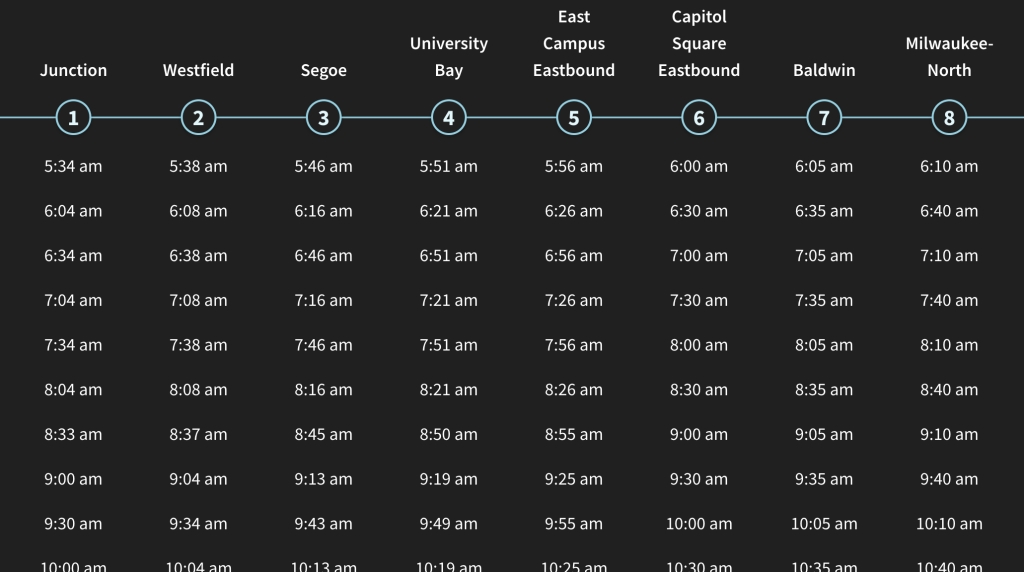
Of course, Metro has limited financial resources compared to a place like Portland. With just about $75M/year, it would be unfair to expect transit result on par with TriMet ($1.8B/year – 24x), but what about compared to LTD in Eugene? We’ll come back to the Eugene comparison later, but that fact that they have about double the budget of Metro really speaks to the general lack of funding available in general.
But still, if Metro can’t manage to run service that approaches a useful frequency for the general public (10 minutes or better) on a newly built BRT line, it’s probably time to have a discussion about some kind of new funding mechanism for public transportation in Madison. Oregon is no shining state on a hill, but the mechanism for creating and funding transit districts is pretty good. Nothing like some time away from Portland to make me appreciate the 0.8% payroll tax enabled by ORS 267.
The Mildly Concerning
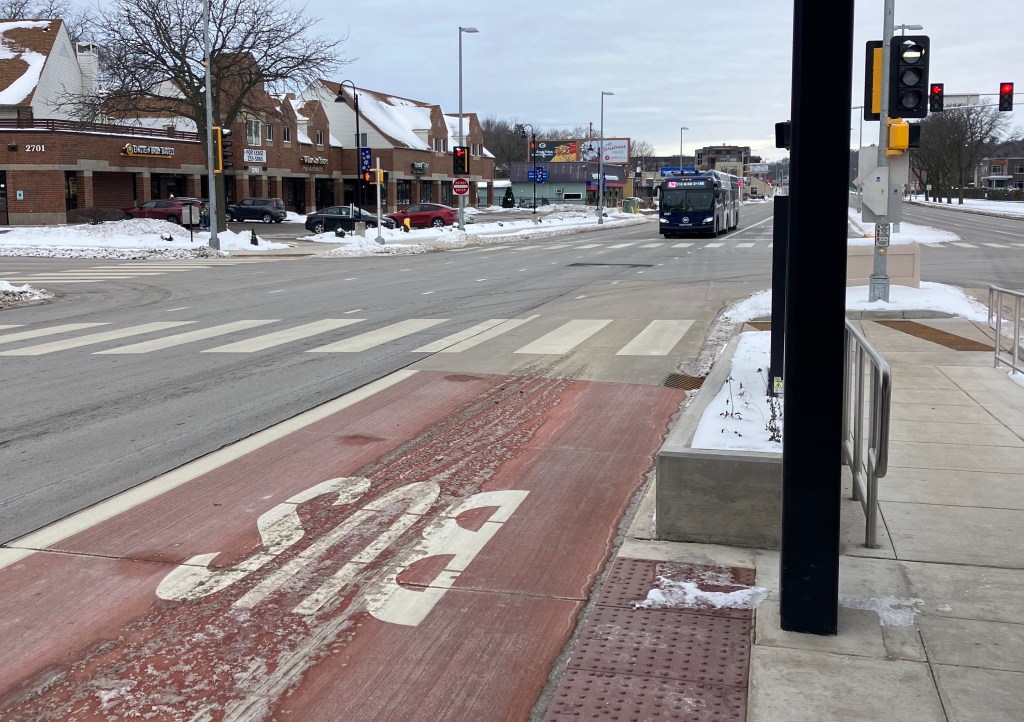
Ultimately, not running enough buses on a given route is a fixable problem: just run more buses. My biggest issue with the new BRT in Madison is really the lack of quality bus-only infrastructure. Even just a cursory glance betrays a lack of dedicated infrastructure. But as ever, the devil is in the details and there are far too many places where “Center Bus Lanes” really means “mostly a bus lane, but with left turns allowed” (see these plots if you want to be disappointed).
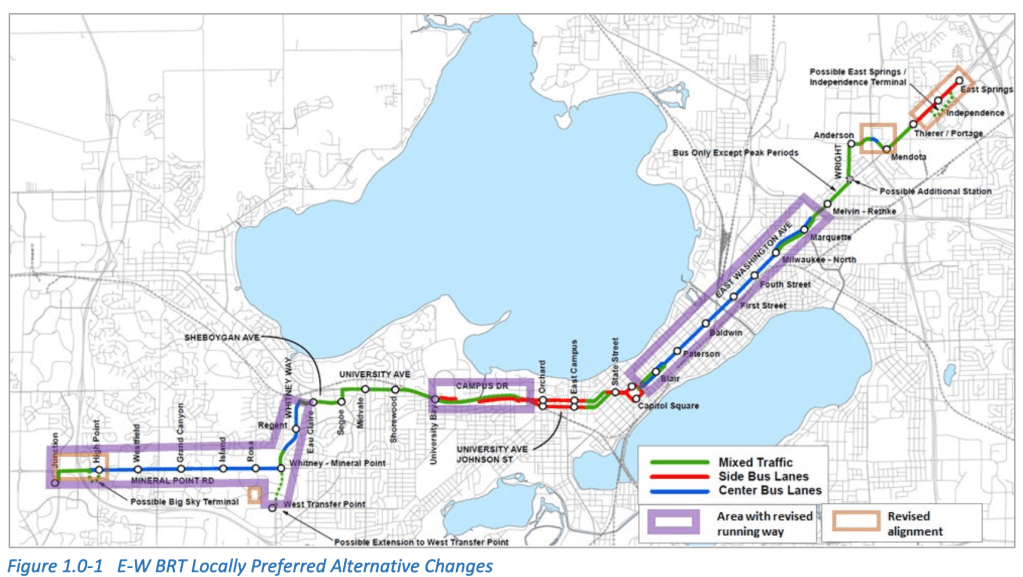
The most frustrating part of all of this is the mixed traffic character of the route on the near west side. For the uninitiated, University Avenue is 6 to 8 lanes wide, and yet this project was still unable to manage to reallocate any space to the bus. And sure, the west side of Madison is generally more suburban in character but this is also serving a recently redeveloped corridor and some major regional employers (like the hospital). And don’t get me started about the lack of bus lanes near the corner of State and Johnson.
It’s hard to feel good about a newly built BRT line that doesn’t even bother with the bare minimum of “rapid transit” for half the route. But that’s hardly news in the world of transit planning. Bus rapid transit is basically never implemented in the US in a way that even remotely resembles rapid transit. It’s up to you if this is a problem or not. What is a problem is the frankly baffling decision to create a dedicated bus lane except in the peak hour on East Wash.
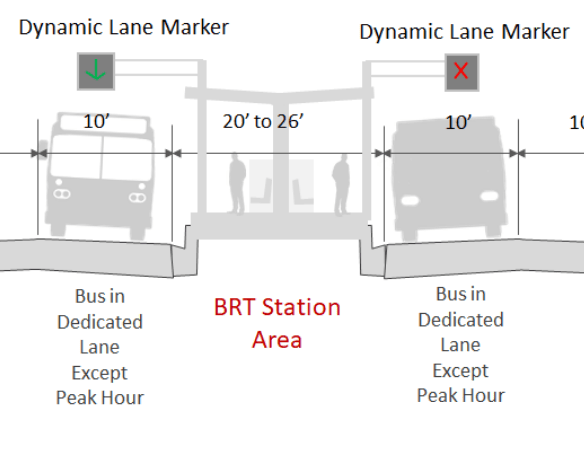

Maybe this is obvious, but peak hours are when the bus lane is needed the most. The primary planning consideration for East Wash seems to have been car travel, which given its status as a state highway is hardly surprising. But it really undermines the project, and all of the operational, travel time, and consistency benefits of having a BRT project start going out the window when you compromise like this.
I understand the political realities of working with a very highway focused state department of transportation. But I find it extremely disappointing to see the phrase “reduce capacity” in the context of a segment of a transit project that will (eventually) see two or more BRT lines running on it, and that already sees peak hour bus service in the 10 to 12 buses per hour range. Given that an articulated bus has a capacity of ~125, about double that of a standard bus, this project adds something like 750 extra bus seats per hour. This is on par with a general travel lane, and potentially more if traffic conditions are poor. It’s not a capacity reduction if more people can travel than before!
Also, for the record AADT on East Wash declined by 15% from 2015 to 2018. I didn’t have a good way to get that in, but I think it matters. In the last 10 years, the corridor has seen explosive growth in residents, but travel in cars along it has remained static or declined.
What Does It All Mean?
So was this all an expensive boondoggle at the expense of the humble taxpayer? No. It’s definitely an improvement from the prior conditions, it just suffers from being a BRT project being planned in the US in the 2020s. Even though there is demonstrated need for faster and more reliable transit service, and even though this is the busiest transit corridor passing through some of the densest parts of the state (in terms of both residents and jobs), there is still no political will or mechanism to properly allocate road space to transit riders.
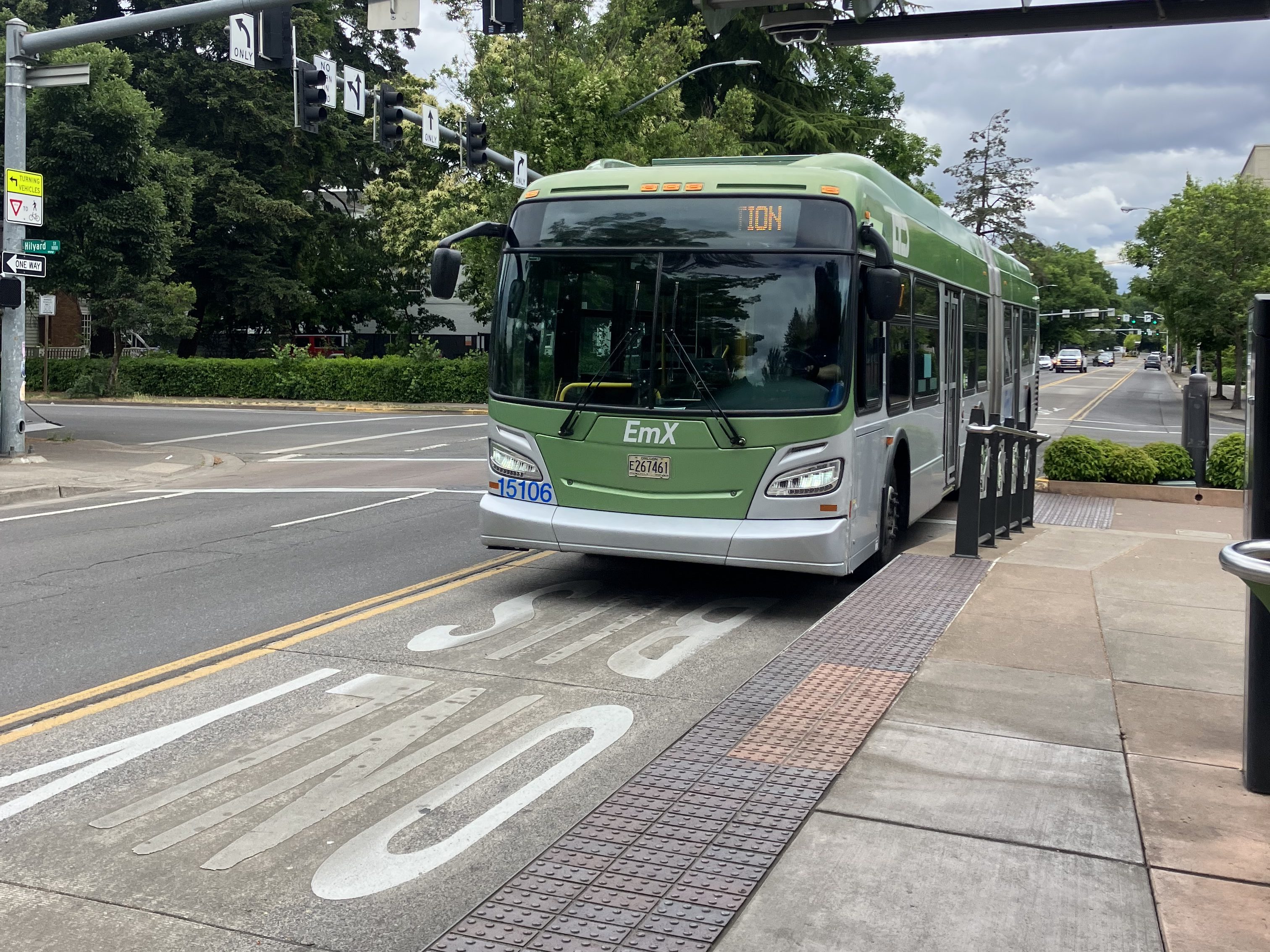
As you all are surely aware of by now, I’m something of a Eugene, Oregon fan. Maybe it’s because Olivia went to school there, or maybe it’s because it’s a place that reminds me of Madison, but it’s a really lovely little city. And way back in 2007, they managed to create one of the best designed BRT systems in any city of any size in the country. Even if the Emerald Express lost out to London’s congestion pricing scheme for the 2008 sustainable transportation award, at least they were in the conversation.
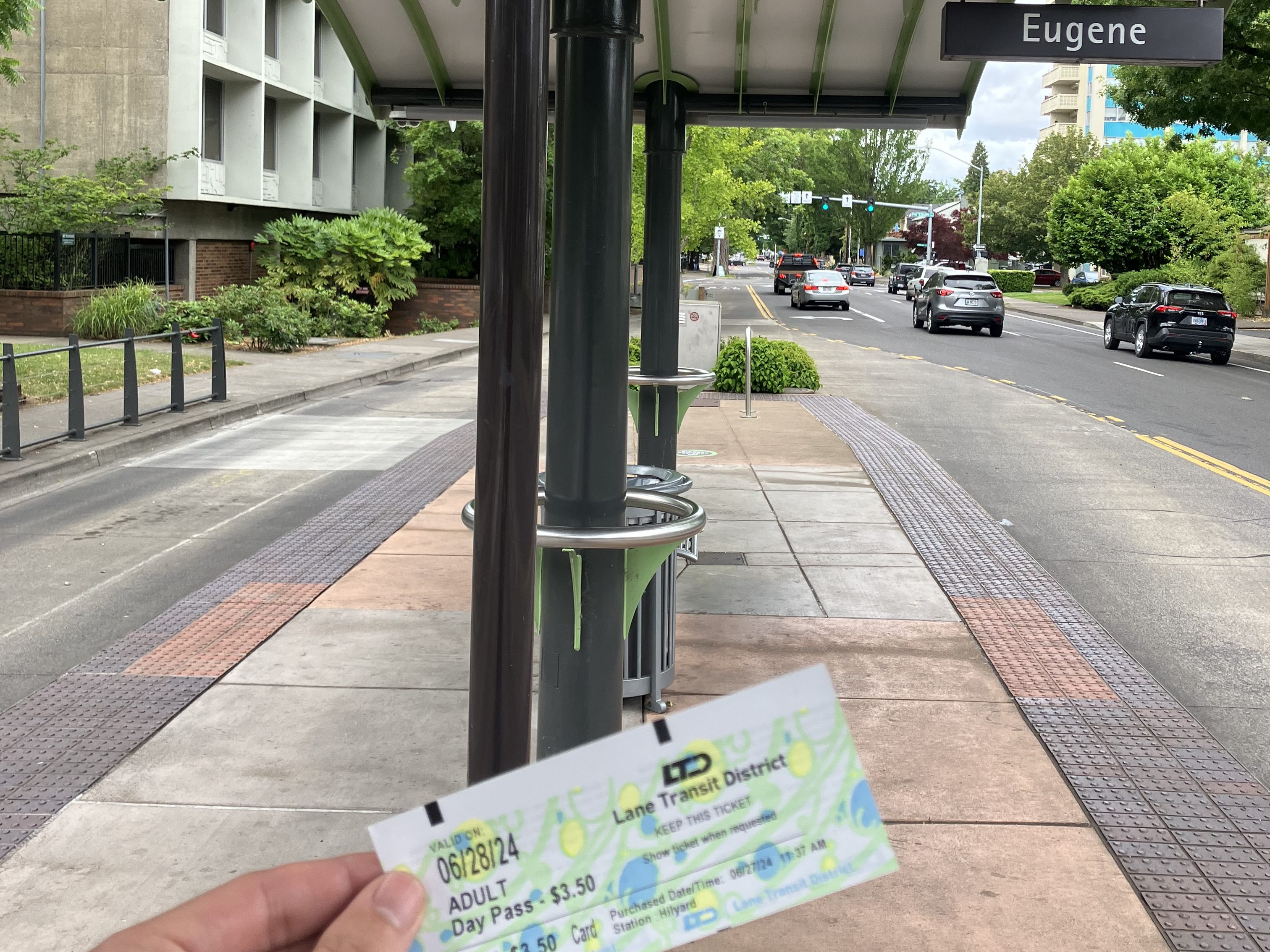
And it wasn’t just because they called the EmX “bus rapid transit”, it’s because they built a line that actually lives up to the title. It has multiple median running busway alignments. It has dedicated right of way over essentially the entire route. And it was all done in a city and metro region that basically amount to “smaller version of Madison”, and it was done almost 20 years ago. Of course, there are some compromises in the EmX route. There is a mixed traffic segment on highway 99 between Eugene and Springfield, and much of the center running busway on the northern edge of the UO campus is one way. But neither of these are as critical of issues as having mixed traffic in peak hours in the core of the route. Plus, LTD manages 10 minute service for most of the day, so it’s clearly working well enough for them.
I think the EmX is an illustrative example of how small regions can benefit massively from quality transit projects. Ridership doubled in the years following the project, and remains high to this day. It turns out improving bus service on the major corridor in town makes a huge difference, especially when you directly serve a ton of college students.
So what it means is that while the Metro Rapid A Line is a great bus, and a marked improvement from the previous service, there are glaring holes. Some of them can be filled easily, but others will remain. As long as the City and State remain committed to “no reduction of vehicle travel lanes on principal arterials”, high quality rapid transit will remain elusive. The incrementalists may believe that this project is just the first step of many on the way to a pro-transit future in the City of Madison, but I fear that it delivers too little to make the impact that’s needed.
And now, for the most useless ranking in the world: modern light rail lines in the US that I’ve ridden. On a scale of Portland Streetcar A/B Line (very bad) to the Seattle Link Line 1 (just build a metro), I’d rank it as an LA Metro E Line. It’s good, but there’s too much street running, not enough service, and a handful of baffling planning decisions. But still, if you’re in Madison its worth checking out. Thanks for reading – til next time.


 City Hikes
Leave a comment