

As I wrote in my last post, I’ve been doing a once a week commute to and from Seattle. Frankly, it’s been exhausting, but it’s also been a once in a lifetime experience for the kind of transportation wonk that I am. Of course since I’m staying in Issaquah, I’m not doing the super part of my super commute every day, but given that since the pandemic super commuting has been on the up and up, I feel like I’ve gotten some interesting personal experience to something which is increasingly important in the geographic structure of the modern city.
Up front: I’ll be a bit fast and loose with the idea of a “super commute”. The general cut off that I’ve seen is 90 minutes one way, but I also think trans-metropolitian area commuting is a major aspect of the super commute, and the easily available ACS tables only report commute times up to 60 minutes plus. I think all of these things are relevant aspects of the super commuting landscape, and I hope you’ll forgive me for a slightly squishy definition.
My Commute is Hard on Me

Since moving to Portland, I’ve been definitively shifting into the “hyper local” world. As such, the hardest thing about doing a once a week commute to Seattle with a few days sleeping away from home is that I’ve lost my local routines. I haven’t worked a shift at the co-op since starting the new job, and I’ve barely had the chance to do my usual moseys to the local bakery when we run out of bread. And that’s before we even consider the fact that I deeply miss Olivia and the kitties when I’m up in Seattle!
But that’s really just lifestyle stuff, and given the move to Seattle is inching closer by the day, it’s really nothing to be too torn up about. It’s also worth saying that I’m in what we should call the “lifestyle” bucket of super commuters. I’m doing this mostly because moving is a pain and because it gives Olivia time to find a new job (and because it meant I could figure out if I liked my job enough to justify the move).
There’s a more nefarious form of super commuting, one which doesn’t get breathy think piece reviews about the people who live in LA and work for an AI marketing start up in San Francisco and fly once a week between the two places1. Obviously that sucks in its own way – we probably shouldn’t have people destroying the planet with airplane emissions to get to their job destroying the planet with AI slop – but the larger super commute issue is for lower income earners forced to endure long commutes for relatively menial jobs. But to get a handle on this dynamic, I think it’s useful to take a longer view.
The City, Transportation, and Class Segregation

In the era of the Dickensian slum, workers clustered near their factory jobs in outrageously overcrowded tenements. The basic reason was that they had to walk to work, and you can only walk so far. This setup had obvious issues -ranging from the criminally high prices working class folks would pay, to the self-explanatory health crises in an era before municipal sewage. The streetcar revolution moderately changed this dynamic, but at least in the US where the typical streetcar operator was privately owned, workers were not necessarily able to afford fares.
In the medium run, this lead to places like Milwaukee having bona-fide socialist leadership supporting the mass suburbanization of the region as a means of breaking the monopoly power of TMER&L and the various downtown landed interests2. As the mass adoption of the automobile and socialized costs for roads combined with the one-time usage of vast tracts of newly accessible land (spurred by the backing of the fixed-rate mortgage by the Federal Government), the so-called “Milwaukee Strategy”3 was a qualified success for the White working class.
Of course, this qualified success for one strata of the working class essentially left out anyone who couldn’t qualify for a mortgage – and given that Black people4 were systematically excluded from this until the point when most of the cheap land had been developed, the underlying issues of slum-level housing in the US were never fully addressed. And since the automobile-only transportation policy was such a “success”, most cities let their public transit system die a never-ending death by a thousand cuts, further isolating the poorer segments of society into racialized slums.
As American cities have transitioned from this era into one marked by gentrification of spaces within central cities, the former slum districts have largely become unaffordable for their former residents5. For the most part, this has meant a migration of poverty from inner cities into more suburban areas – in Portland, its this process which pushed Chinatown to the Jade District on 82nd, and that has seen areas between 82nd and Gresham (as well as St. Johns/Portsmouth) become the most racially diverse parts of the city.
Bringing things back to super commuting, this process of demographic shifts within cities has meant that a significant burden of super commuting falls on the poorest segments of society, who are now located further from major job centers. One way to look at this: in the Portland Metro Area, the median earnings of a car commuter are almost 50% higher than the median earnings of a transit commuter, and the transit commuter is 4x more likely to have a commute over 60 minutes6. And while trans-metro area super commuters are more likely to be higher earners7, it stands to reason that low income super commuters rely on the patchwork of county-level transit systems to piece together a torturous trip while high income super commuters drive their Tesla or Rivian that they got the government to pay $10k of via a tax break.
This kind of thing is why I find the sort of breathy “future of work” stuff to be a bit flat8. The thing that needs analyzing with regards to super commuters aren’t people like me – the higher wage, partially remote workers who can bang out a blog post on the train ride home. No, the real issue is painfully long commutes for transit riders that could be made almost instantly better in some places with better fare policy and relatively minor investments in better service.
Do We Even Want to Solve This?
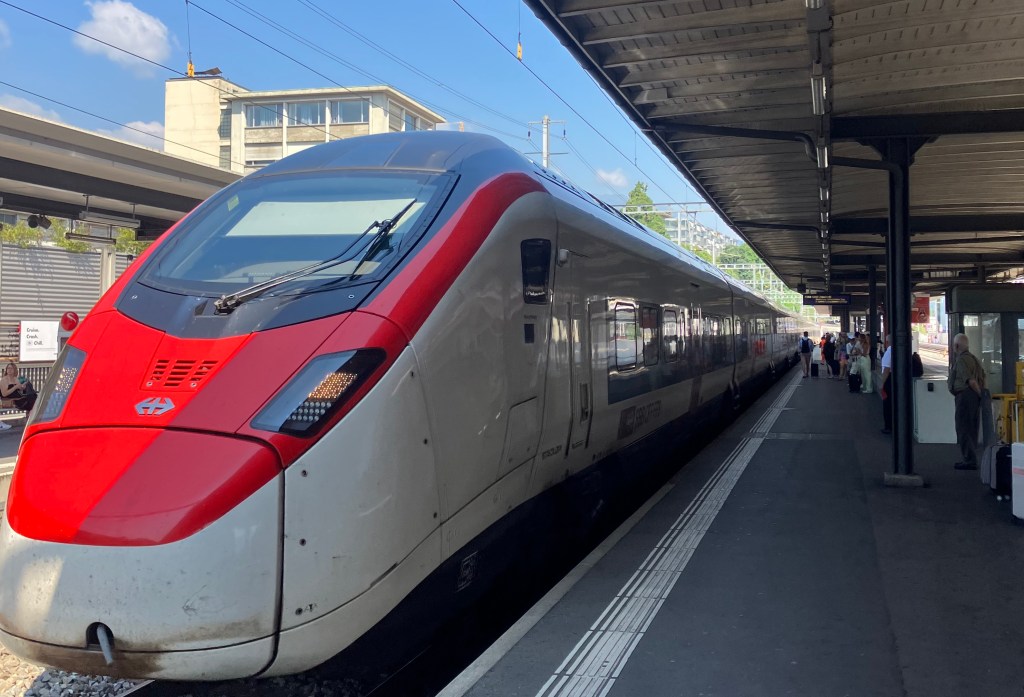
Something I often consider is the impact of a Shinkansen style train from Seattle to Portland on the Portland housing market. At Tokyo – Osaka speeds, the trip could easily be made in an hour, and I don’t think its unreasonable to think that a cheap and frequent high speed train would draw a significant number of Seattleites to move south. Given that we seem categorically uninterested in non-market housing, if history is our guide we should expect a fringe area being brought into the commute shed of a much more expensive place with much higher wages to lead to a price increase in the former hinterland. After all, that’s essentially what has happened to every town that’s now a suburb in a major metro. How much was rent in Issaquah before they built I-90?
While I remain extremely excited about the prospect of high speed rail, I am loathe to admit that it’s no panacea to the issues related to super commuting. Like yes, it would be more environmentally friendly, but as long as our housing and transportation systems interact in a way that price discriminate against the working class (that is to say: they work as intended in a competitive market), the issue of people who can least afford a long commute being burdened with one will be an issue.
And it’s easy to speculate about some ideal past technical solution – rent control and strong legal protections for Black Portlanders in Albina in 1989 – but the crux of the issue isn’t so much technical as it is social. When our society values profit over the right for someone to live in the place they’ve always lived, it may make for an “efficient market” or it may “maximize utility”, but why do we even want those things? Maybe you have an internal justification as to why a market society is a net positive, and maybe you have reasons to believe that applying those principles to housing will be a net positive, but I find them hard to justify.
I’ll spare any further discussion of the general issue of the housing crisis, but suffice to say it’s fair that we collectively seem to not care much about this issue. As long as impersonal market forces rule the basic aspects of your life – like where you live and work – there’s always the chance that you’ll end up thinking you can make the long commute work. The only thing that new technology brings is new geographic fronts for this decision to occur on, and for what its worth I think it’s not worth it.
If you can afford to take a job far away from home, and you can afford to move, you really should. Life is too short to be spent going endlessly back and forth between two places, and for what its worth I think the perfect commute is about 20 minutes on the bus, with ten or so minutes of walking. That’s enough time to get a bit of reading or pondering in before getting to work, and enough walking to keep you fresh. I’ll also accept a 30 minute bike ride.
Footnotes
- Read this for free brain worms. Nothing is worse than what this person does for work. ↩︎
- How much you consider the Sewer Socialist era in Milwaukee to be “bona fide” depends on your particular ideology I suppose, but Frank Zeidler and Dan Hoan were both very vocal in their support of Milwaukee’s freeway plans ↩︎
- I’m probably the only person who has called it this ↩︎
- The post-WWII housing world wasn’t great for other People of Color, but as was usual in US history, anti-Black racism was the most pervasive and driving aspect of the racialized discrimination in housing, especially at the Federal level. ↩︎
- This is a vast, vast oversimplification and this dynamic is more of a broad rule than a hard and fast thing. And for the most part, this dynamic is more present in cities like Portland and Seattle than Milwaukee or Cleveland. ↩︎
- See ACS table S0802. Most US metro areas have even larger spreads in income between drivers and transit riders. Seattle, Chicago, and New York are notable exceptions – and New York as always skews the national transit picture to such a degree that it’s not worthwhile to look at national numbers. ↩︎
- This is based primarily on a quick read of LEHD data. For example: 19.9% of Salem MSA residents commute to the Portland MSA, but 24.3% of higher income Salem MSA residents do compared to 19.5% of lower income residents. There are similar dynamics between Olympia and Seattle. ↩︎
- This one falls flat for a funny reason: they have no idea what a travel nurse is ↩︎
 City Hikes
Leave a comment