On most Sundays since moving to Seattle, Olivia and I have been getting hikes in. Since it’s still car-free 20261, this has meant taking our local buses to the various larger parks within Seattle (and on occasion, a Sound Transit bus to Issaquah). Interestingly, we are almost always the only people I see doing this. Despite Seattle’s relatively healthy transit commute mode share (15% as of 2024), and despite the dizzying array of great urban parks, and despite being one of the most hike-oriented places in the country, and despite excellent transit service, getting a nice hike in by bus isn’t really on our collective radar.
I’m of the opinion that there are two reasons for this. The first is that people don’t conceive of a walk in a city park as a hike, and the second is that people are generally unaware that transit is an option for doing hikes. So let’s start with the first point, and work our way to the second, and finish things off with a quick overview of the state of transit hiking in Seattle.
What Counts as a Hike Anyways?
If you were to ask an outlet that trades in selling people goods for hiking2, they would probably say that terrain and environment play a decisive factor. Hikes conjure up “images of steep and rugged trails with dense forests or remote vistas” while walks are “associated with easy to moderate terrain, often on paved paths and trails. Think: neighborhood stroll [or] urban trails”. I find this to be a disingenuous distinction. Since walking is so fundamental to the human experience3, it feels like the real distinction is one of mindset or environmental setting.
Indeed, it is also a cultural distinction. Across the pond, the term “hillwalking” is generally used in place of what an American would call a hike. Hike is also used, but “walking”, “hillwalking”, and “rambling” are much more commonly used in the UK to describe what most Americans would call a “hike”4.
Linguistic quibbling aside, this is ultimately a subjective question. But most people I know in the Pacific Northwest would not use the word “hike” to describe walking in the vast majority of city parks. In Portland, I would only ever heard Forest Park as a place where one would “hike”. I’ve got much less experience in Seattle, but I suspect that “hike” is generally reserved for the sort of places where you drive your car to a trailhead outside of the city. No doubt if a place is considered to be “wilderness” you are “hiking”.
But as I’ve touched on what feels like 1,000 times, this notion of wilderness is ultimately socially constructed – and thus inexorably linked to the city the hiker seeks to escape. Of course, this linkage does not preclude you from legitimately enjoying the places designated as wilderness, but I think when you frame things this way, it makes it easier to imagine hiking in Seward Park or Discovery Park as homoousion (“of the same stuff”) to hiking in Olympic National Park.
Sadly, my blog is not really a cultural force5, and most people do not engage with the natural areas down the road as they do with the ones a two hour drive away. In some senses, a “transit accessible hike” is almost entirely impossible to imagine, as public transit is something inherent to the city and hiking is something inherent to outside the city6. I find this to be deeply unfortunate, especially since Seattle has such a great parks system.
Buses Serve Parks Too
Even if you’re willing to concede that a hike within the context of a relatively small park is just as good7 as one out in the so-called wilderness, it’s still another step to imagine yourself taking a bus to the park. And to be sure, there are exceedingly few parks where getting there on a Sunday morning could be conceived as easier than driving.
Take Discovery Park. It’s at least 45 minutes by transit from our house, and the 33 which serves it directly only comes once an hour on Sundays. On the other hand, it’s a 25 to 30 minute drive. But consider that I’d much rather spend 45 minutes on a bus than 25 in a car, especially if I’ve got a good book to read. And it means that on the way home I can take a quick jaunt up Madison on the G for groceries8.
I won’t attempt to claim that you will save any time, but if you want to be maximally efficient with your Sunday leisure time, maybe don’t do that. It’s just more pleasant to ride the bus. And at least in Seattle, every major park that you’d consider doing a hike in is directly served by a bus. Don’t believe me? Here’s a list (source: me).
- The Nose (Seward Park): Route 50
- Puget Park/West Duwamish Greenbelt: Route H, Route 125
- Ravenna Park: Link 1 Line, Route 372
- Discovery Park: Route 24, Route 33
- Washington Park Arboreteum: Route G, Route 11, Route 48
- Carkeek: Route D, Route 28
But there is one actual benefit you can have from riding public transit to hike: you are freed from the tyranny of having to go back to your car. This frees you to explore trails that aren’t natural loops without doing the repetitive out and back9. A few weeks ago, Olivia and I took Link to Ravenna Park, enjoyed a nice stroll through the ravine, then took the 372 back (to a different Link station). I’ve even got a nine mile hike from Bellevue to Issaquah via Cougar Mountain teed up (more on that later). If you have a car, doing this kind of thing is exceedingly annoying – requiring that you do a ridiculously time-intensive car swap/park thing.
I think this comes down to an inherent aspect of (White) American culture. Even if you take the bus to work, and even if you support transit at a fundamental level, the kind of trips you use transit for tend to still be narrowly defined. I’ll pick on Nathalie Graham’s very good article for The Stranger discussing Routle here to show you what I mean (for the unaware: Routle is Wordle but for bus routes, and you can choose Seattle, Portland, Oakland, or San Francisco as of now). In the article, Graham says: “I was excited to play. And then I lost. Twice. It turns out I only know the buses I know from the four Seattle neighborhoods I’ve lived in.”
Of course, outside of people like me who take a sick pleasure in being able to navigate the transit system on the fly without the help of a computer, this is hardly a surprise. Most people are more familiar with the streets in their neighborhood than the ones across town. But I also think it reveals that the author uses transit primarily for a relatively small set of trips – ones that involve a commute, or ones that are in the neighborhood. They probably aren’t riding the 33 to Discovery Park, or the 50 to Seward.
And this extends beyond one Stranger article. You’re probably aware that I ride the 36 very often, and my anecdote of note lately has been that it’s rare to see another White person on the bus outside of commute hours. During commute times, I would say that the 36 more or less reflects the racial demographics of the neigborhood – a roughly even split between Latino, Asian, and White. But for whatever reason, this noticeably shifts at other times.
I can think of dozens of reasons why this may be the case10, but I think that it matters in the context of hiking in part because hiking is, and is perceived to be, a generally White cultural institution. If there are relatively fewer White people who take discretionary trips via transit, it’s hardly surprising that people don’t really consider riding the bus as a means to participate in hiking.
There are a lot of reasons why I think this needs to be reconsidered, but I’ll leave you with this 2023 piece from the International Examiner as a jumping off point.
A Quick Guide
So now that I’ve convinced you both that your next hike should be in a city park, and that you should take the bus there, how do you decide on what park? Well, this will depend on where you live. Unlike with driving, where your personal location doesn’t make much of a difference at all in what hike you choose, it can be quite annoying to get to some places on the bus if you don’t live nearby.
That said, I made a quick chart of the parks I consider to have some “hikeable” aspect to them – longer nature trail, some interesting natural features, or something like that – plotted by their “hikability” (which is my subjective vibes score) versus the number of buses per hour they get on a Sunday.
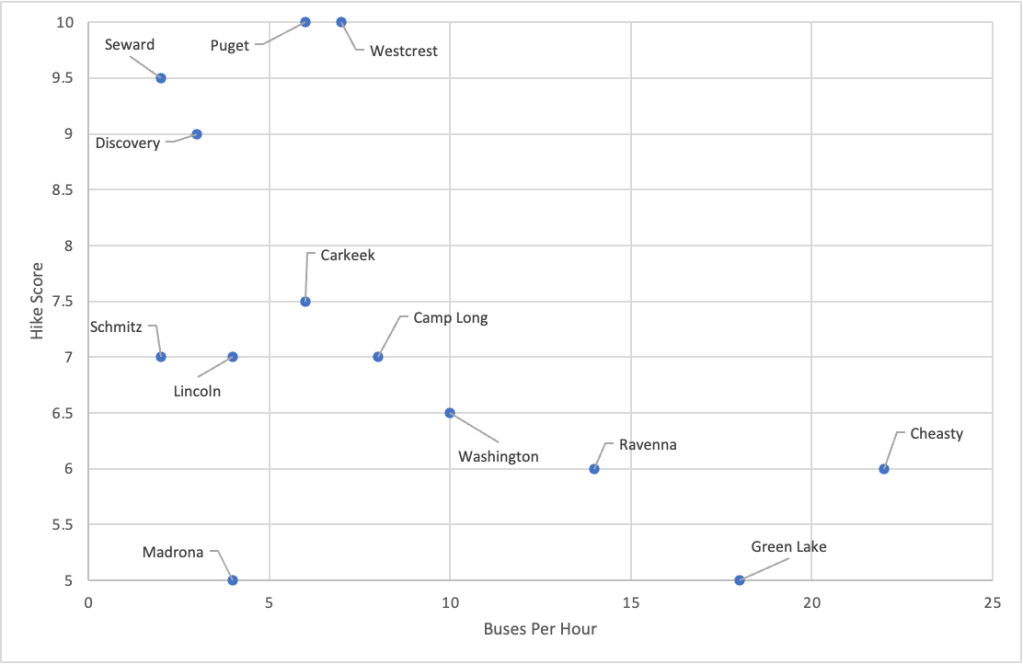
You can see a loose inverse relationship – the better hiking parks tend to be a bit harder to get to on the bus. But it’s worth noting that if you live in South Seattle, you probably live near a stop on the 50 (thanks to its insane coverage focus), and the 50 serves a shocking number of the parks shown here (Seward, Puget, Camp Long, Schmitz, and Cheasty). Likewise, all but three have at least 4 buses per hour serving them. In Portland, that’s about as good as transit service to any place outside of downtown gets.
Carkeek is maybe our median park here. It’s got two routes that terminate within a stones throw of a main park entrance11. And I consider Carkeek to offer fairly good hiking – with the main downside being that it’s relatively small. If you live in Ballard, it’s less than 15 minutes on the D. If you don’t live in Ballard, well it’s just 15 minutes more than going to Ballard.
For the most part, you just have to do a bit of planning ahead if you’re going to be a bus hiker in Seattle. But really, the most important aspect is being interested in the ways in which plants and animals live alongside you in the city you call home. I find this to be the crux of why I even want to do this in the first place – I find it more interesting to observe natural areas over time in Seattle than I do in a big nature reserve. It helps having Olivia by my side telling me a story about every plant, every step of the way, but this kind of curiosity can be cultivated no matter who you are.
And on the whole, I find it to be satisfying in large part because it feels sustainable, local, and practical. The experience of hiking in a beautiful wilderness can and does induce awe, but I find the spiritual aspects of these experiences to be somewhat lackluster in the long run. I do not desire to kneel at the altar of an unknowable nature, seeking pittance for humanities incalculable sins against it. I desire to tend, to know, and to feel the movements of the seasons and the character of the land I see outside my windows.
Thanks for reading – ’til next time.
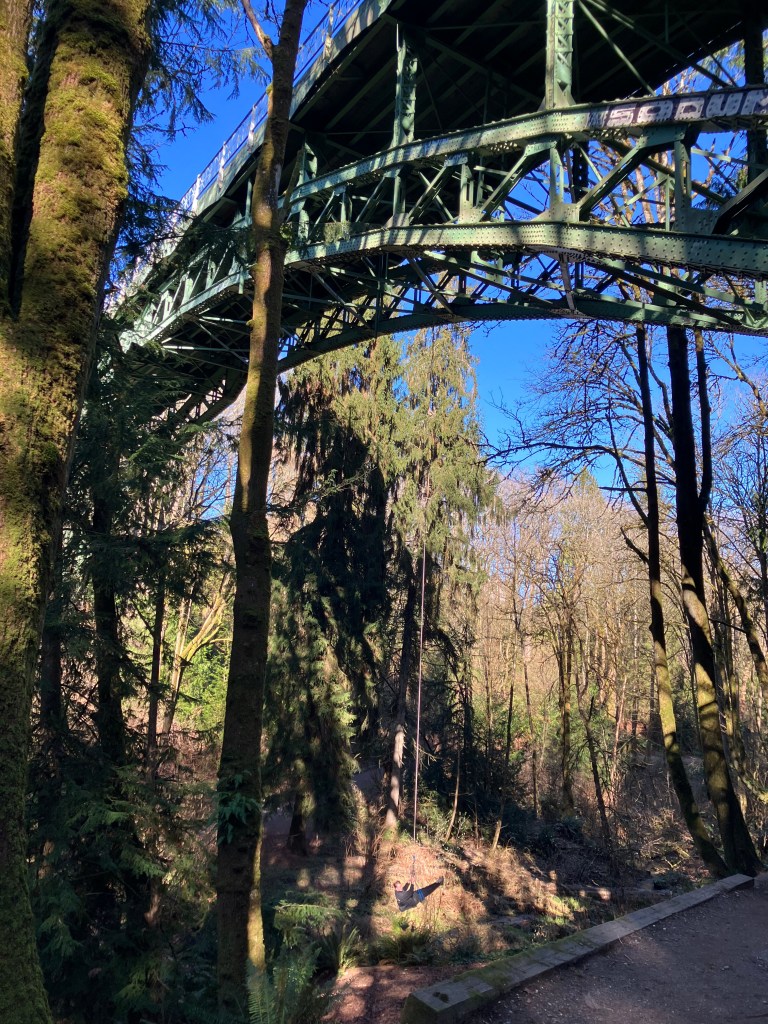
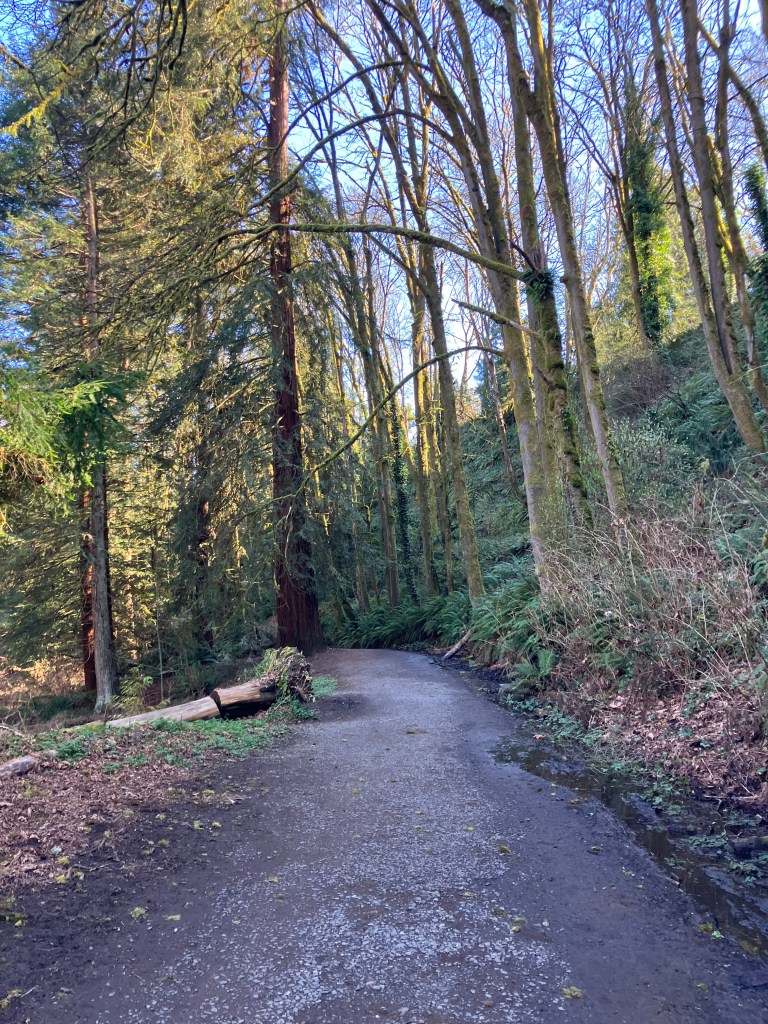
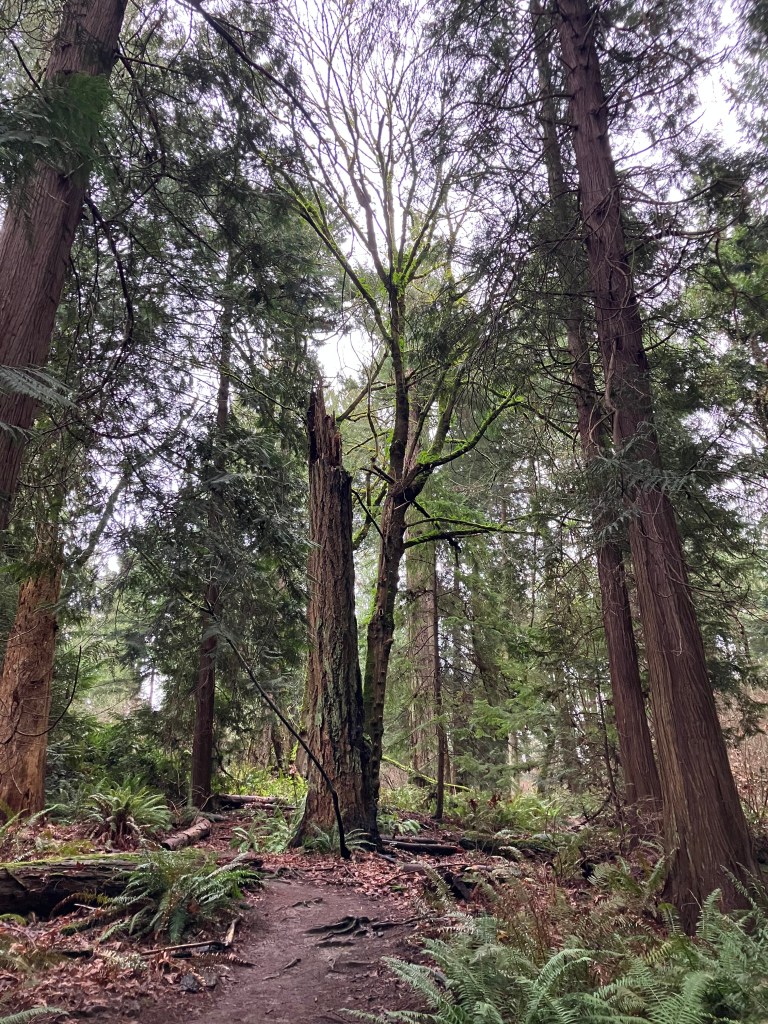
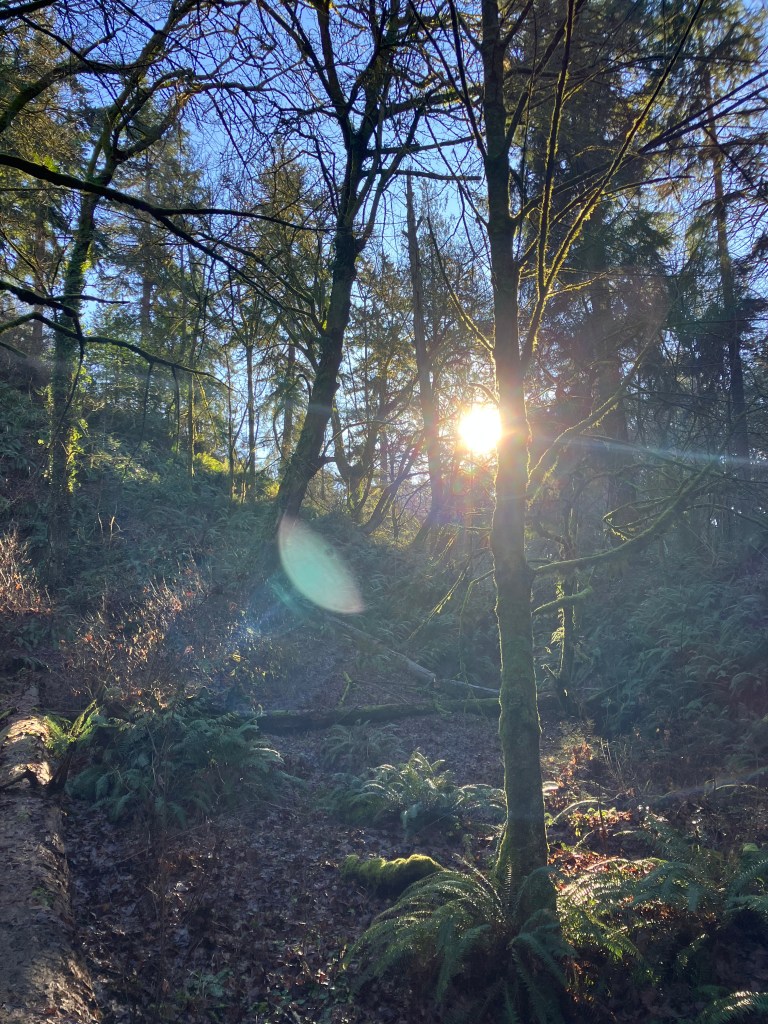
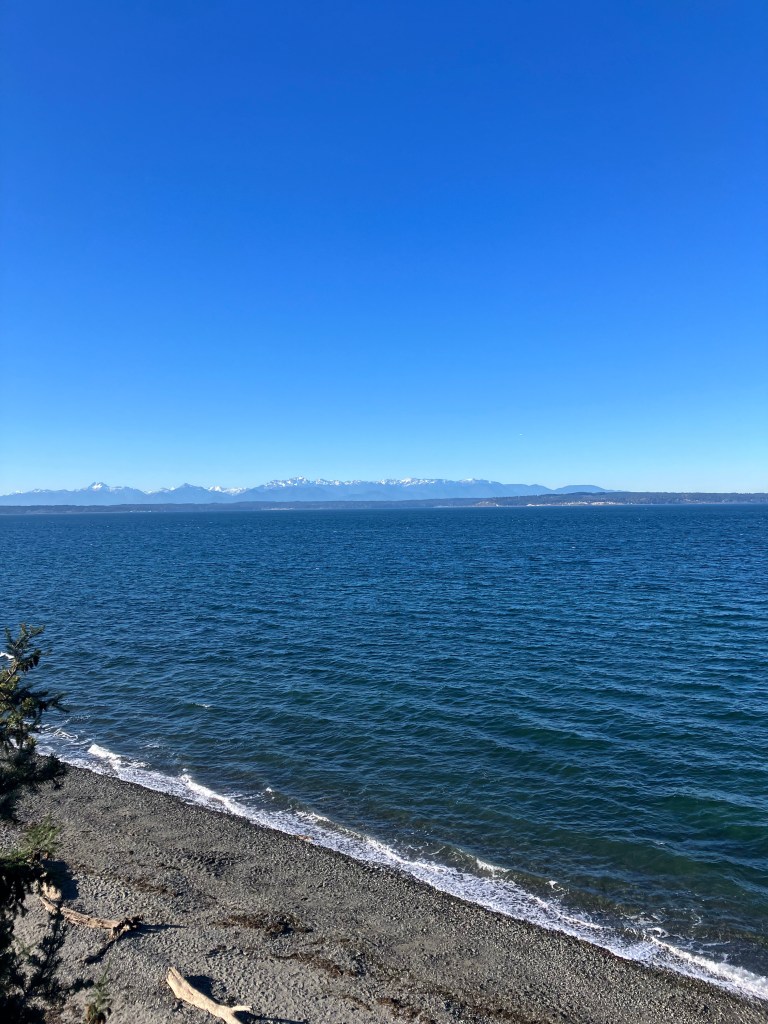
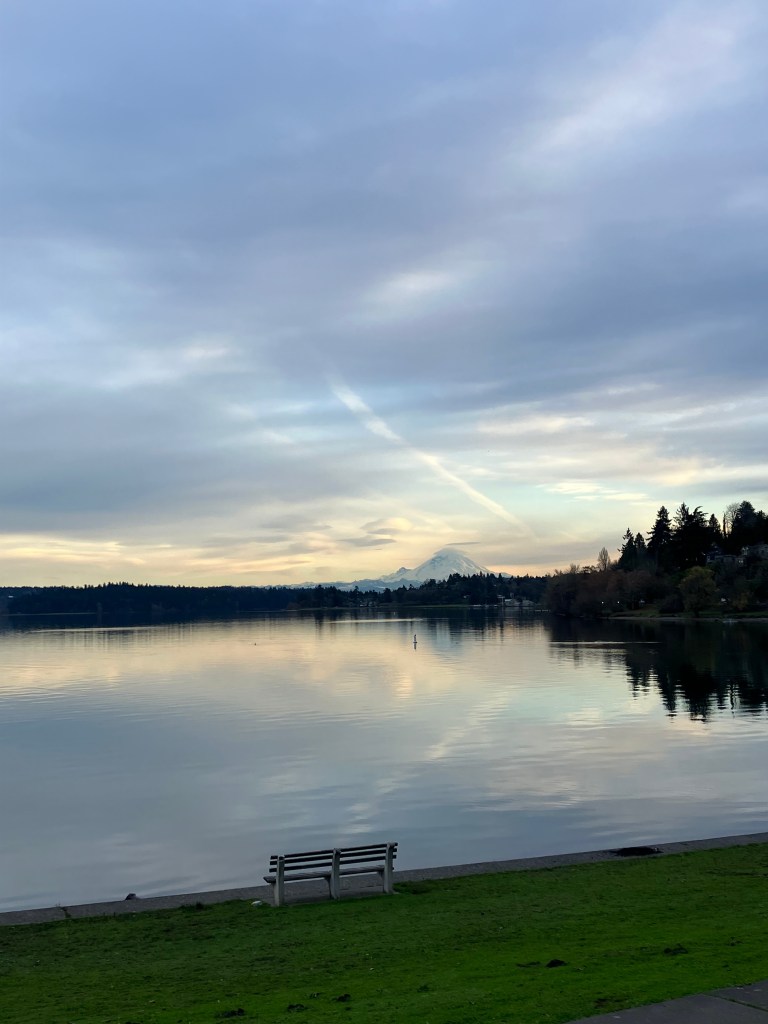
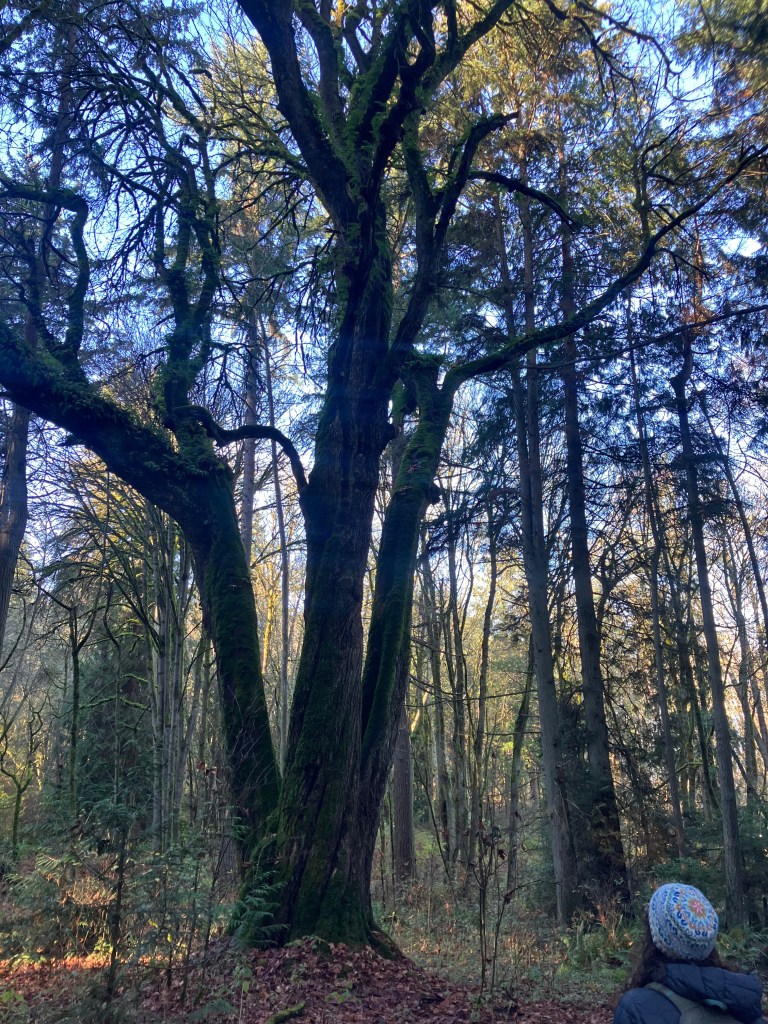
I’ll close with a gallery of pictures taken on hikes Olivia and I have done on the bus since moving to Seattle. I’ve really enjoyed all of the park space we have here, and if you’re local to Seattle why not try a bus ride to your next hike? I’m happy to provide guidance 🙂
Footnotes
- On a strictly clerical note, we are still driving the car once a month to make sure it runs properly. Maybe we’ll sell it, but haven’t really decided yet. ↩︎
- This REI blog post is what I’m referencing ↩︎
- Of course, not everyone is physically able to walk. So perhaps it’s not the most inclusive word here. You may see “roll” used as well, but I can find this to be even more ambiguous, as rolling can easily be associated with something like biking or skateboarding (or even driving). I’ll be using “walk”, but I just thought it was important to note this. ↩︎
- Well that’s what Wikipedia says anyways. ↩︎
- Unless of course, you live on Bainbridge Island and believe me to be participating in an elaborate conspiracy to legitimize the social and political basis for modest low-income apartment buildings on a publicly owned parcel. ↩︎
- Again, we have landed on something that is entirely socially constructed. In other parts of the world, great rural transit exists. But our social convention of the Jeffersonian yeoman (rather than the peasant village) dooms us again. Relevant post here ↩︎
- Okay maybe not literally “just as good” – I do prefer Olympic National Park to Seward Park in a vacuum, but I don’t live in a vacuum (that’d be dirty). ↩︎
- Sure, I could do this in a car too. But do you want to drive in Capitol Hill? I sure don’t. Too stressful! ↩︎
- I don’t really mind out and backs – since you generally see different things in each direction. ↩︎
- It’s tempting to consider that White people just ride the bus less overall, and while this is true even in Seattle, it’s less of a cultural touch point here than elsewhere. ↩︎
- If you play Jai Alai anyways. ↩︎


 City Hikes
Leave a comment