Lately, I’ve been going to the movies. Portland hosts a robust independent movie theater ecosystem, and the closest one to my place (the Clinton Street Theater) has a very interesting selection of movies. Plus, Olivia and I did a Barbenheimer night at the Laurelhurst last weekend. But more than just going to a movie and enjoying myself, I’ve spent a disproportionate amount of time thinking about how lovely the areas surrounding all the historical theaters in Portland are.
And this makes sense. Movies rose to cultural prominence at a time where a streetcar was still the primary way to navigate a city, and historic streetcar nodes and corridors typically contain vestigial remnants of a walkable place. Is Portland unique in its indie cinema scene? Not exactly, but it does make some sense that the historic cinemas that have survived into the modern era are mostly clustered around the typically pleasant streetcar oriented development patterns.
In any case, Portland has 15 or so surviving historic theaters that still primarily show movies (3 of which are owned by regional chain McMenamins). So let’s talk about a few of them, and why a night at the movies is better at a historic theater.
Laurelhurst Theater

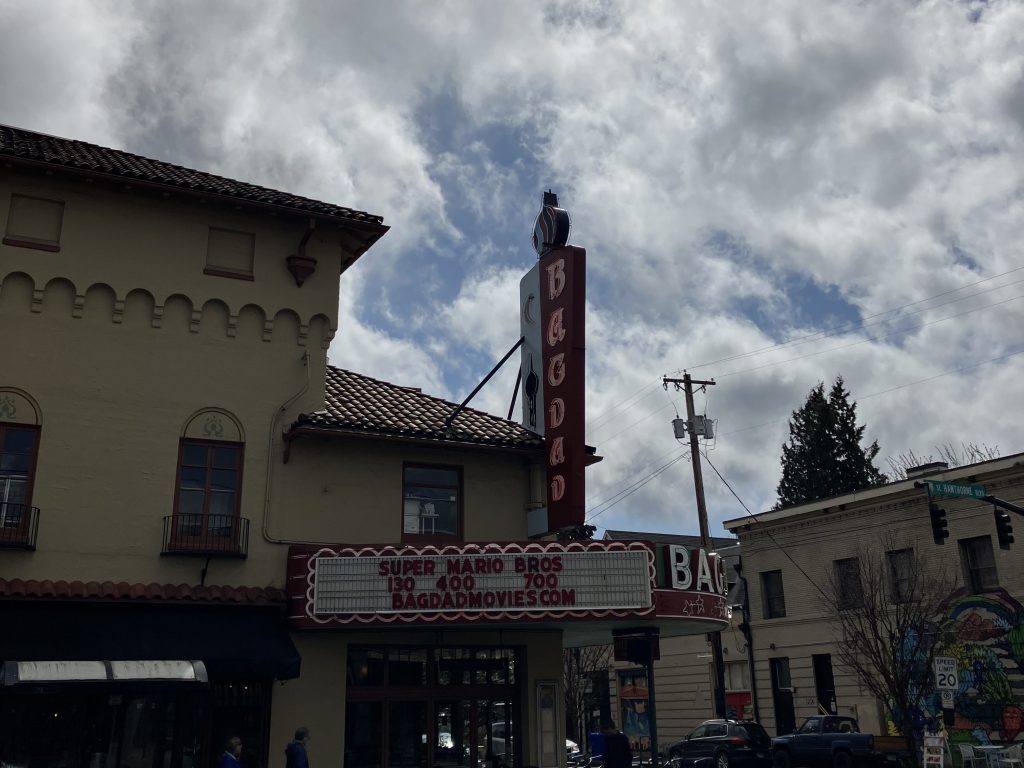
For starters, let’s get acquainted with the theater itself. The Laurelhurst generally shows a healthy mix of the latest films (and is the site of my own Barbie-Oppenheimer double feature night). I don’t actually know much about films, or cinema but it’s a good place to catch whatever the latest movie is. And the neon sign is absolutely spectacular, so that doesn’t hurt either.
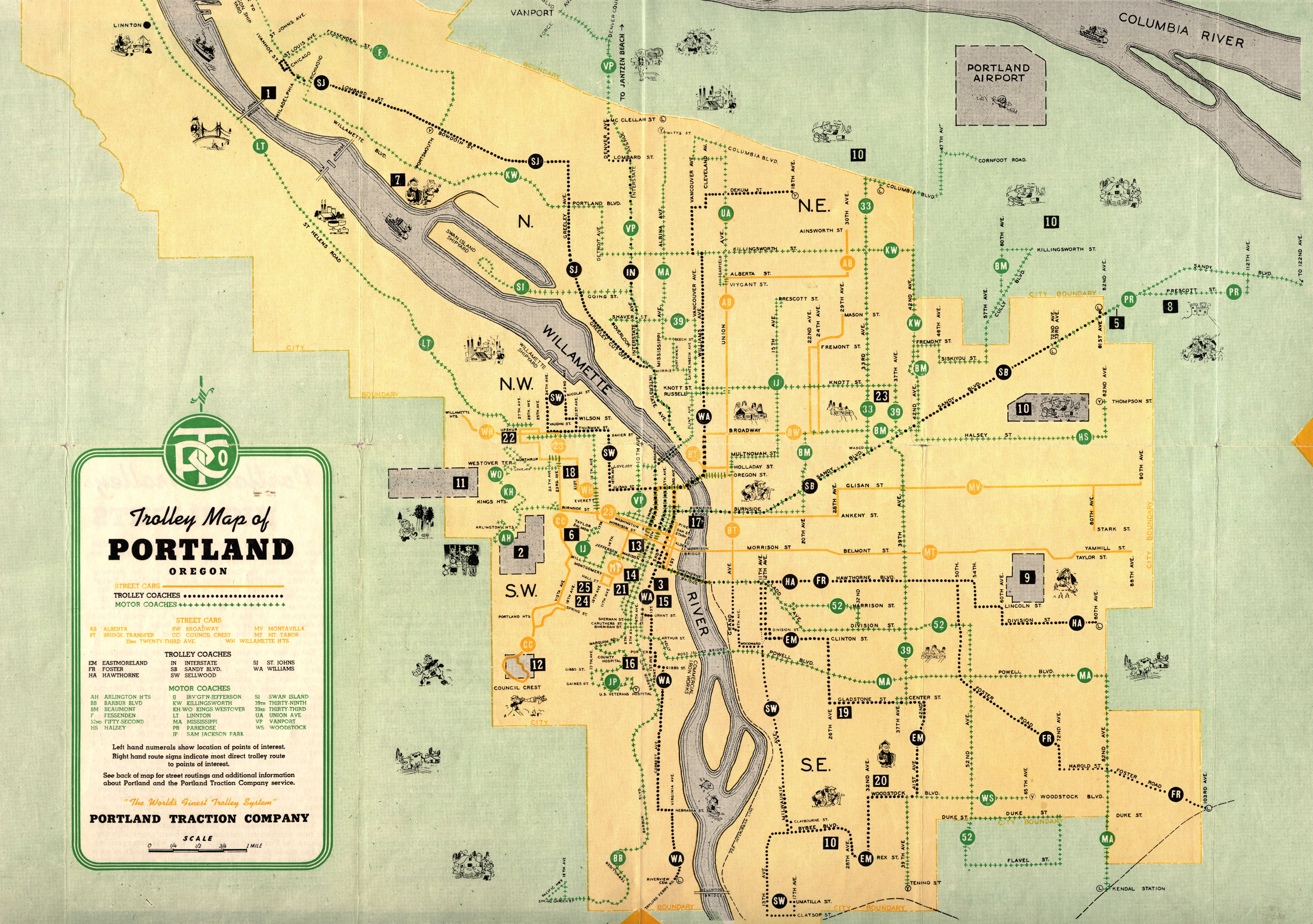
It’s located at East Burnside and 28th, that latter of which was an important streetcar corridor from 1892 (with the construction of the East Ankeny line) til 1948 (with the conversion of the Montavilla line to gas bus). The area around the theater has remained a typically quaint East Portland commercial corridor, with boutiques and bars abounding. Interestingly, East Burnside (east of 10th) had no direct streetcar service, with nearby routes being on Sandy, Glisan, and Ankeny instead.
The 28th Ave area is one of my favorites in the city, and given the lack of bus service on it I think it really is a prime candidate for Ankenyification. Ankenyification is the process of turning former streetcar routes without current transit routes into greenways (with many car-free plazas ideally), and is something Portland has done to great effect on both Ankeny and Clinton – which not so coincidentally also have great historic theaters nearby.
Clinton Street Theater
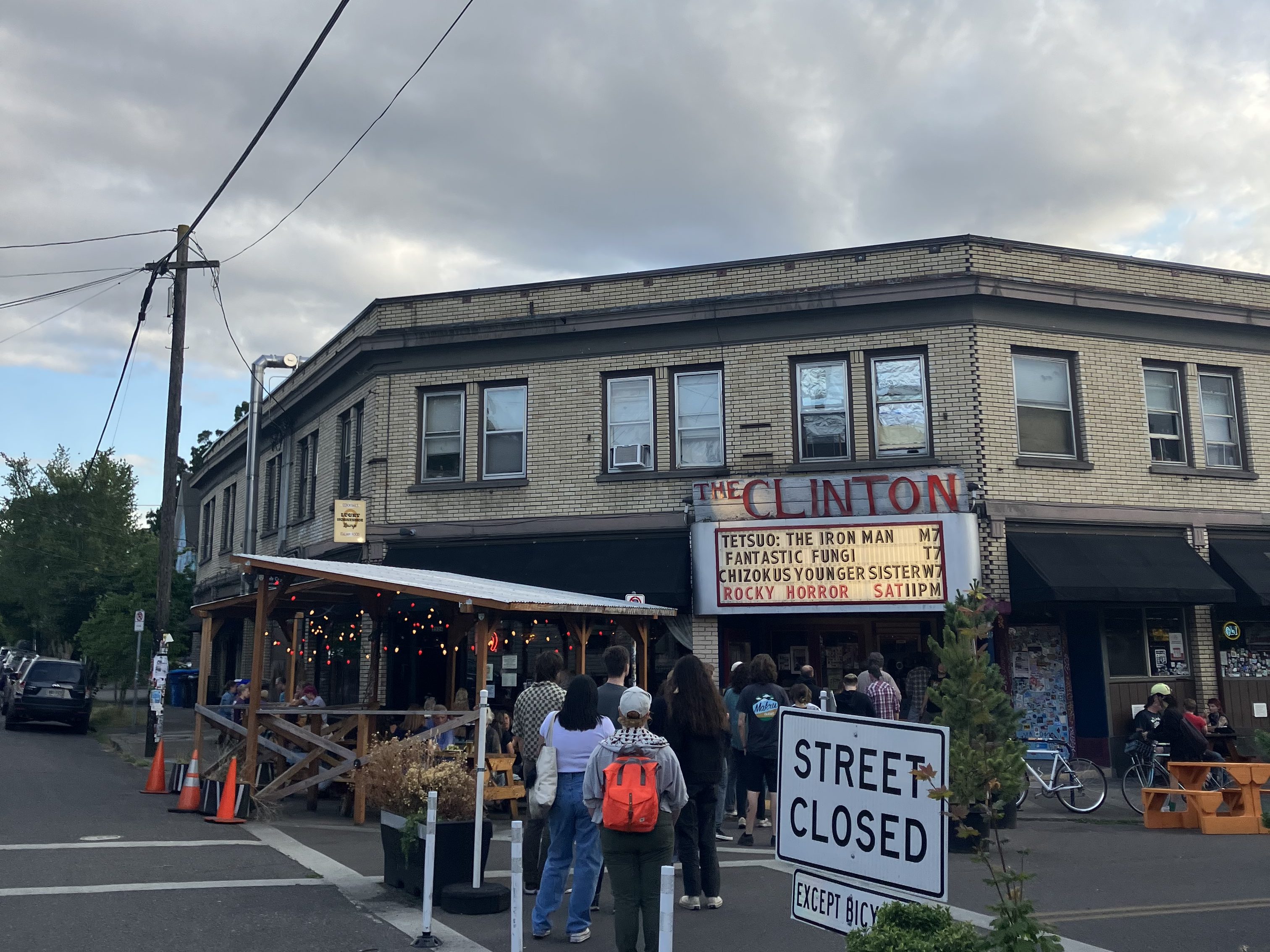
The Clinton is my favorite place in the city. At the corner of 26th and Clinton, it’s probably best known for its longstanding tradition of showing Rocky Horror every Saturday night. But it’s much more than this – it’s got community events, it’s got film showings for local independent unions, it’s got film festivals. In short, it has everything you want – other than the latest selections from Hollywood. But who wants that? Not me!
The corner of 26th and Clinton unsurprisingly was an important location in the historic streetcar network of Portland. For about 30 years (~1910 to ~1940), it was the diversion point between the Woodstock line and the Richmond line. With transit service on the Woodstock line shifting to a Milwaukie-Bybee routing sometime in the 90s and the Richmond line shifting to Division sometime in the 60s (or earlier – all I know is it happened between 1945 and 1977) it’s no surprise that Clinton became Ankenyified. And with the 10-Harold being finally moved off Clinton in the last few years, car-free plazas like 26th and Clinton have been both possible and excellent.
26th leaves much to be desired though. Despite being a streetcar route from Clinton to Powell, the route has been more or less completely turned over to the automobile (the 10-Harold does still run occasionally though). Bikes have been officially routed to 28th (despite some obvious topographical disadvantages), with deadly consequences.
I think it would be a slam dunk to make 26th car-free around the existing pedestrian plaza. It would make an existing area even better, and would make cycling conditions much safer in the region around Cleveland HS.
Academy Theater
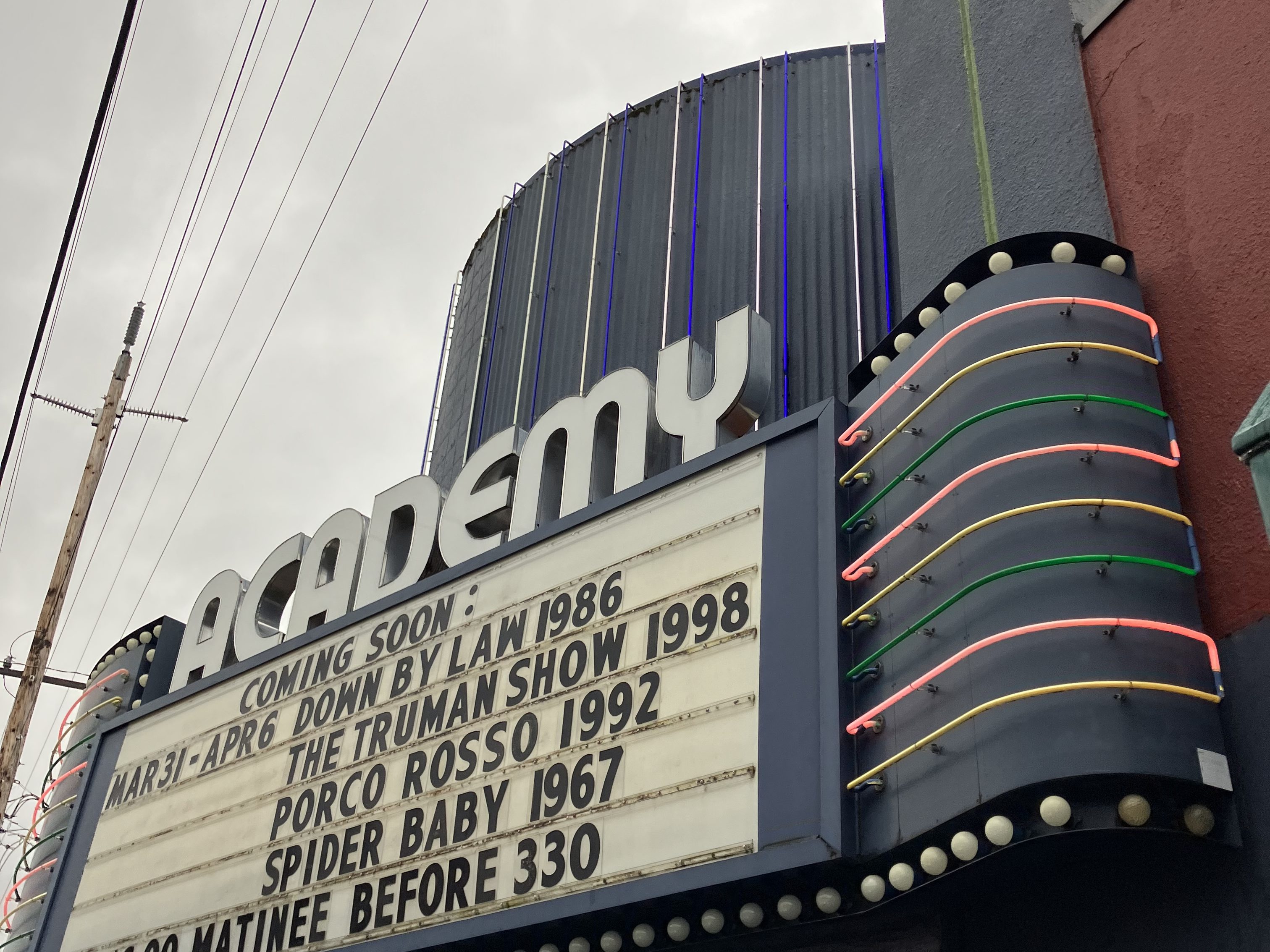
I’ve never seen a show at the Academy, but I want to talk about it anyways. It’s in a vastly underrated neighborhood (Montavilla) and it’s not directly on a former streetcar line (though it is close to two). Montavilla (Mount Tabor Village) was founded around the Montavilla streetcar, which ran down Glisan, but was also served by the end of the line of the Mount Tabor line which ran down Yamhill. But the Academy is on Stark, which is an important road for an entirely different reason.
[editors note: the Montavilla line did branch down 80th to Stark, an embarrassing miss on streetcar history! And it was a long-lived spur, lasting from the early 1900s all the way til end of service on the Montavilla in the late 40s.]
Stark follows an old survey line, which means that its relative importance tends to stem from that. Being a boundary between farms and probably one of the earlier paved roads in the region is likely why Stark is a “main street” type of place (and not just in Montavilla). But I don’t think there is any part of the road east of the Willamette that has quite as much charm as Stark in Montavilla and I’m more than happy to credit the Academy for a large share of that.
A movie theater is a fairly unique attraction by staying open late with entertainment for all ages. The all ages part is key, since most other later-evening attractions tend towards an older crowd (like a bar). Vibrant urban places thrive on diversity of uses – both temporally and by typology – and is there a better example of a novel use than a movie theater?

And ultimately that is why I’ve loved going to the movies lately. Sure, engaging in cultural events is nice. But really it’s more or less an excuse to be out and about in the evening – without quite so many of the drinking beer connotations (though every small cinema in Portland does in fact serve beer too). Experiencing life in a city – a properly good city – should involve supporting cultural institutions.
A neighborhood cinema is perhaps the best way to do this. Not only do you have the opportunity to engage in one of the most interesting and enduring parts of American culture, you also get to make your neighborhood a more vibrant place. So if you have a theater you can walk to, take advantage of it.



Leave a comment