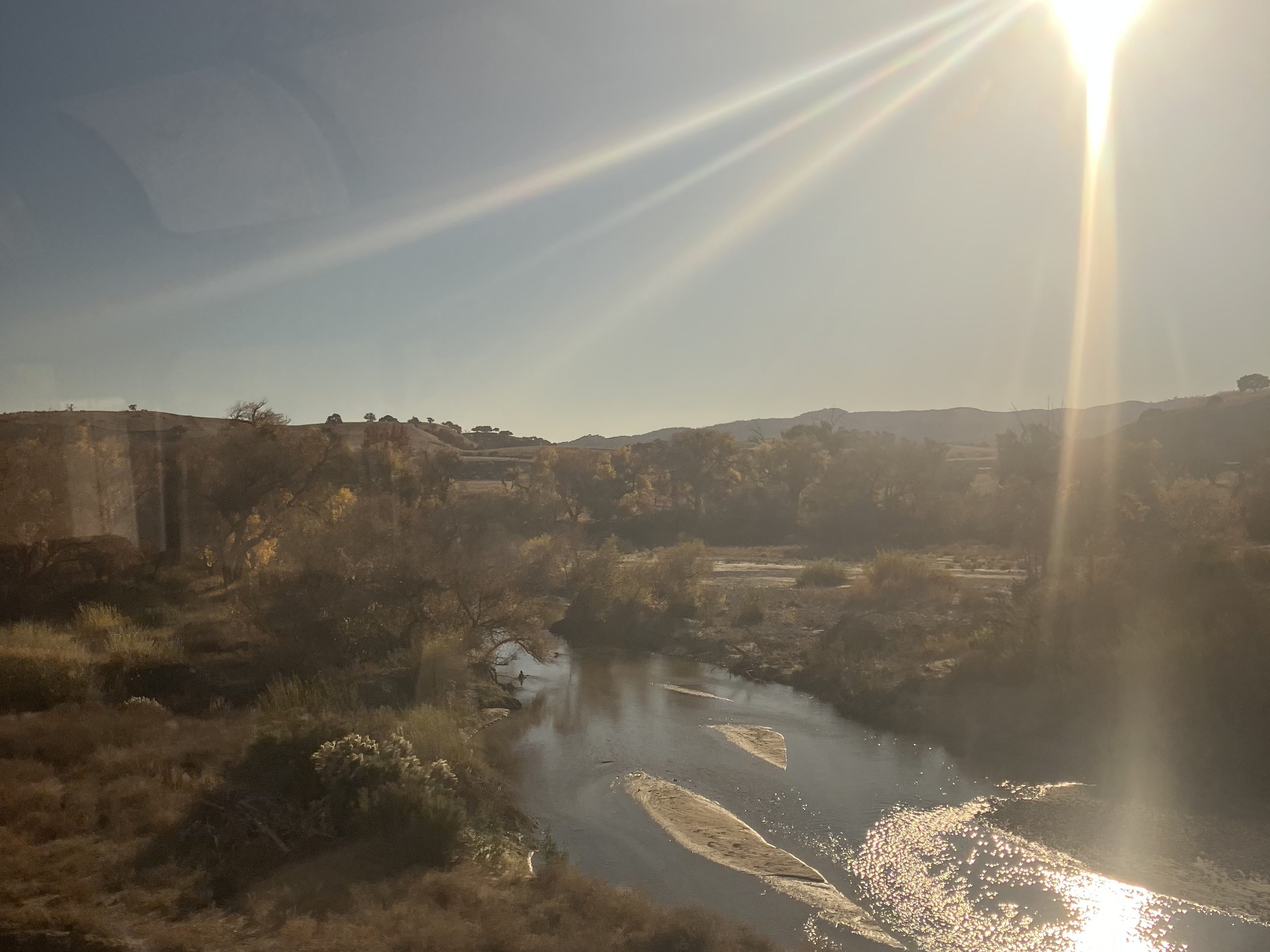
I’m all aboard my extravagant winter break train ride, and currently plodding along in the Salinas Valley. The Coast Starlight has been good to me so far, with no major delays and a seat all to myself. I’m in new Amtrak territory, having never gone south of Oakland on the Coast Starlight before and the Salinas Valley was one of the things I was most looking forward to. Olivia is a noted fan of John Steinbeck’s writing, and it rubbed off on me this summer when I read East of Eden.
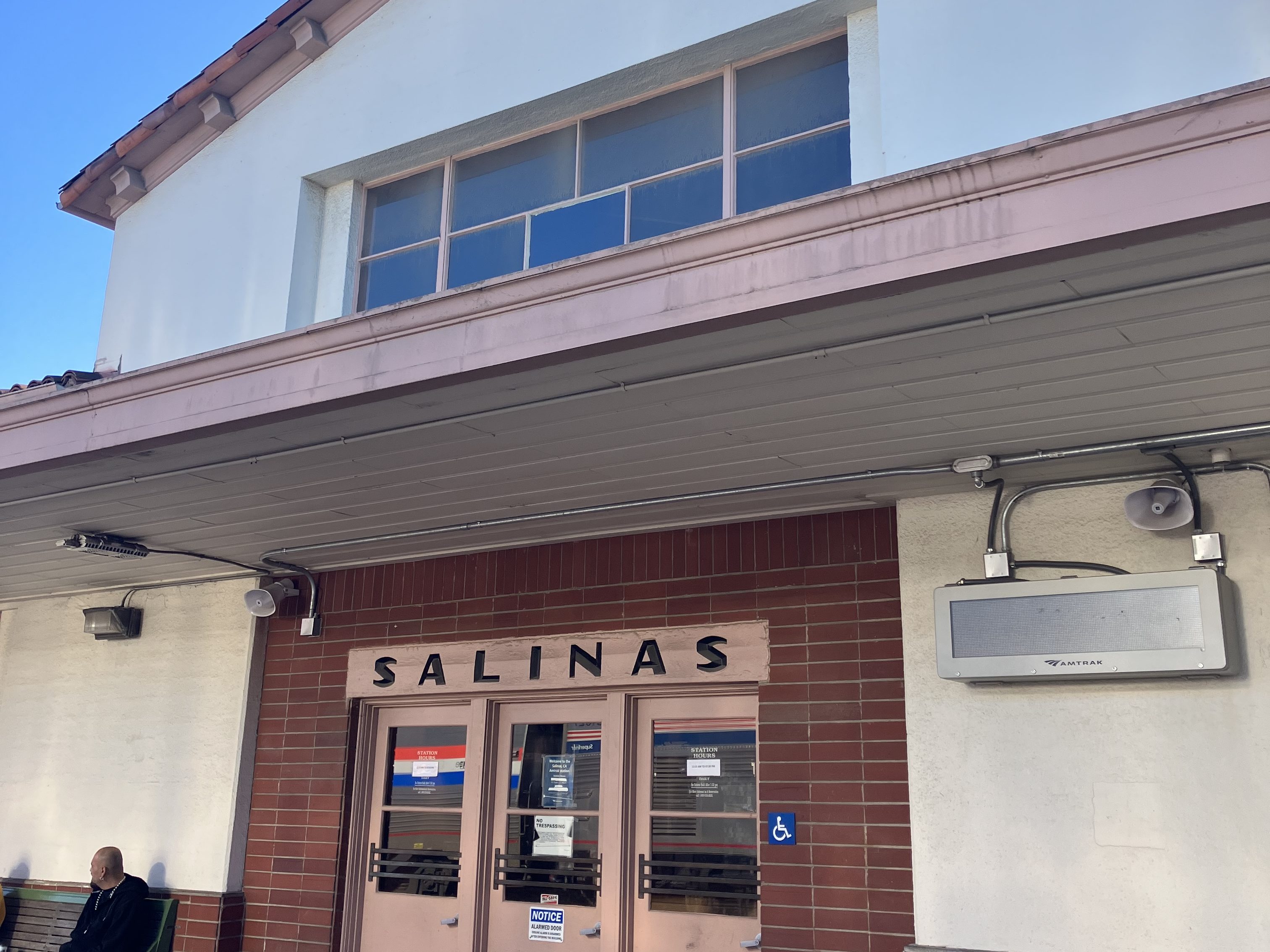
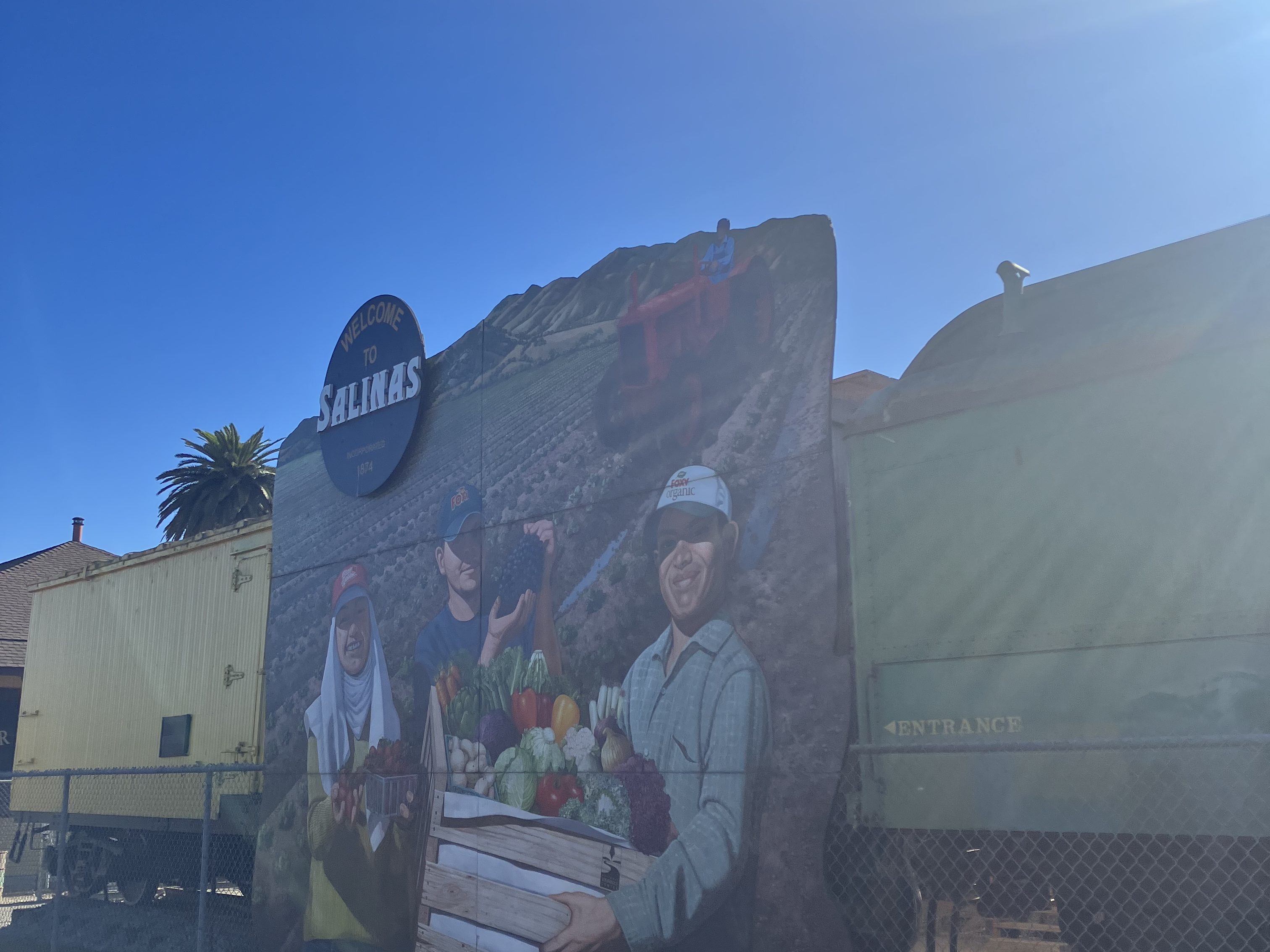
I quite liked East of Eden, and the setting of the Salinas Valley was compelling to me. The fertile plains, the rolling hills, and the Southern Pacific – it doesn’t get more quintessentially California than that. While the station stop in Salinas was shorter than I was hoping for, offering me just enough time to take a few obligatory station pictures, the lounge car offers great views and is a pleasant place to ponder.
And while questions about what it means to be quintessentially California are outside my wheelhouse as a Wisconsinite turned Oregonian (is there anyone less qualified than me?), I still think the Salinas Valley offers a lens with which to view California through. And in particular, a California that is seemingly less caught up in the machinations of big tech and global capitalism if those are things that can be escaped.
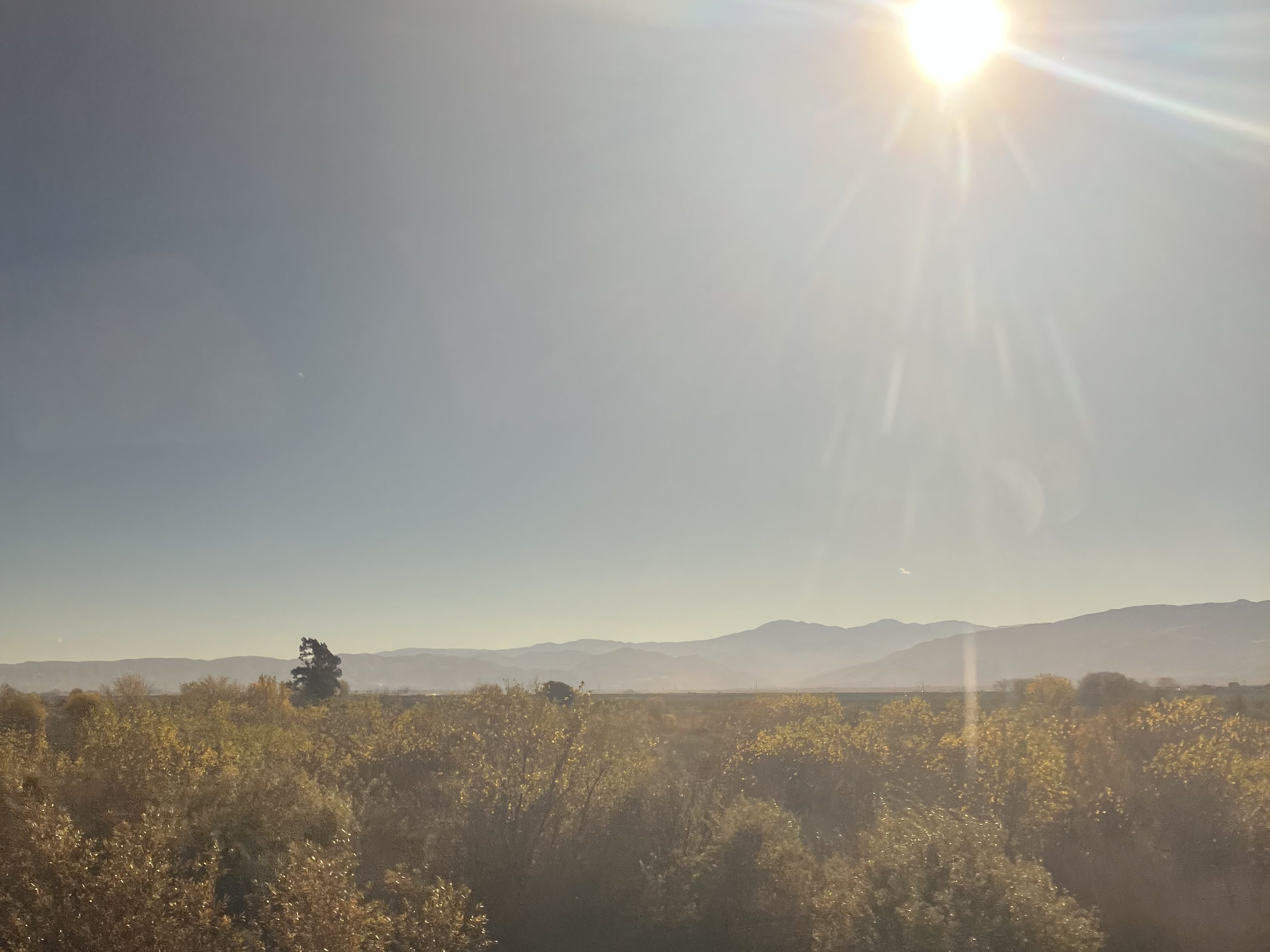
In my estimation, the Salinas Valley has more in common with so-called Middle America than it does with the seats of California power to its south and north. Perhaps this is what gives Steinbeck some of his enduring popularity, the mass appeal of the landscape. A historically rugged and rural landscape of marginal farmers succumbing to the coming tide of urbanization is a universal story – one that echoes throughout American history. Owner-occupied farm land decreasing as corporate holdings increase – the Salinas Valley has been at the nexus of that transition for generations.
The “progressive” story of the land, where White homesteaders “improved” the land they stole from the local Natives (in this case the Salinans) only to be forced off their land by wealthy capitalists and land speculators “improving” the farming practices and increasing profitability (via the Bracero program and other means to reduce labor costs). Perhaps the Steinbeckian ideal of Sam Hamilton’s farm never really existed, as the Southern Pacific Octopus always was the corporate overlord of anywhere it turned in nineteenth century California. But the feeling remains.
And it’s an uncomfortable feeling. Despite the hay made historically about the Southern Pacific octopus, there have never been serious land reforms in California (or anywhere in the US). According to the SF Chronicle, Tejon Ranch still manages to own 270,000 acres of land in and around the Antelope Valley in Southern California, while Sierra Pacific’s mind-boggling forest empire spans 1.74 million acres in just California. The latifundio is still king in California, even if American settlers largely ignored pre-existing Spanish and Mexican latifundios.
A brief overview of US history will show you that hostility to land reform isn’t just a California thing. In the 90s, a prerequisite of NAFTA was Mexico stripping its revolution era protections for land reform and redistribution; and the passing of NAFTA created a still-extant peasant uprising in Chiapas. When land reform means stripping multinational corporations of their hard-earned land given to them by a corrupt, US backed military dictatorship then the CIA cries communism and another coup starts the cycle of misery all over again. See Guatemala in the 1950s, Cuba in the 1960s, Chile in the 1970s, Nicaragua in the 1980s, Haiti in the 1990s and many more. If land reforms mean that the “investment climate” for Wall Street is minimized, don’t be surprised to see a US-backed coup on the horizon.
The tendency for US capital to hamstring all attempts at land reform globally (and most acutely in Latin America) makes the future of land reform domestically seem a little grim. Outside rumblings of preventing private capital from buying single family homes, I have yet to see any serious political messaging around land reform domestically though I don’t follow it closely. Perhaps my radical inkling to abolish absentee landlords, to give the land to those who work it, and to those who it was stolen from is not in the cards. It certainly doesn’t seem like a priority for any politicians these days. But eventually, a time for it will come.
The winds of history blow unpredictably, but eventually corporate control of land will reach intolerable levels. Capital will overextend itself, and a mass movement will rise to take what is rightfully theirs, and to distribute the rest as we all see fit. Or maybe I’ve been reading too much Noam Chomsky. In any case, it’s hard not to think about the consequences of railroad land grants and mega landholders on a former Southern Pacific line through a bountiful farming area.
I’m eager to return to the area one day, if only to visit the Monterey Bay Aquarium. The vistas from the train are stunning but offer very little in terms of meaningful engagement with a place. Los Angeles looms large on the horizon for me now, as does the prospect of a good nights sleep and a proper shower. Til next time.


Leave a Reply