
Yesterday, a freight trail derailment meant I got stranded in Santa Barbara. Buses were scheduled to get to ferry me and all my fellow travelers to our final destinations, but with an earliest possible departure time of 9:30 PM it was looking bleak for getting in to my hotel before midnight. So I called a ride – despite my general disdain for so-called “ride sharing” apps. I was desperate, okay?

When the driver picked me up, he suggested I cancel the ride and to just pay him directly when we got into LA. It saved me $50, so I figured it was a reasonable idea (retrospectively… probably was not!). Now I’m not one to complain about a chatty driver, but when he started going into how the human spirit has “exactly 22 grams of energy” I was feeling a bit nervous. A 90 minute ordeal with a full blown Scientologist was not something I was really up for after a 30 hour train ride, but I didn’t have much of say one way or the other. The commentary on how great it was that Alex Jones was interviewing Elon M*sk did nothing to assuage my fears.
My dreams of getting into “the last of the Great Railway Stations” in the United States after an epic journey were quashed, but somehow the ridiculously long taxi ride from a conspiracy theorist feels much more LA than my preferred option. Which is strange, and sad. Los Angeles grew up along the railroads – maybe more than your typical city. And while the death of rail transit is not unique to LA, they likely were the city that managed to remove the most of it.
This ability to completely remake itself to fit the changing times reflects LA’s unique location in the cultural zeitgeist. The book that inspired me to finally experience LA, Mike Davis’ 1990 City of Quartz, opens with a Morrow Mayo quote:
Los Angeles, it should be understood, is not a mere city. On the contrary, it is, and has been since 1888, a commodity; something to be advertised and sold to the people of the United States like automobiles, cigarettes, and mouth wash.
Morrow Mayo, Los Angeles, New York 1933, p. 319
Being a commodity means removing context, and it’s exactly this de-contextualization that Los Angeles thrives at. Electric trains were the height of progress in the 1920s, so during that time LA boasted one of the most extensive electric train systems in the world – with the development spurred by the system eliminating some of the best citrus orchards in the world. Likewise, in the 1950s the freeway was king so LA focused all of its formidable energy on creating the most extensive urban freeway network in the world – also at the cost of many an orange grove.
And when the sale of Pacific Electric to General Motors facilitated the end of the Red Car era, that too symbolized Los Angeles shifting away from the old era of trains to the hot new era of private automobiles. Even though the Hollywood Subway once carried 65,000 passengers per day, the lines were not directly profitable to run and so there was no hope for the system. After all, an unprofitable rail system isn’t progress, it’s waste to be trimmed. Luckily for LA, its freeway system makes the city buckets of money every day! (haha)

Ultimately, the railroads themselves became subsumed by a new American dream and the development forces that they themselves created. Once lines were abandoned, their rights of ways were built on or paved over for wider roads for cars. Land development has always been a main economic driver in LA, and invaluable real estate sitting at the end of a still-extant subway tunnel directly to downtown LA (host to many a music video) has been developed into apartments. The Subway Terminal Building still exists, but the station does not and to the untrained eye it is just another old building near Pershing Square.

Mike Davis says that “virtually among big American cities, Los Angeles still lacks a scholarly municipal history – a void of research that has become the accomplice of cliché and illusion”. No where is this cliché more apparent than Hollywood. I don’t have much to say about it, other than that I did not really enjoy that portion of my walk. The walk of fame is tacky, and filled to the brim with tour buses and souvenir shops. If you are a successful entertainer, you can bet that Hollywood will claim you as its own, regardless of your ties to Los Angeles specifically.
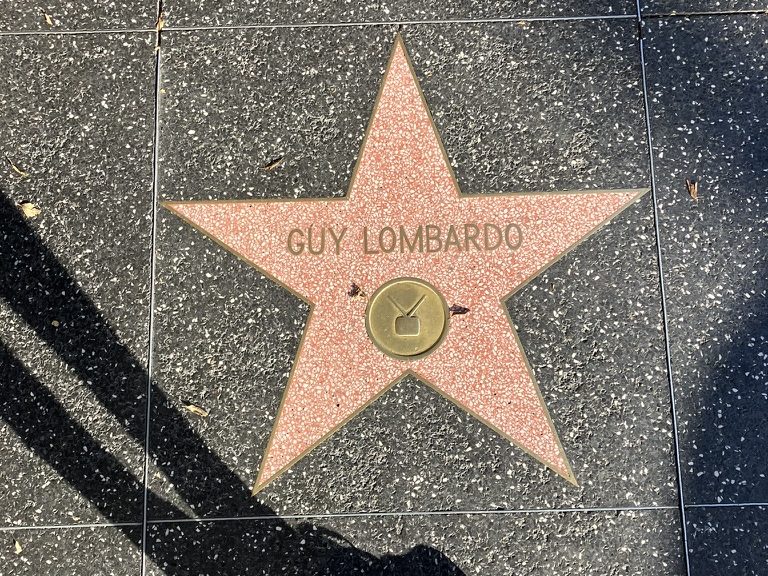
This is all just a long winded way of saying that it’s funny to see Guy Lombardo’s star on the walk of fame. Maybe it’s Los Angeles thanking Robert Moses for destroying so much of rival New York, as Lombardo was often kept on retainer by Moses at Jones Beach.
Places like the Hollywood Walk of Fame that lionize the very idea of celebrity aren’t just tacky – they are evidence of a city that is unconcerned with its own history. And it’s frustrating to see, as someone who really enjoys finding little bits of history while walking. I was particularly annoyed that there is no longer a mural depicting a Pacific Electric Red Car at the former Hollywood Subway portal, and the fact that the portal itself isn’t easily accessible to the public is frustrating too. Smaller things like a former full-wall mural dedicated to Elliott Smith in Silver Lake being partially removed by a bar (and placed inside) really irked me as well.
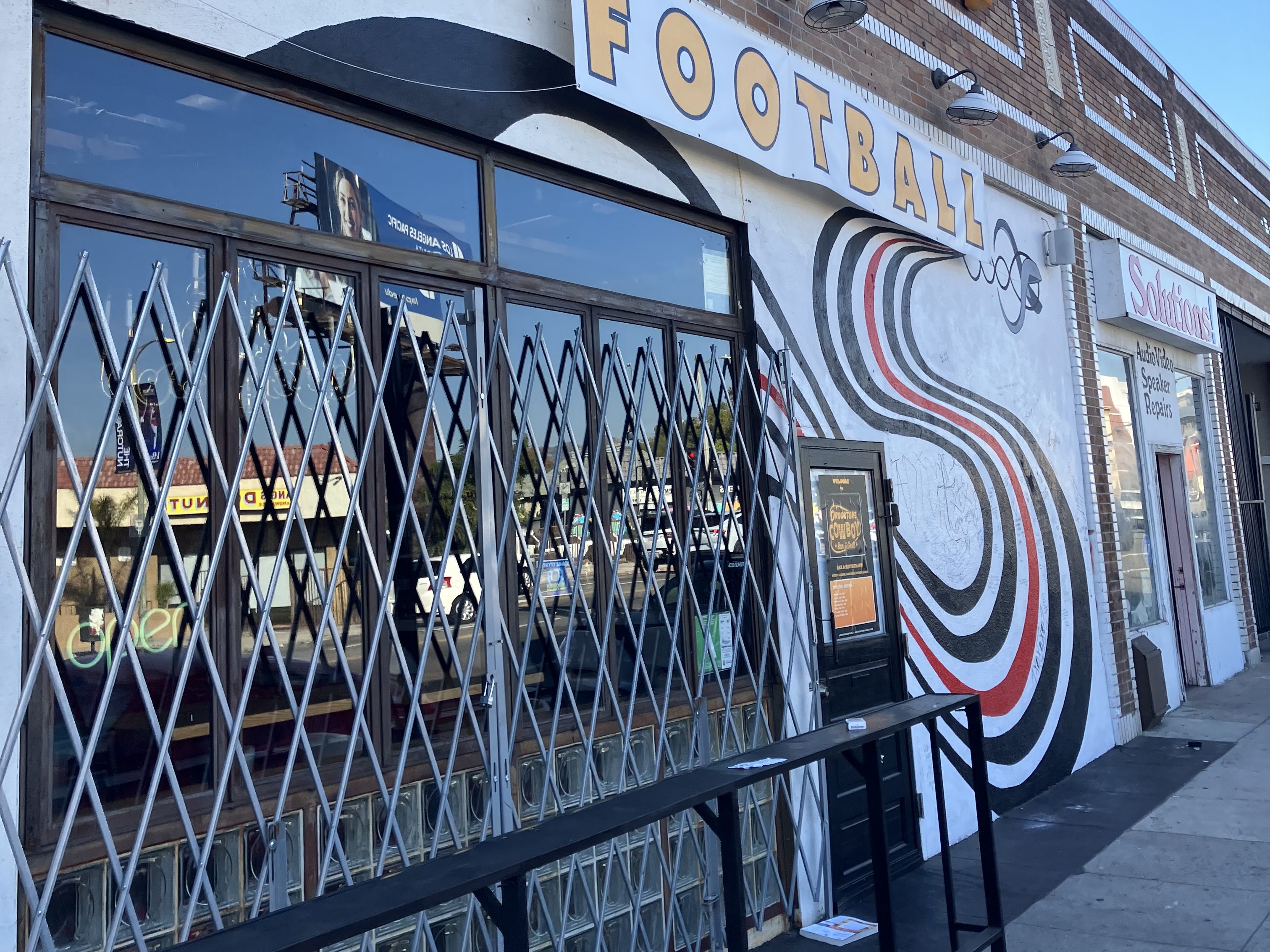
Of course, these two specific examples are relevant to me because I am a huge train nerd and Elliott Smith aficionado. But it speaks to the larger them of a casual attitude towards historical preservation and understanding. Granted, this is not unique to LA – I did live in an apartment building that was constructed on the site of the recording studio where Smith recorded most of Either/Or and XO in Portland. But the feeling is heightened in Los Angeles, where the need for progress consumes more virulently.
And in parts of the city where progress has had its way, the negative results are evident. Bunker Hill was primarily a residential neighborhood for the first century of LA’s American history, but was targeted for urban “renewal” in the post-WWII era. The results are jarring; I felt extremely uncomfortable walking around the sterile plazas and strange “parks”. Demolishing the heart of downtown to make way for office skyscrapers is again, not unique to LA. But the results here feel worse, with the emphasis on safety and security rather than public access and comfort being palpable.

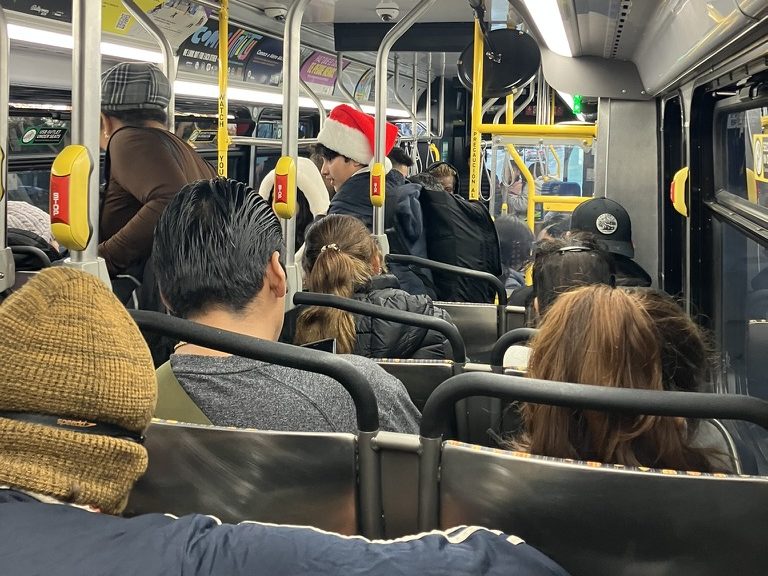
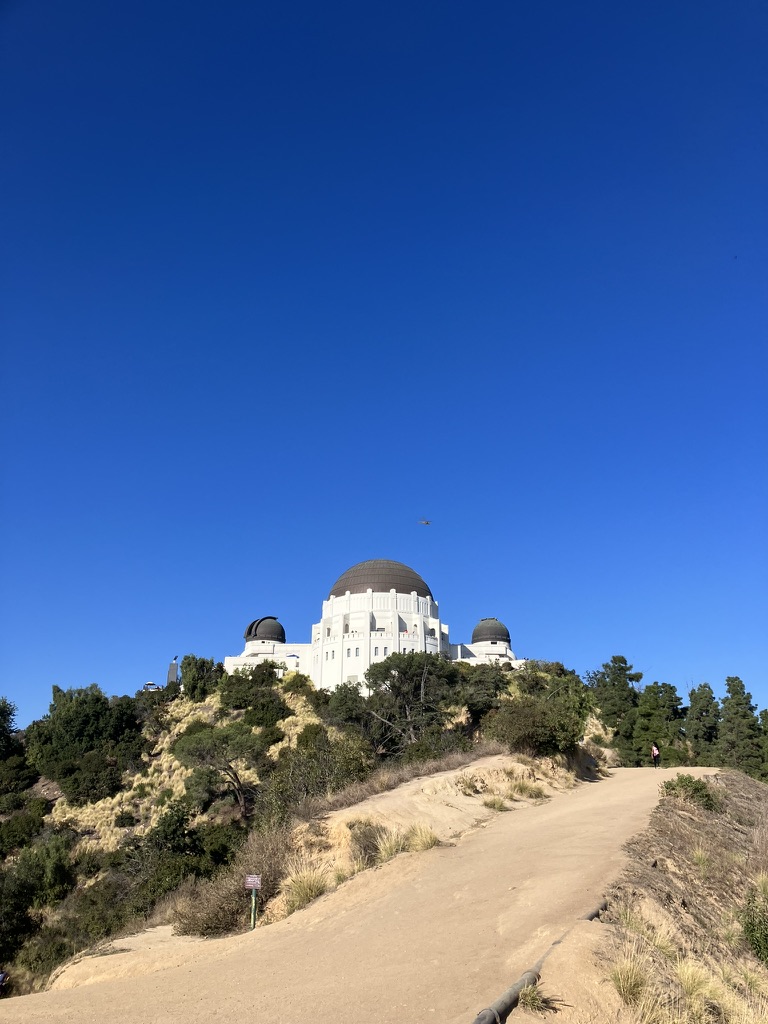
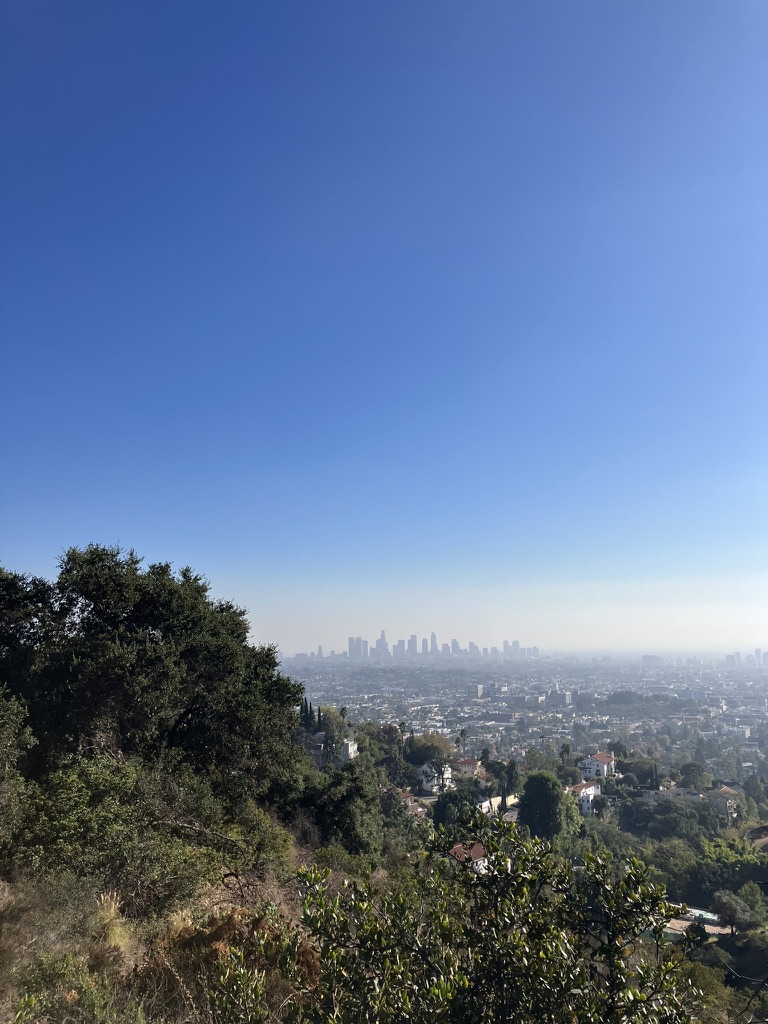
Still, despite all the issues LA has created for itself I still really enjoyed my walk today. Griffith Park is absolutely worth the hype; I don’t think any other urban park in the country offers better views. There are so many great streets to explore, and tons of interesting architecture. And as a bonus, the bus system is incredible. I know I am prone to waxing about trains, but LA is a bus city these days – and now boasts the second highest transit ridership nationwide. My ride from the end of my walk on the 20-Wilshire was packed, and featured a man playing guitar. It doesn’t get any better than that folks.
Los Angeles may be actively in the process of demolishing itself. It may not be place where you can easily find a tale of days past, outside some markers telling you that some famous person has been here. And it may have an actively hostile attitude towards pedestrians, transit riders, and cyclist. But it still is a fascinating city to be in; the food is divine, the people are interesting, and the buses come every 5 minutes on Sunset. I’ll take that. Stay tuned for tomorrow, where I walk to the ocean!
 City Hikes
Leave a comment