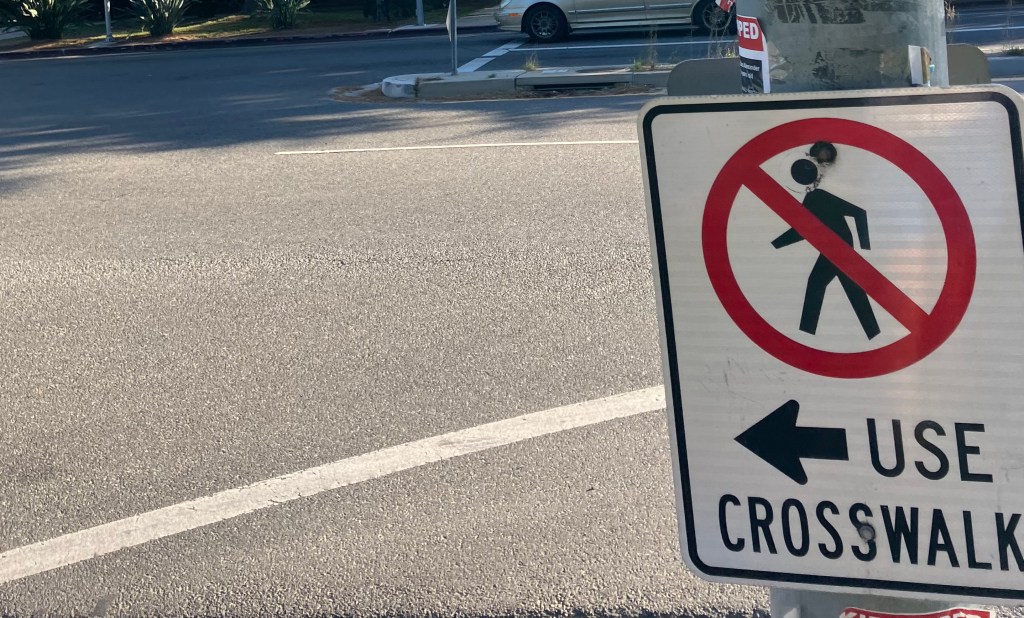
There’s an RRFB (Rectangular Rapid Flashing Beacon) near our apartment that helps intrepid pedestrians cross SE 17th just as it becomes an on ramp to Powell Boulevard. RRFBs seem to be all the rage these days, and if you’re an urbanist or city observer you’re probably at least somewhat aware of them. I think they kind of suck, and the one near our apartment demonstrates this clearly.

For a bit of background, the beacon was built in 2014 with the MAX Orange Line – a project that, despite its many flaws, meaningfully improved cycling and walking conditions between our neighborhood and the city. Most of this improvement can be chalked up to the full rebuild of the Powell Boulevard/SE 17th exit ramp/overcrossing. Before the Orange Line, these ramps had very narrow sidewalks and there was no connection to the nearby dead-end SE Gideon.
Anyways, the stretch of SE 17th that carries the MAX line was significantly widened, and bike lanes were added as well. I have a lot of thoughts on the specific design of SE 17th (it’s not my favorite), but I think that’s a bit beside the point. The point is, SE 17th is a “major city bikeway”, with bike lanes on both sides of the road so a crossing was needed to get to the new Powell Boulevard. And thus, the RRFB in question was born.
The MUTCD (Manual on Uniform Traffic Control Devices) loves RRFBs, and evidently they are in vogue right now. This is not surprising, since they are functionally just the “thoughts and prayers” of traffic control. They do nothing to change the built environment that was creating an unsafe crossing for a pedestrian, they just sort of give a big flashing warning to drivers that says “hey you really oughta stop for this fella”.
And look, they work reasonably well for the most part and the FHWA quotes that 98% of drivers yield when the beacon is lit. Perhaps, but the beacon at SE 17th has (at least) two problems.
First, there is a concrete barrier that blocks the view of cars approaching from the northwest. Given that this is functionally an off ramp of a state highway, this is no minor concern. I recently had an experience while crossing from east to west where I pressed the button to active the beacon, two cars refused to stop for me, and then when I got to the median another car was already about to go – since they could not see that I was actually crossing.
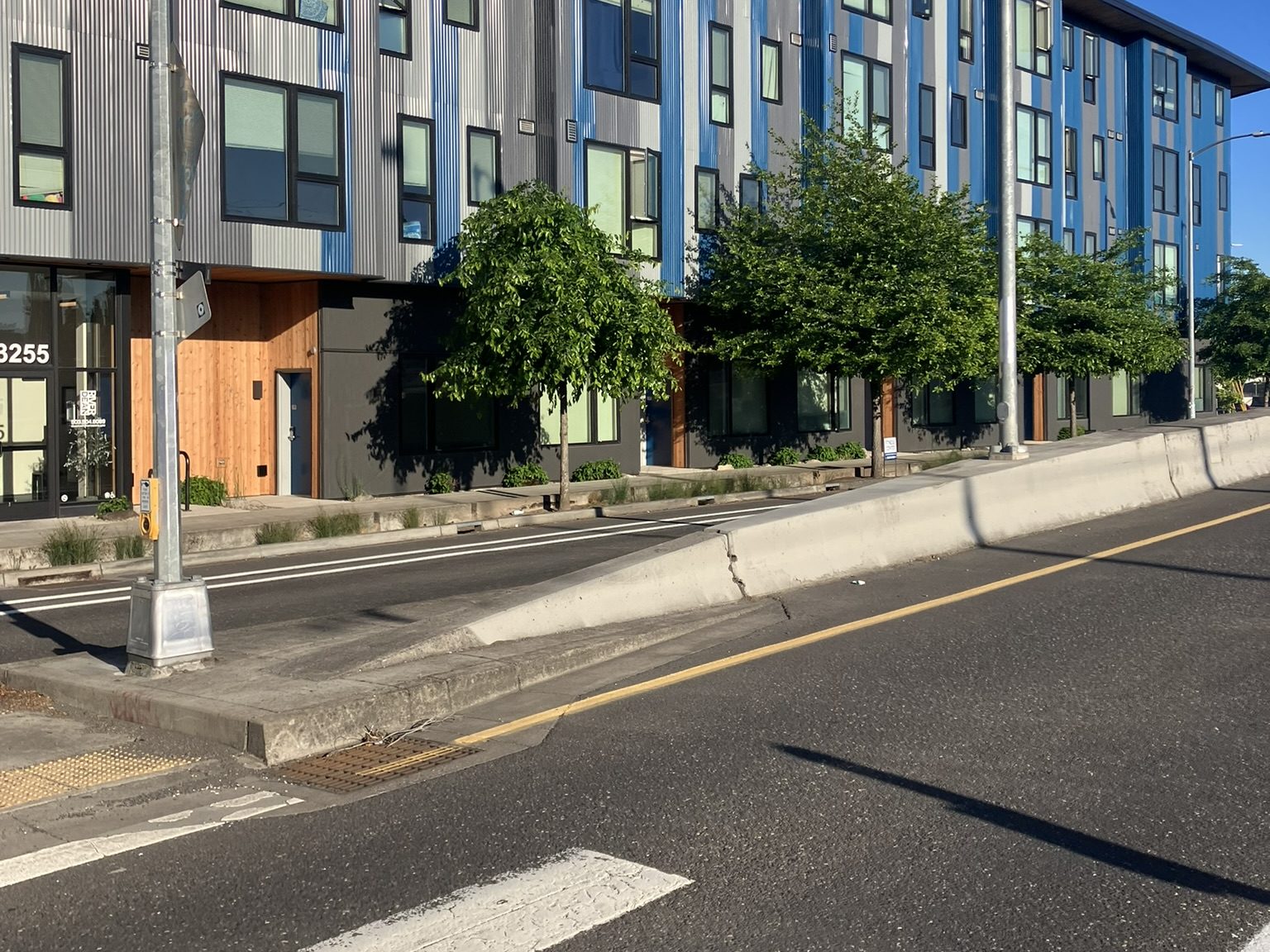
This impaired sightline for drivers makes them more likely to not stop – since they are less likely to be able to see someone actually crossing. In my experience, people barely slow down if they (presumably) see the beacon, but don’t see any signs of a person actually crossing. This is an extremely easy fix – just lower the height of the barrier to give pedestrians and drivers an unobstructed view of both sides of the crossing. It’s so easy, that it makes me extremely frustrated that no one involved in this project seemed to give it a second thought.
There are a ton of cases like this – where key points of infrastructure, critical to the safety of pedestrians and cyclists – are obviously an afterthought (see the recent Steel Bridge path closure). As nice as the new path over Powell is, and as lovely as the connection between 11th/12th/Milwaukie and the river is, it’s all made just that little bit worse by things like this RRFB with poor sight lines.
The second major issue is that every time you press the button, a recorded voice says “Walk street with caution, vehicles may not stop”. Wow, thanks! I had no idea that a car may just run me down at any moment while crossing the street. I really appreciate the thoughtful and tasteful reminder of this while I am in a crosswalk where I have the legal right of way.
It’s things like this – where transportation professionals would rather create a sub-par crossing with poor sight lines, then just throw an automated announcement on top to put the blame onto the pedestrian for not crossing carefully enough when they get run down by an asshole in a Ford F-350.
Why not make it an actual signal?
I’m sure the answer is “it would impair traffic conditions” or “the projected pedestrian traffic volumes don’t justify it”. This is a fancy way of saying “we care more about the unencumbered flow of motor vehicles than we do about people walking”. And this attitude is pervasive in what seems like every single “enhanced pedestrian crossing” project I see around town.
Sometime last year when I walked the length of 82nd, I counted “Crosswalk Closed” signs. The final count was somewhere in the 70s – far fewer than I had expected given it’s been owned and operated by ODOT for the last century. However, a disturbing pattern did emerge – every time I would see a crosswalk closed sign, it would be within a block of a new RRFB or other fancy-schmancy MUTCD compliant pedestrian crossing. And great, 82nd is a horrible street to cross on foot, it’s good to give pedestrians better crossings. But do we have to also close every other crossing in the vicinity?
Let’s look at this RRFB at the corner of 82nd and NE Thompson, adjacent to McDaniel High School.
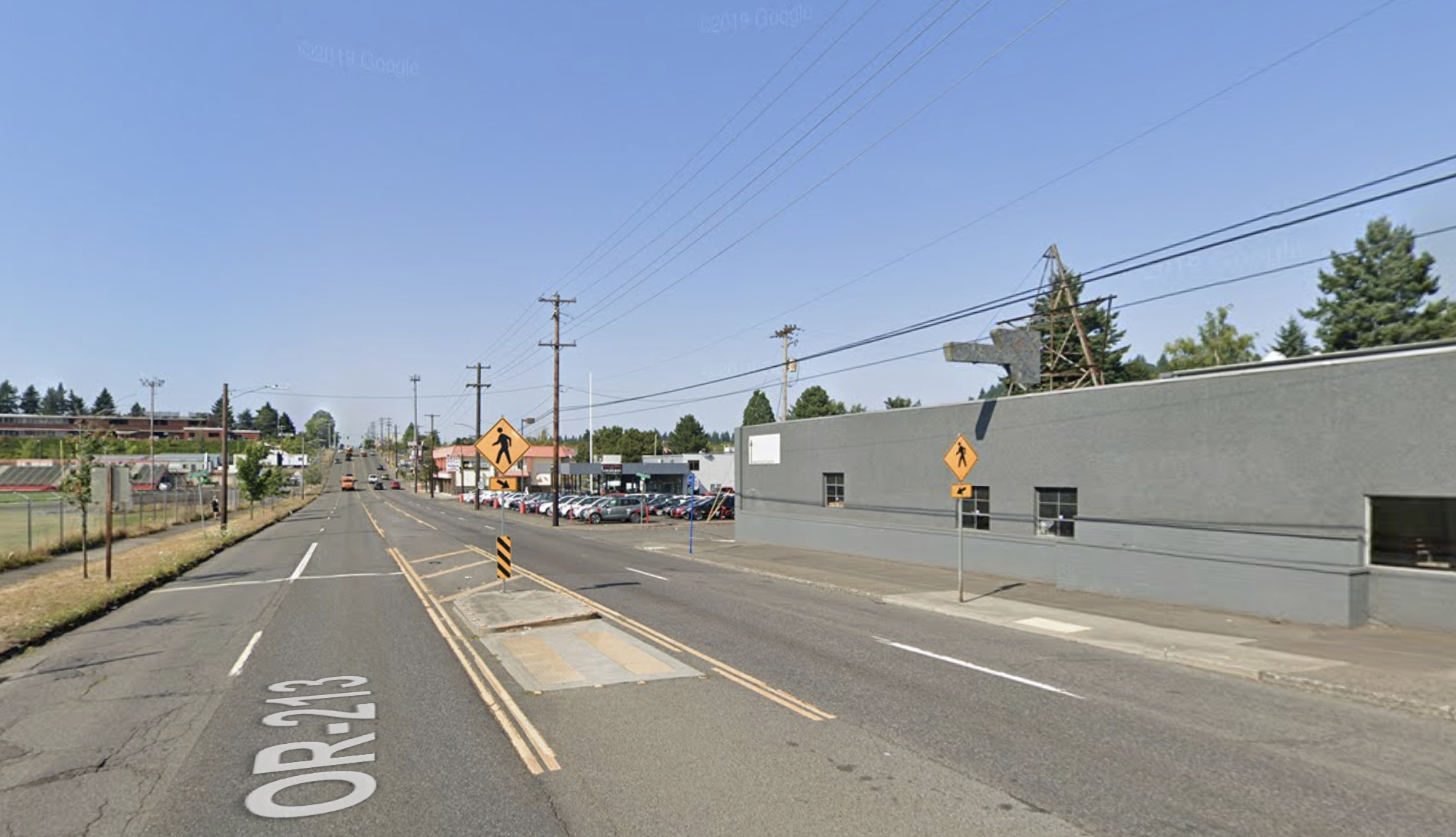
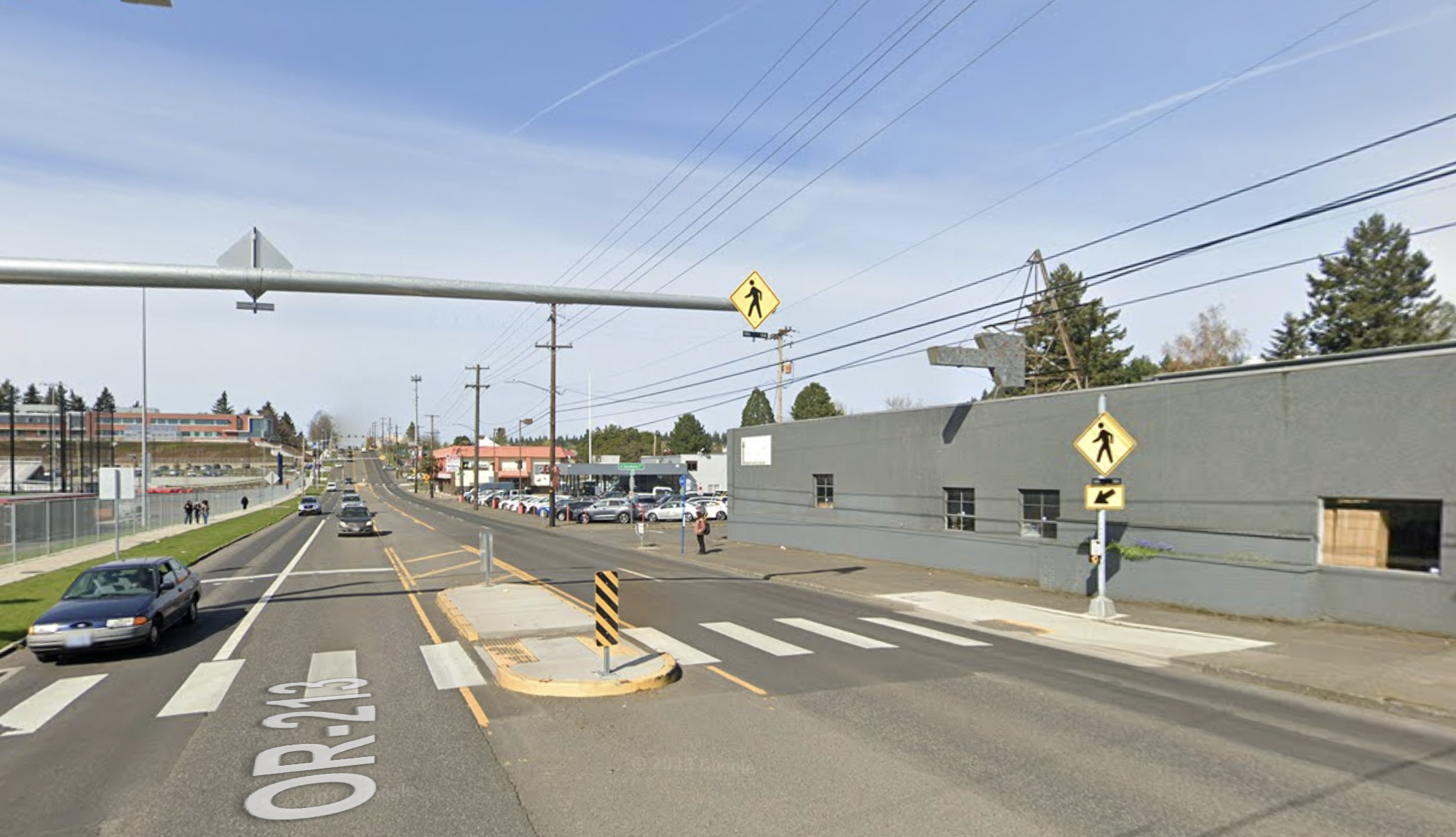
It definitely is an improvement, but the eagle eyed among you may notice the “Crosswalk Closed” sign next to the bus stop at the corner of NE Sacramento (the next street north). Putting aside that it’s not a good move to install a sign like that next to a bus stop (you know, a place where people need to walk to), the particular location of this RRFB would frustrate me deeply if I was trying to get to the sports fields from NE Sacramento

This might be construed as a “minor nitpick”, just like my endless complaining about how ODOT closed the west leg of the crosswalk at Powell and SE 21st in 2017. But little choices like this are examples of the way that our current best practices in the transportation planning world systematically punish pedestrians. Having to travel a block out of your way to cross 82nd, or having to cross a street two extra times, or being forced to endure minor belittling at the hands of an automated announcement signals to pedestrians that they are unwelcome interlopers on major roads.
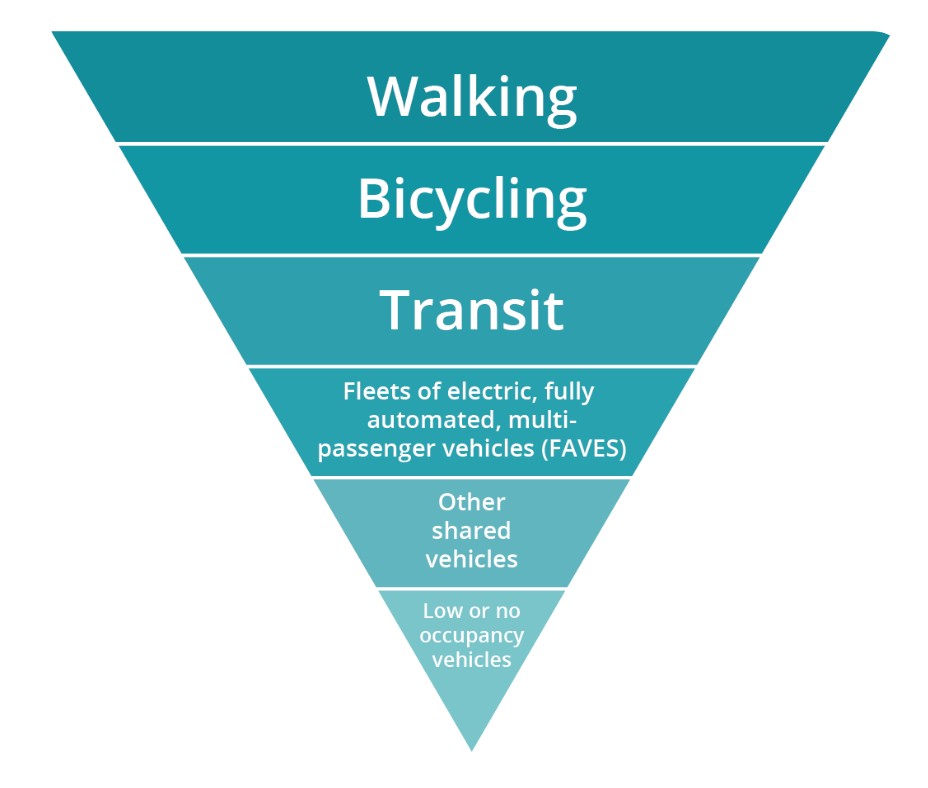
And this “Crosswalk Closed” issue begs another question: if it’s unsafe to cross a road except at an “enhanced crossing” location, shouldn’t we be taking drastic measures to change this? I mean a quick glance at the foundational aspects of Portland’s Transportation System Plan would have you believe that “Walking” is the most important thing to plan for.
And so I’d ask why on earth we’ve gotten things like this – a crosswalk closed sign on Division and 159th. This is new enough that it’s not even available to see on Google Street View! And it’s at a fully signalized crossing that was built for the Division Transit Project – which had a bottom line in the hundreds of millions. Yet, the only complaint that registered to our city leaders came to allow more automotive access to the Roman Russian Market on 102nd.
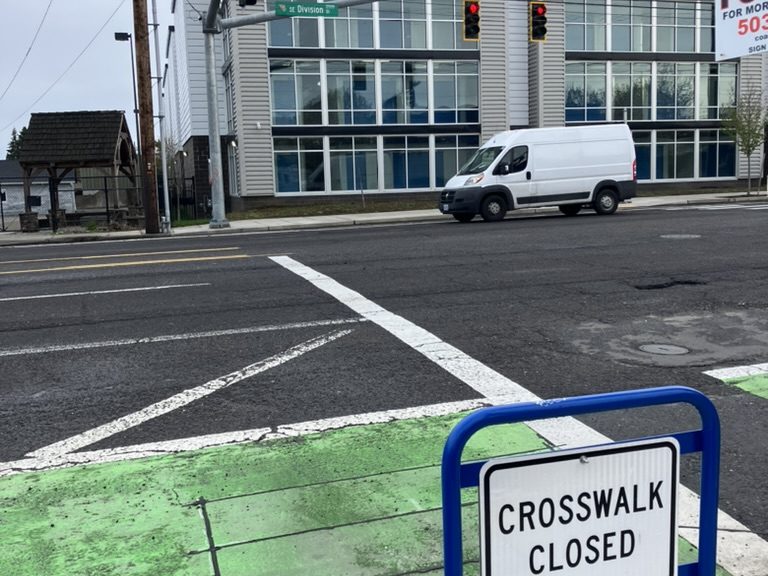
This crosswalk did not need to be closed – but it was judged to be “not worth it” to build a crosswalk into a newly built signal. I can only speculate, but it seems to me that the only reason for this would be vehicle traffic. Maybe this crosswalk would have “interfered” with a left turn, or maybe it just would have “forced” the PBOT and TriMet traffic engineers to lengthen the signal (Editors note: given the existence of a traffic signal here, PBOT’s own guidance would be to install a crosswalk).
The framing here matters. Using a word like “interfere” sends a clear message as to who should be prioritized. And this isn’t something that can wordsmithed away either – despite that seemingly being the typical way to get around an issue. No, this example on Division sends a clear message – even when an intersection is within a pedestrian district, is the highest classification of walkway designated by the city, and is part of a $275 million project, the concerns of motor vehicle traffic are more important.
All this in the context of a project explicitly seeking to improve the walking conditions on Division. And despite half of a master’s degree in planning, I can’t find any place where the public would have been given the opportunity to comment on something as specific as this crosswalk. That work is likely done in engineering, after all the engagement has been done. Given this, and the fact that every policy in the city and region say this crosswalk should exist, why doesn’t it? Your guess is as good as mine – and good luck trying to find specific engineering documents!
And I come away from this short investigation thinking “what are we even doing here?” Is it just that there isn’t anyone who cares about this stuff? I’m not sure about that. It does feel to me that the process that we use to build our environment leaves little in the way for cautious dissent or well considered alternatives. It’s all or nothing, and often times bad projects get bundled with good ones to reduce the chances of everything blowing up (see: I5 Rose Quarter).
You can tell how little this matters to local policy leaders by trying to get information on which crosswalks are even closed. Portland has an inventory of street signs, but this is laughably incomplete. Metro has a sidewalk dataset, but no information on what happens to a sidewalk when it reaches an intersection. ODOT has an inventory of signs as well, but like Portland the crosswalk specific data has obvious holes (not to mention, ODOT controls only a few roads in Portland directly).

If we really truly believe that pedestrians are the top of the modal hierarchy, then it’s inexcusable to act in this way. And if we want to talk about who’s culpable, then I fear that the answer is just about everyone. It’s easy to be in the planning world and to point at traffic engineers, but it’s clear and obvious to the intrepid pedestrian that this city does not genuinely value pedestrian activity over “smooth traffic conditions”. And neither does the state!
And it’s worth repeating – when we compromise on pedestrian comfort and safety, it puts everyone at risk. Everyone is a pedestrian at some point during a trip and, ORS 801.305 notwithstanding, streets are for people – not vehicles. Treating pedestrians with dignity means prioritizing them over “smooth traffic conditions”, or “interference from a left turn”. It’s high time we start acting like it.
 City Hikes
Leave a comment