

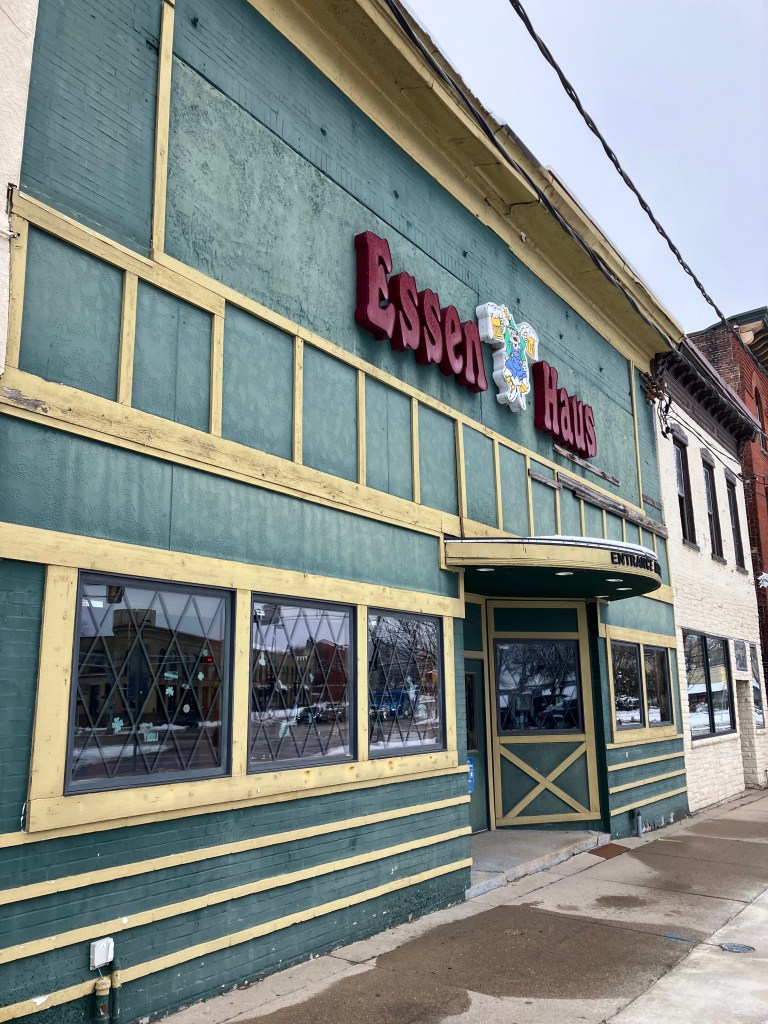
On my 24th birthday, I went out to the Essen Haus. It was a cold February night in 2020, and not a particularly compelling night out. A girl I had been seeing called me to berate me for being a jerk (I’ll make no claims that it wasn’t fair in the abstract, but the specific circumstance of the night was not warranted), and fewer people than I maybe would have hoped for made it. It was just me, Jack, Michael, and Anna by the end of the night. I’m sure we had a few boots, especially earlier in the night when Jack’s mom was there (we share a birthday).
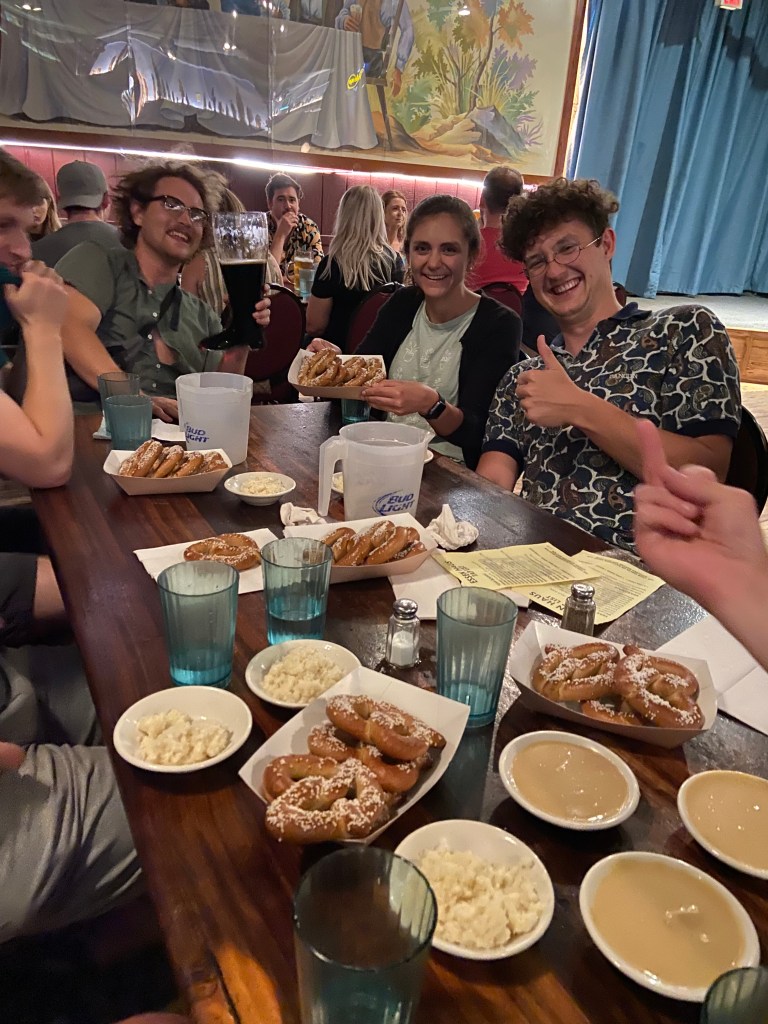
I share this not because it’s my favorite memory from the Essen Haus (that would be the time I accidentally ordering nearly 30 pretzels), or even my least favorite (that would be one of the times I puked in the bathroom). It just was an important night in my life, and I spent it with dear friends at the Essen Haus. And now it’s closing, and it makes me sad in a way that I’ll never be able to put into words.
Maybe it’s a function of my typically Wisconsin vaguely German heritage, and the feelings of a homesick man far away from a comfortable beer hall where you can buy beer by the boot, but I just can’t let this slide by without comment. Madison is an ephemeral place in a lot of ways – a function of being oriented around a university. In the modern economy of “eds and meds”, a strong biotech sector anchored by Epic – notorious for a ruthless work culture and outrageously high turnover – compounds this. Indeed, according to the Census, 12.6% of residents in Madison moved from out of the county, and 26.9% moved at some point in the last year. The later ranks #1 for Census Designated Places over 200,000.
And I think this begs a question:
How Much Can Places Change While Still Staying Themselves?
Admittedly, the 200,000 person cut off is a bit cheeky. Madison is quite large for a college town, and naturally places oriented around large universities see a lot of turnover. But Madison is by my estimation more than “just” a college town (no shade to college towns, I love ’em). Especially if we consider how in the state of Wisconsin, the past 50 years have seen the Madison MSA go from 1/3rd to 2/3rds the size of the state’s largest (Milwaukee). Madison is a metropolis in its own right, and should be treated as such.
It’s nice that the city is growing, and I’m glad more people get to experience it. You know the saying – I’m not against development, I’m just against this development. And even then, while I’ve got plenty of annoyance with the minutia of this particular development (like more than 200 car parking spaces), my issue is with what’s going to be lost, not what’s to come.
So much of what I know and love about my hometown is in relation to my family, and part of that family heritage involves German food and custom. Well, it does to me now anyways. Because it’s not like I grew up going to the Essen Haus, or even enjoying German food very much. Outside volunteering at the World’s Largest Brat Fest (not the year Smash Mouth played), I can only strongly recall instances of feeling like my family was vaguely German at the Dorf Haus in Roxbury. Rather, I’ve only begun to care about since moving to Portland – probably because I noticed what I was missing.
So it feels like a particularly bitter pill to swallow, to watch it happen from so far away. I’ve been frustrated with the lack a certain je ne sais quoi that the Essen Haus has, but that Portland’s pretty good German style bars lack. Maybe it’s the group of regulars chatting amongst themselves at the bar, or maybe it’s the boots, or maybe it’s the distinctly mediocre food. Maybe the Essen Haus is just a giant of my own mythologization of Wisconsin. Perhaps it’s some of each, though the boots seem like the easiest fix.
In 100 years, what will be left of the Madison that I love? Probably very little, and I think I find that to be disarming. But there’s no easy answer to how much a place can change while retaining it’s vital sense of self. To even ask the question feels like wading into reactionary waters, where “change” is used as a euphemism for excluding immigrants, or Black people. On this I’ll say that everyone is welcome in Madison (not that I have any real say in it), but it’d be nice if we could keep a few establishments like the Essen Haus around for everyone coming in to enjoy.
Anyways, Is The Development Any Good?
The new development is set to have 100 hotel rooms and 170 apartments, as well as the 220 parking spots. According to the letter of intent submitted to the plan commission, 167 of these parking stalls will be reserved for residents. I find this to my the most offensive part of the plan, given the location of the development 2 blocks from the forthcoming BRT project on East Wash and 1 block from the primary cross-Isthmus bike route.
I bring this up mostly because having access to a car is a strong determinant for using a car for any given trip. Writing this out, it sounds pretty obvious since you can’t use a car if you don’t have access to one, but the larger point is that by providing a parking spot for every apartment unit the developer is encouraging car usage. 20% of Madison renters do not have access to a car, why not scale down the parking to match? I suppose the developers have their own reasons, but I think seriously curtailing access to cars is a key part of climate justice. It’s just unfortunate that would also mean curtailing access to jobs – and since the largest private employer in the region is nearly 20 miles away on the western fringe of Verona, it’s unlikely that this would be seen as a positive.
There’s also 39 units of affordable housing included at 60% area median income (AMI). Per HUD, this corresponded to an income of $55,680 for a three person, two-bedroom unit and $43,320 for a one person, one bed (or studio). Assuming that these affordable housing units rents are set via Low Income Housing Tax Credit (LIHTC) standards, this means that 60% is a maximum – and if this household were to exceed that income they would no longer be eligible to rent that unit. With 30% of income being used as a benchmark for affordability, the rent in a 60% AMI two bedroom in Madison would be $1,392/month, and would be $1,083/month for a one bedroom.
These are seemingly pretty good deals for the location, fairly significantly lower than the market rent in new constructions in the vicinity. But it’s hard to feel good about them, given that the 60% AMI is a hard cutoff. This isn’t an issue with the development itself, rather a fundamental issue with the way that LIHTC works (see this part of an excellent series by Shelterforce for more details). Since that 60% AMI figure is a hard cut off, it guarantees that everyone renting an affordable unit is rent burdened (paying more than 30% of their gross income towards rent). It’s hard to feel much excitement about that.
The developers, and the city, posture this as “much needed affordable housing” but it’s not clear to me that it will function as such. LIHTC is set up in a way that ensure a welfare cliff, and while this may not be the fault of the developer, or the city, it’s enough to be cautious about what “affordable housing” even is. Because when I lived in Madison, I rented a quarter of a house for $618.75 about 4,060.3 feet as the crow flies from this development. Sure, prices have gone up since 2021, but is paying $1k/month is affordable for someone making less than $43k/year? I’m not so sure, especially given the rising cost of basically everything else in life.
Affordable housing is great, but the devil is always in the details. Given that the state of Wisconsin has all but outlawed rent control, and LIHTC funding is federal, there is probably not much else that the city of Madison can do. The only other options are the so-called free market, where hopefully if enough supply is built then prices will start to come down. There is some merit to this, as Austin, TX shows, but this price drop has come only after many years of skyrocketing rents – rents that are still generally higher than they were in mid 2021. Also, Austin has also physically expanded by 18% since 2013 (derived from TIGER Shapefiles; 2013, 2023), meaning that this growth can hardly be said to be exclusive to apartments in the central city.
But quibbles with LIHTC and a huge parking structure aside, this apartment is sort of whatever to me. If it weren’t for the Essen Haus being torn down, it wouldn’t even register as something worth caring about. The more interesting angle is why these sorts of larger apartment buildings are ubiquitous in downtown, while parts of the city that are arguably better situated to high paying jobs remain as detached houses.
Well, What Should We Even Do?
For this development, even if it’s sort of meh and replaces an institution that defined the city for me for half a decade I don’t really think there’s much to be done. At least not from an urban planning perspective at this exact moment in time. That said, I think the city would be wise to massively upzone basically all of the near West Side. Given the employment dynamics in the city, places like my childhood neighborhood are outrageously in demand and likely better located than downtown Madison for the median high wage job in the city (likely located at Epic outside Verona, or at Exact Sciences on the far West Side).
Rather than allowing these neighborhoods to be preserved as expensive relics to the 1920s, they should be seriously densified. I’ve written about this extensively before, but the character of the neighborhood should always be understood as a reflection of who is currently living there – not the nature of the housing stock. If the near West Side neighborhoods have had a character, it’s been defined by their relationship to higher paying jobs associated with the University – but as these jobs have massively expanded in scope in the past few decades, housing has not kept pace at all.
If things continue as they are, and the highest housing density is focused solely in downtown and directly near UW’s campus, stories like the Essen Haus closing will be the norm. There’s just too strong of incentives for longtime businesses to sell, the profits are just too dizzying. Spreading out this density to other parts of the city might mean shifting the physical character of the neighborhoods, and it would not come without it’s issues. But if the only other option is to watch places that define the city, that give it it’s essential quality, then what other option is there?
If this development were happening on Virginia Terrace, I have no doubt that the neighbors would circle the wagons to stop the development at all costs. But surely these same neighbors also rue the changes to downtown – yet these two things are linked. If only part of the city is allowed to change, while the residential neighborhoods are frozen in amber, then the logical result will be that the changeable places change much faster than they would have otherwise. I don’t think the change is bad per se, but if it’s a burden for the city to bear than it should be borne by all regions of the city equally. The other option is explosive growth gets concentrated within downtown and the exurban fringe, leading to farmland lost to the sands of time at the same time that community cornerstones like the Silver Dollar and Essen Haus find the wrecking ball.
A better way forward is possible, but only if we have a serious conversation about who can reasonably live in the city. Maybe I sound like a broken record, but in a city like Madison, geographically constrained by lakes and in the midst of dizzying economic growth, it’s not reasonable to expect that a single family home will be a good housing typology for basically any part of the historic central city (defined by me as areas urbanized before WWII – roughly the Emerson, Lowell, Marquette, Lapham, Franklin, and Randall elementary attendance areas). In this area, about three-quarters of non-vacant residential land is single family homes (derived from Dane County tax lot data, check my work if you want to!). Three quarters!
Incidentally, the average assessed value of a single family home in this area is also over $450,000. Meanwhile, a 2 unit (duplex) has an average value of $419,000 – or $209,500 per unit. 3 and 4 units have per unit prices of $188k and $142k respectively. From this perspective, any zone that allows primarily or exclusively single family homes can (and perhaps should) be viewed as a mechanism for keeping per unit prices high, and thus as a means of creating at least some amount of economic segregation.
But again, all of these changes would take time to manifest- perhaps even more than just letting market forces take their swing with the existing zoning code. Missing middle housing initiatives are great, and Madison should still pursue them, but it’s a much more forward looking project than I think advocates tend to let on. I remain of the opinion that much more drastic changes are needed, and the “natural” place to look is honestly large scale apartments on the west side of the forthcoming BRT route. But that’s a topic for another day, as we’ve gotten fairly far off course from the Essen Haus.
You’ll Be Missed
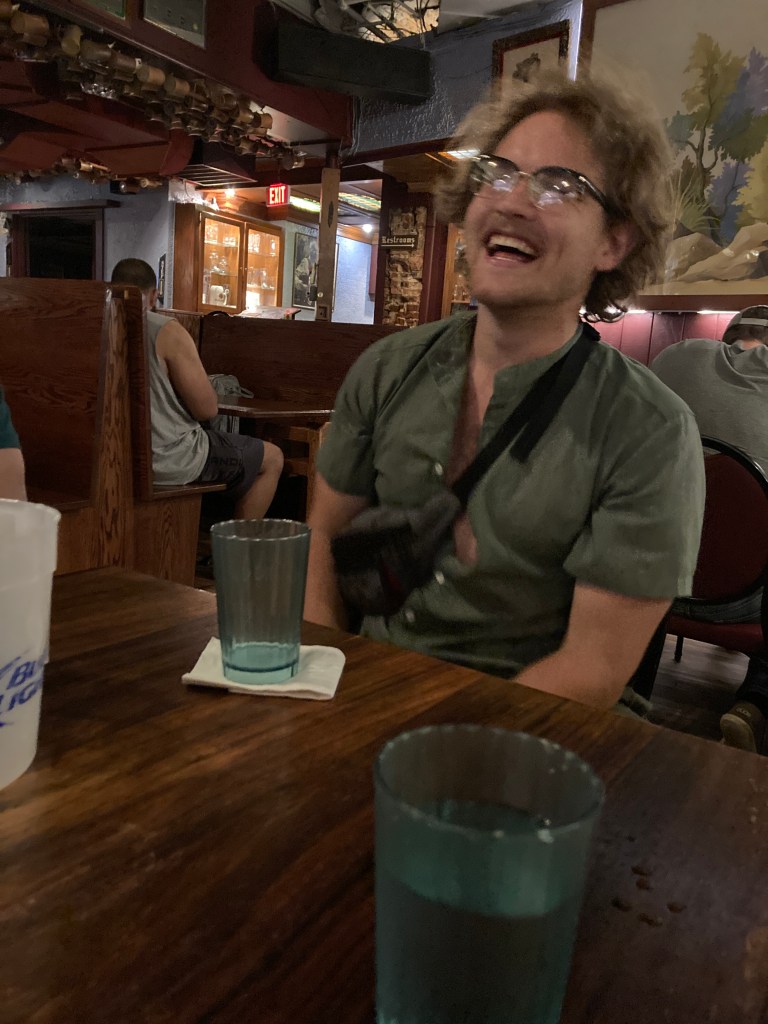
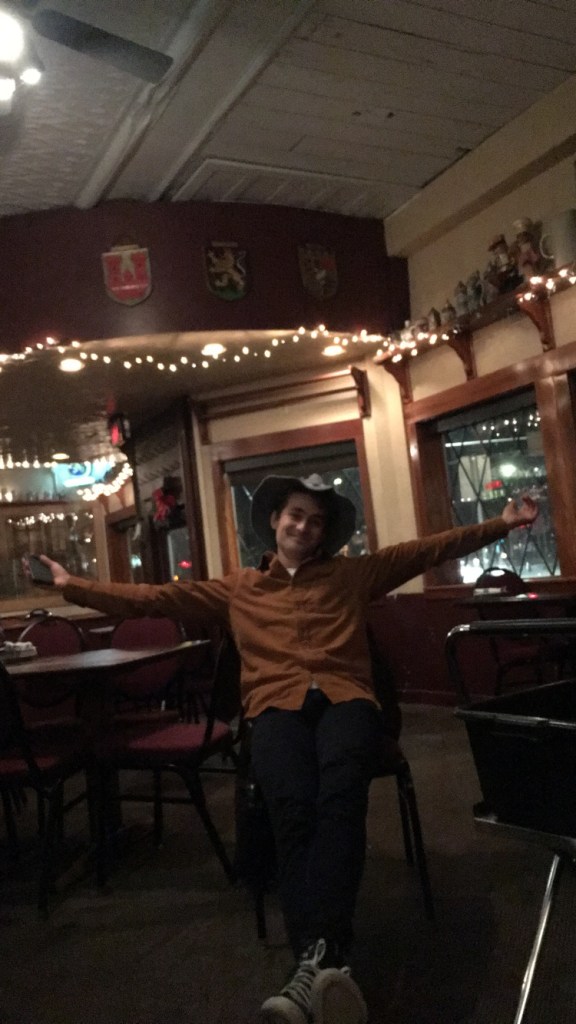
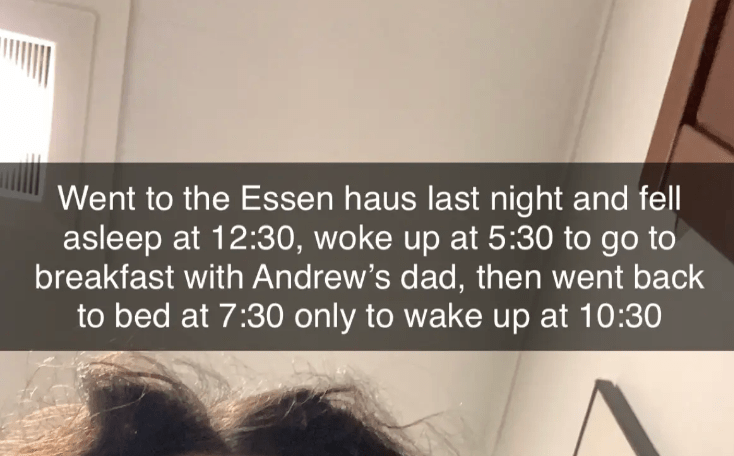
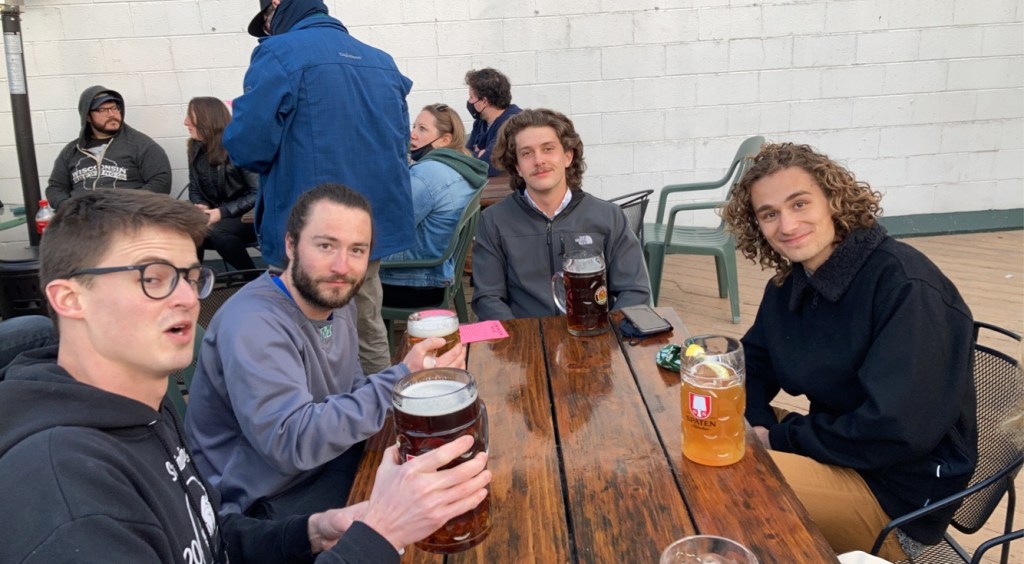
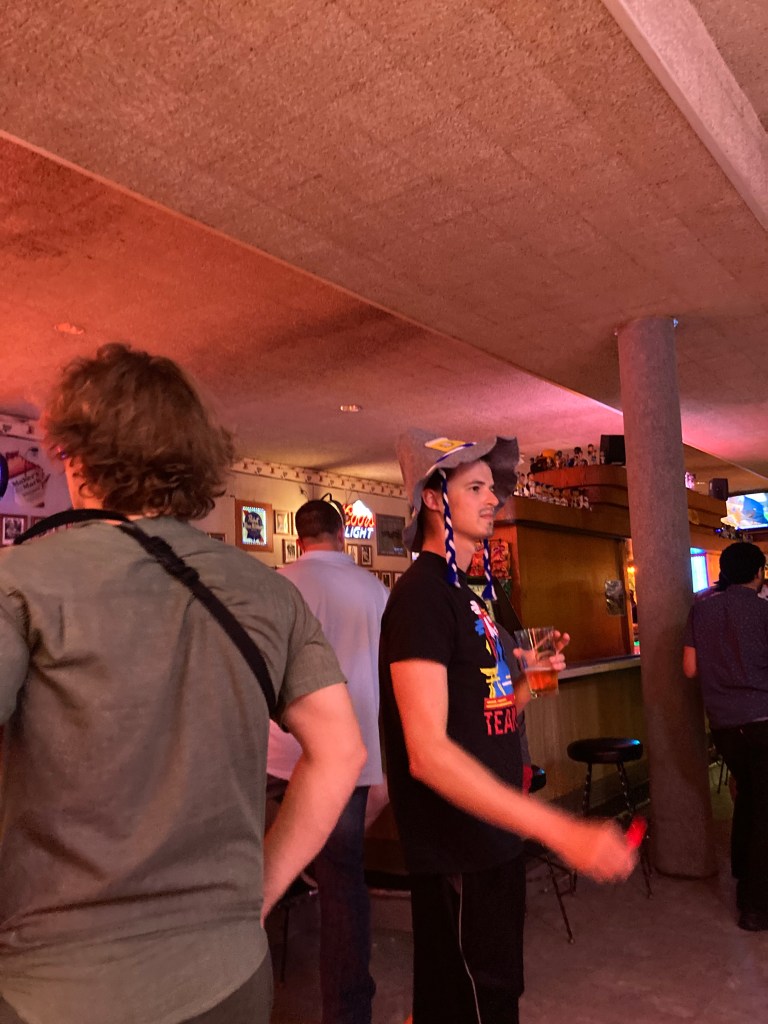
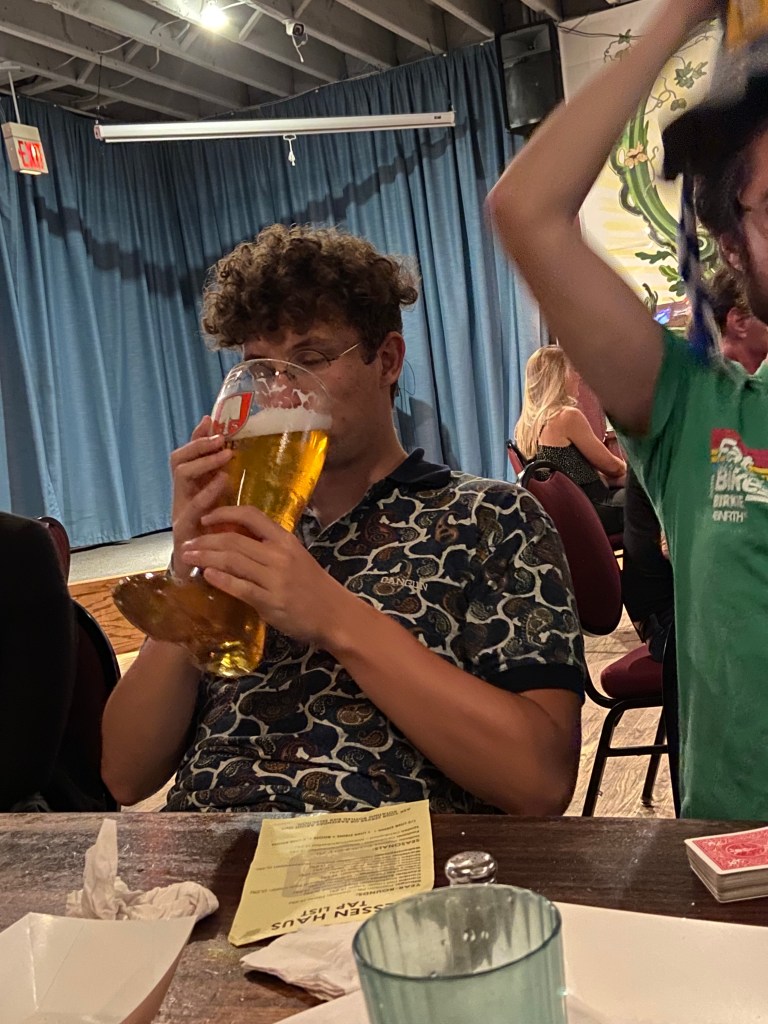
I’ll end this post with a photo album of some assorted pictures I have from my times at the Essen Haus. While it’s fun for me to get onto a tangent about the nature of housing, affordable housing, and development in Madison this loss is still a bitter blow for me. There will never be a place that can replace it, and I’ll always recall my time there fondly. Til next time, old friend (emergency trip home before it closes is on my mind right now!)





Leave a Reply