A little bit ago, I managed to swing off one last backpacking trip to close out the summer in Montana with six dear friends (Olivia was sorely missed on a work trip). I had never been to Glacier before, and the experience was really something I’ll never forget. But what really made this trip special for me was that the entire thing was done without a car.
Friends of the blog may be aware of my longstanding beef with the car-centric nature of the National Parks Service. For a variety of historical reasons, almost every National Park is only accessible by private vehicle, with Glacier being a rare exception with reasonable non-car access. Just how reasonable it is depends on your perspective though, and despite having an excellent time, it would be hard to classify this as a “user friendly experience”.
A Brief Bit of Context
Before we dive into the specifics of my trip, it’s useful to understand why this trip is even possible. Glacier, more than any other park, owes its existence to a railway. When the Great Northern Railway finished its transcontinental line from Minneapolis to Seattle, it bypassed almost every established city between it’s termini (which were mostly along Northern Pacific’s transcontinental line through southern North Dakota and Montana). As a result, it engaged in heavy promotion both of its railway towns (mostly named after European places: Glasgow, Malta, Zurich, etc.) and the nascent Glacier Park just north of the line as it crossed the continental divide at Marias Pass.
Unlike other major national parks with associated railway tourism like the Grand Canyon (Atchison, Topeka & Santa Fe) and Yellowstone (Oregon Short Line, Northern Pacific), Glacier was almost entirely established by the railway itself. The Great Northern built hotels, lodges, chalets, and trails to promote tourism and lobbied congress extensively for recognition. Contrast this with Yellowstone, where the park was established (1874) well before any railway managed to build a line out.
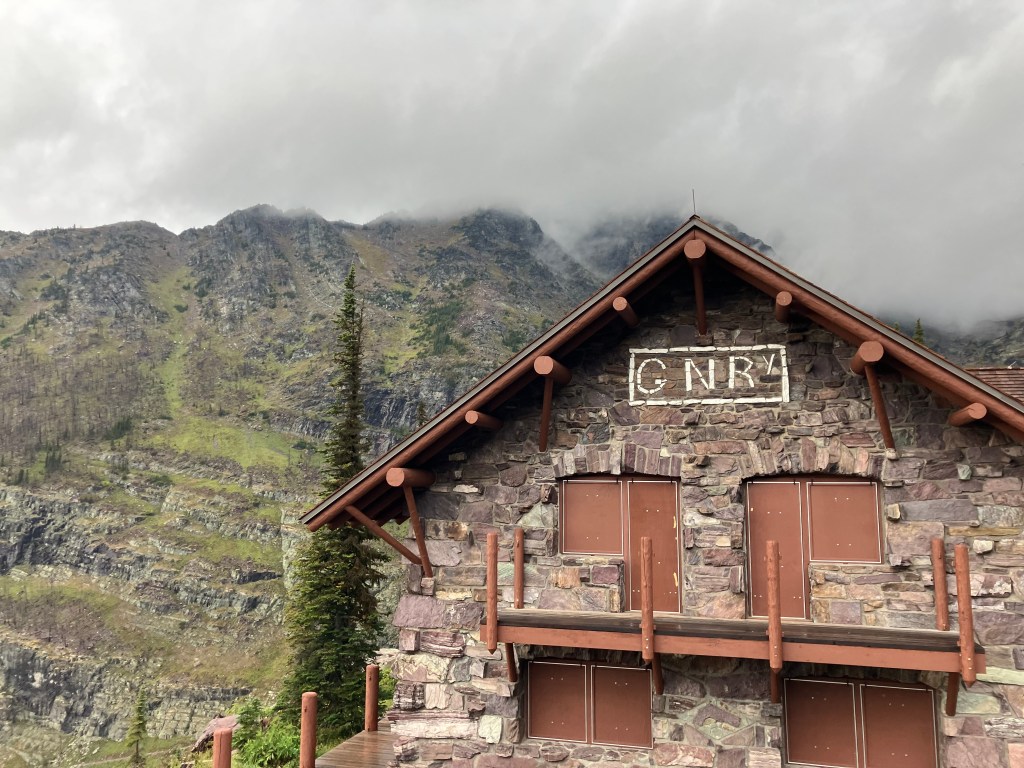
Once tourists arrived on a Great Northern train to either of the stops at the park, they would take a stagecoach to one of the major hotels along the lakes, followed by some kind of horse or foot trip into the mountains. Indeed, the inspiration for Glacier was the Swiss Alps, where trips between chalets are still the norm for back country travel (hence the building of many chalets in the back country – one of which we camped next to). But it’s important to say that this sort of National Parks tourism was mostly reserved for the rich – and that the establishment of the national park was directly responsible for the removal of the Blackfeet from the area. Before it became a park, both the Blackfeet and Flathead Indians had treaty rights to hunt but normative conceptions of wilderness in US culture (devoid of people) and the US government forced them out.
But more on the ethics of wilderness in part two of this trip report!
What’s the Train Access Like Now?
For starters, Amtrak’s Empire Builder is the descendant of the flagship Great Northern Train of the same name. At one train a day, the service is worse than Great Northern ever ran, as the luxury Empire Builder was complemented by the all-coach Western Star/Oriental Limited, but operates a broadly similar (albeit slightly slower) schedule. The eastbound train gets into West Glacier at 8 in the morning, while the westbound train leaves at 9:30 at night. This generally means that if you want to backpack and you’re coming from the east, you’ll need to book accommodations to bookend your journey.
Luckily, we traveled from the west and arrived on the eastbound train about an hour late on Friday morning. From West Glacier, it’s a little over two miles walking to the Apgar Visitor Center where you can catch a shuttle to most key locations along Going-to-the-Sun road in the summers. If you aren’t willing to walk, private concessionaire giant Xanterra (a descendant of the legendary railway hospitality company, Fred Harvey) provides a paid shuttle from both West Glacier and East Glacier.

Unfortunately, it’s a bit on the pricey side ($14/person – not including the park entry fee) and requires an advance reservation for the West Glacier service. For East Glacier, the website specifically says to not rely on it since it has such limited capacity. Cool!

So while Amtrak and the National Park Service both actively advertise the train connection, actually getting into the park (especially if you aren’t opting for a Xanterra owned hotel) is sort of challenging. I didn’t mind the 2 mile walk – and we actually managed to outpace the mile-plus line of cars waiting to get in, so if you’re interested in a Ampacking trip to the park, I think West Glacier + a walk is really your best bet.

Our walk into the park was sort of annoyingly stressful. Since we decided it would be best to actually pay the park entry fee, we couldn’t take the bike path entrance (which bypasses the entry gates), and on that note it’s ludicrously expensive to enter a National Park on foot. At $20/person, our seven person party came out to $140 dollars, though we actually paid $160 for two year-long park passes. We had to buy two because they are only good for four pedestrians, despite being valid for one car – regardless of occupancy! We certainly could have all jammed into a minivan and paid the one $35/car fee, though if we would have driven I suspect we would have had three cars ($105).
Sort of unbelievably, when we were paying for this absolute racket, the car behind us was frustrated with how long it was taking and honked at us. It was a surreal experience, and now that I’m writing about it I really wish I would have given her a piece of my mind. Evidently, this entire process really was not at all geared towards pedestrians.
But here’s the kicker – Glacier now has a vehicle reservation system thanks to years of overuse, long lines, and frustration at parking lots. If the goal is to reduce vehicle traffic into the park, it’d be nice for them to actually try to make the non-car entry options reasonably priced. If you accept that most people really aren’t willing to walk along the shoulder of a highway to save $14, the total cost per person to enter the park without a car ($34) is functionally the same as it is per car. It’s just so stupid. It’s already probably more expensive to get from most places to the park via train than car, can we at least get a discount on the park entry fee?

Getting Around the Park
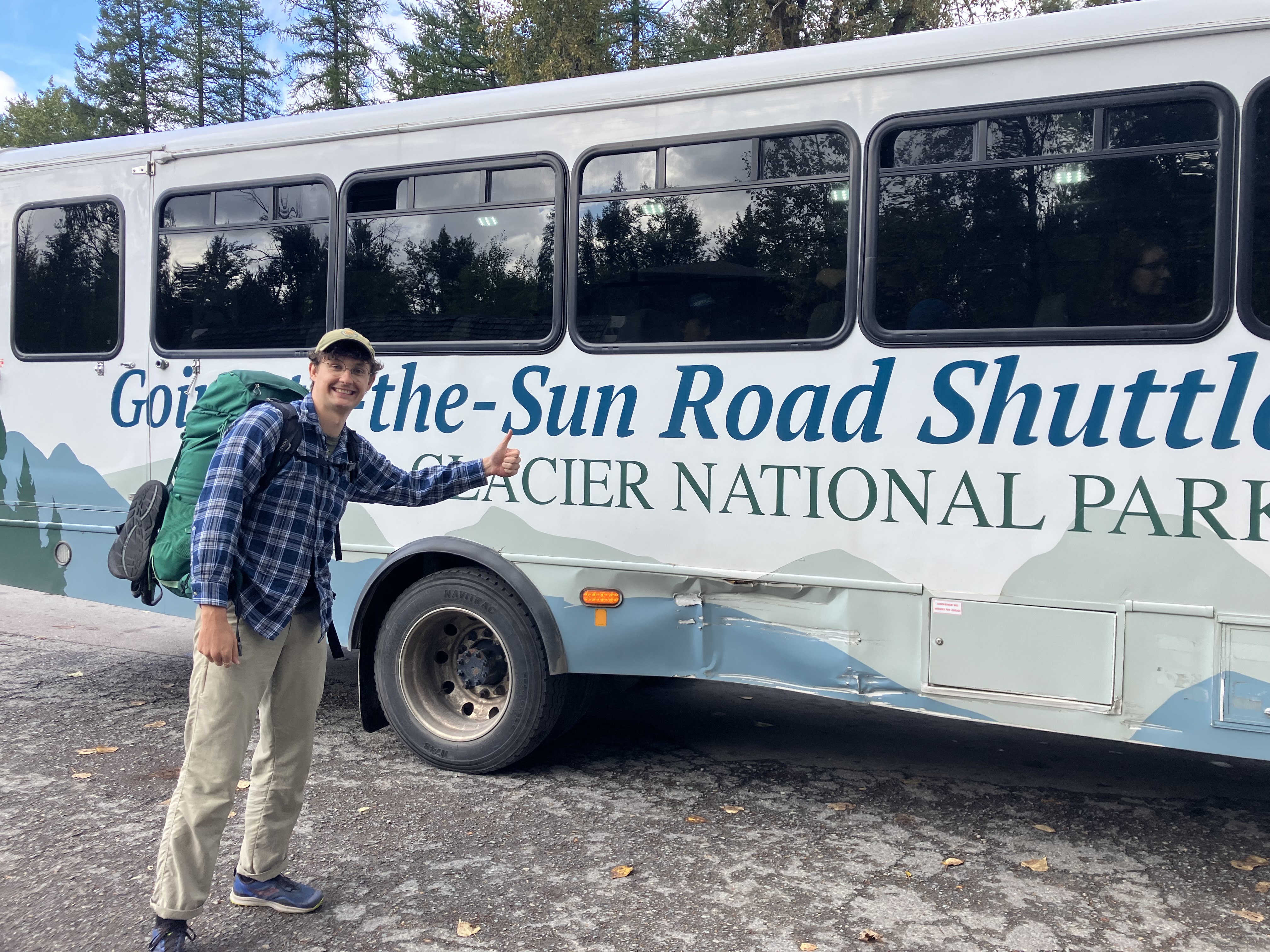
Once you’ve managed to get from the Amtrak station to the park itself (providing you haven’t lost your mind), the next step is to catch one of the parks shuttles. Owing to the very mountainous character of Going-to-the-Sun road, the shuttle service is broken into four segments. There are no timed transfers, and no posted schedules, though an express shuttle up to Logan Pass does operate during the summer months. As such, there’s a lot of waiting around.
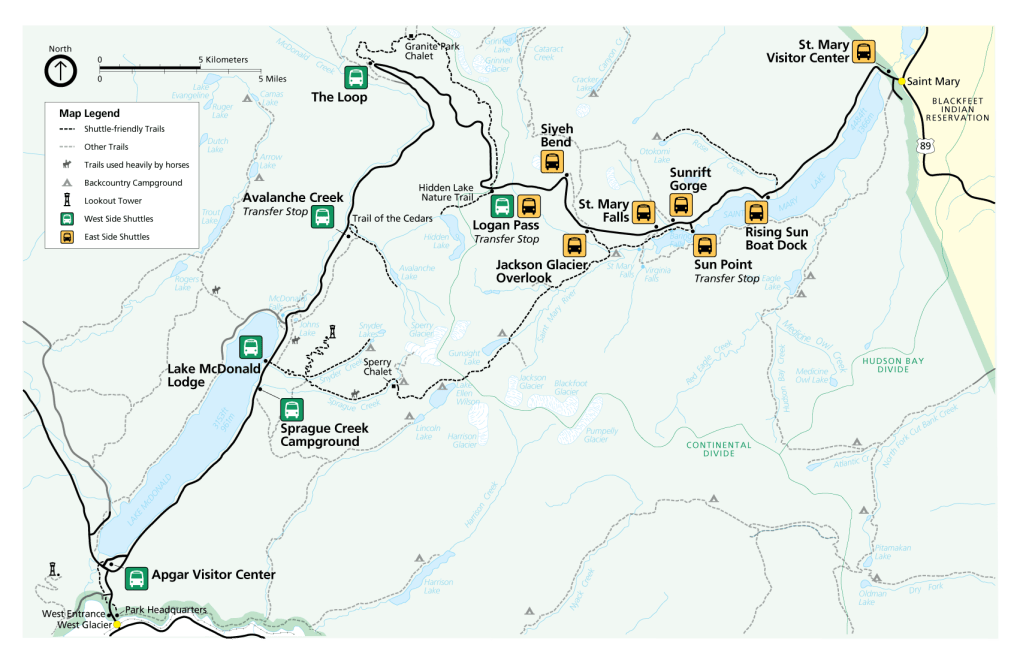
This isn’t the end of the world, but it certainly makes it a bit onerous to go more than a few stops down the road. Indeed, in many ways the shuttle functions more as a way to relieve parking loads in certain areas than it does to move intrepid hikers from point A to point B. Hence, most of the people we saw using the shuttle had done something like park at Avalanche Creek or Apgar, then took the shuttle up to Logan Pass to avoid the parking lot struggle there.

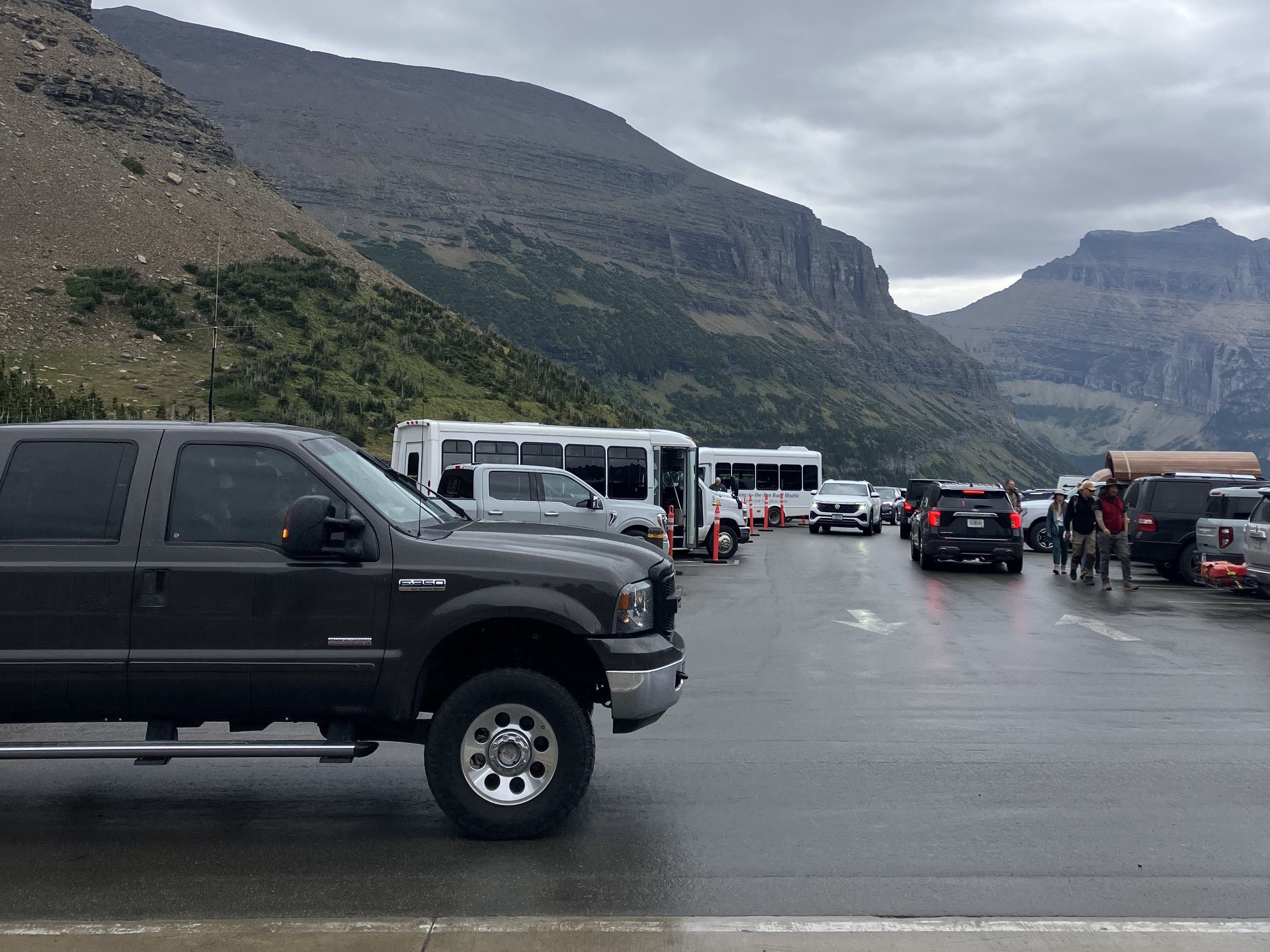
Given that back country campers made up about 1% of park visitation in 2023, it’s understandable as to why this shuttle is less geared towards a convenient back country experience and more towards traffic relief, but it makes for a sort of frustrating experience as a user. Waiting in line for an hour for a shuttle that only seats 10 people at Logan Pass really undermines the usefulness of the service – especially if you’re looking to displace obviously more convenient car trips.
While it’s tempting to say something like “well, I’m just grateful this service exists at all”, I won’t; it needs to be better. Unfettered vehicular access has degraded the experience at other National Parks to the point of road closures (Zion) and what really should be road closures (Arches). Public transit is a far better option for almost every national park than driving – at least when you’re physically there already. For one, most parks are like Glacier where a single road connects to most of the major trails and sites – a linear corridor which can easily be served by a bus. Simply have a bus stop at all the scenic vistas and trailhead, run it every 5 to 10 minutes, and all of a sudden the service is far superior to the current conditions of fighting traffic and praying for parking.
And at risk of running long on this post, I’ll note that the Arches website notes that pulses of 40+ visitors at trailheads in shuttle-based parks can lead to trail erosion and other acute overuse issues. The answer is to run more buses to spread out passenger loads, or to manage stops and trailheads differently. For example, it’s common for major stadiums to have a long walk from the station to alleviate crush loads when huge crowds are let out. Moving stops and building sidewalks and interpretive areas at trailheads could help on that front (this would be easy to accomplish at Arches, probably less so at Glacier). People have already solved the problem that the National Parks Service claims to be intractable.
The Hike Itself
Now the real joy of this trip wasn’t about taking Amtrak, or the smug sense of superiority I got while outpacing car traffic on foot, or riding shuttle buses, it was really about the 20 mile, two night traverse of Gunsight Pass.
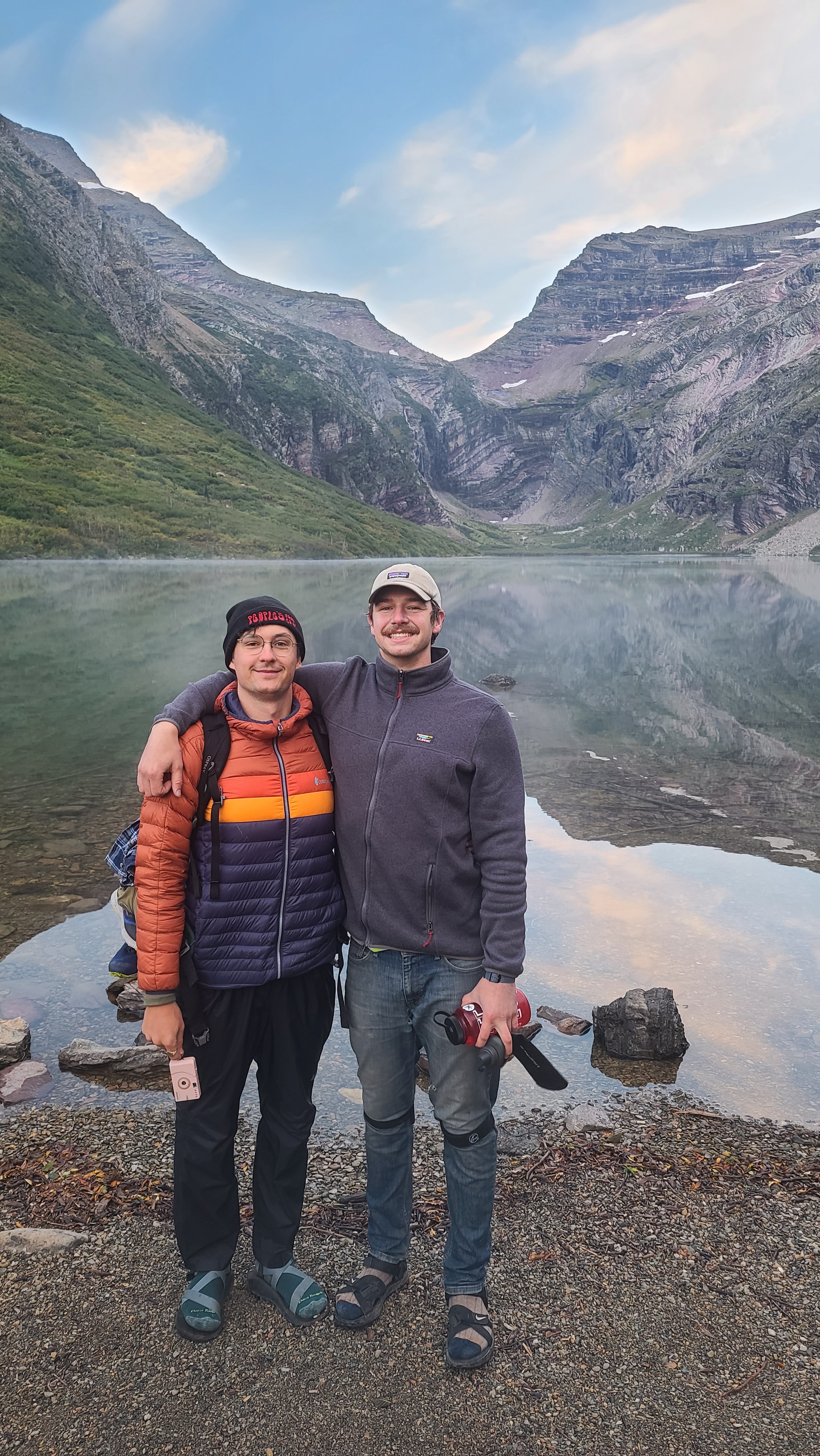
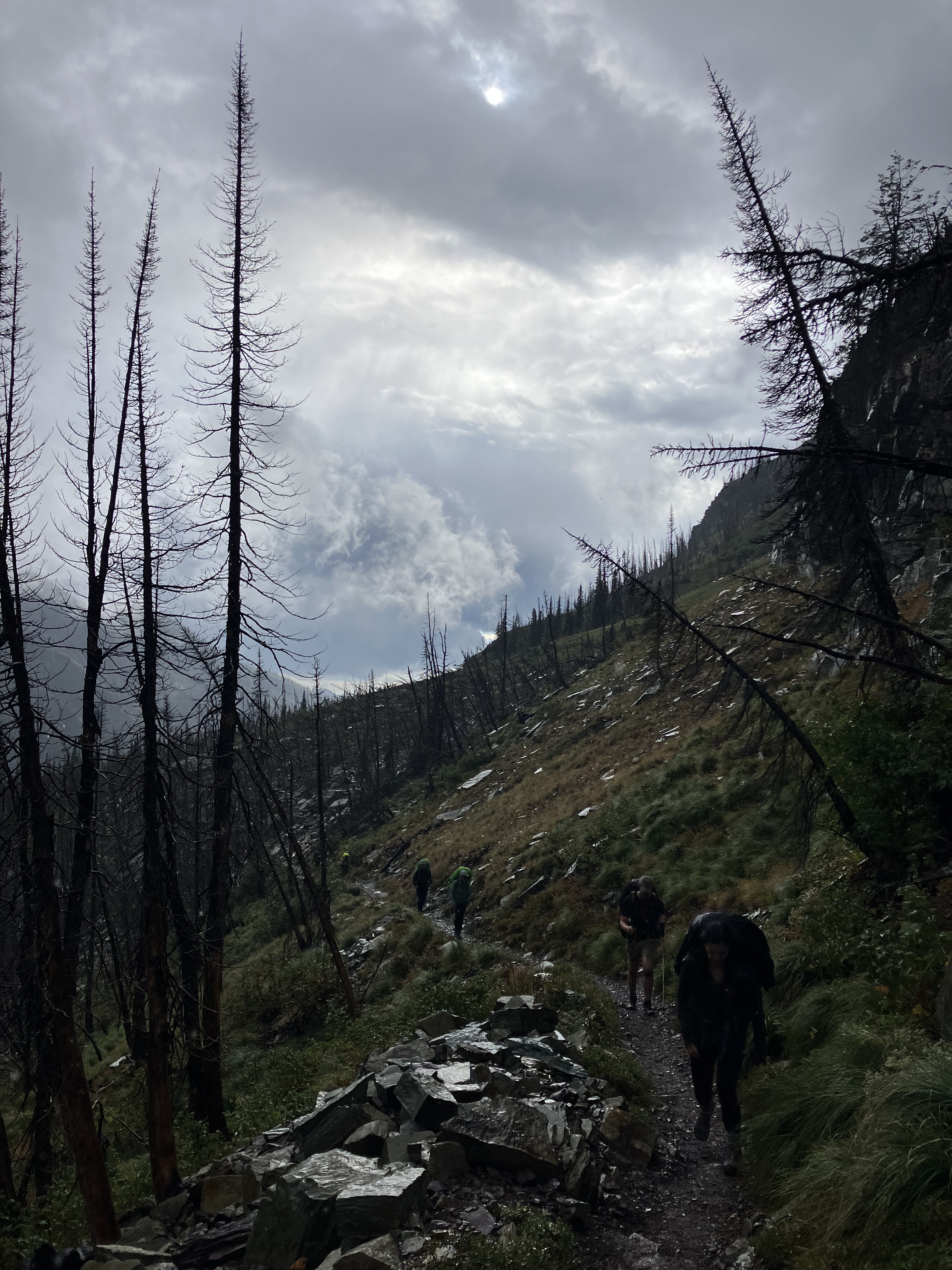

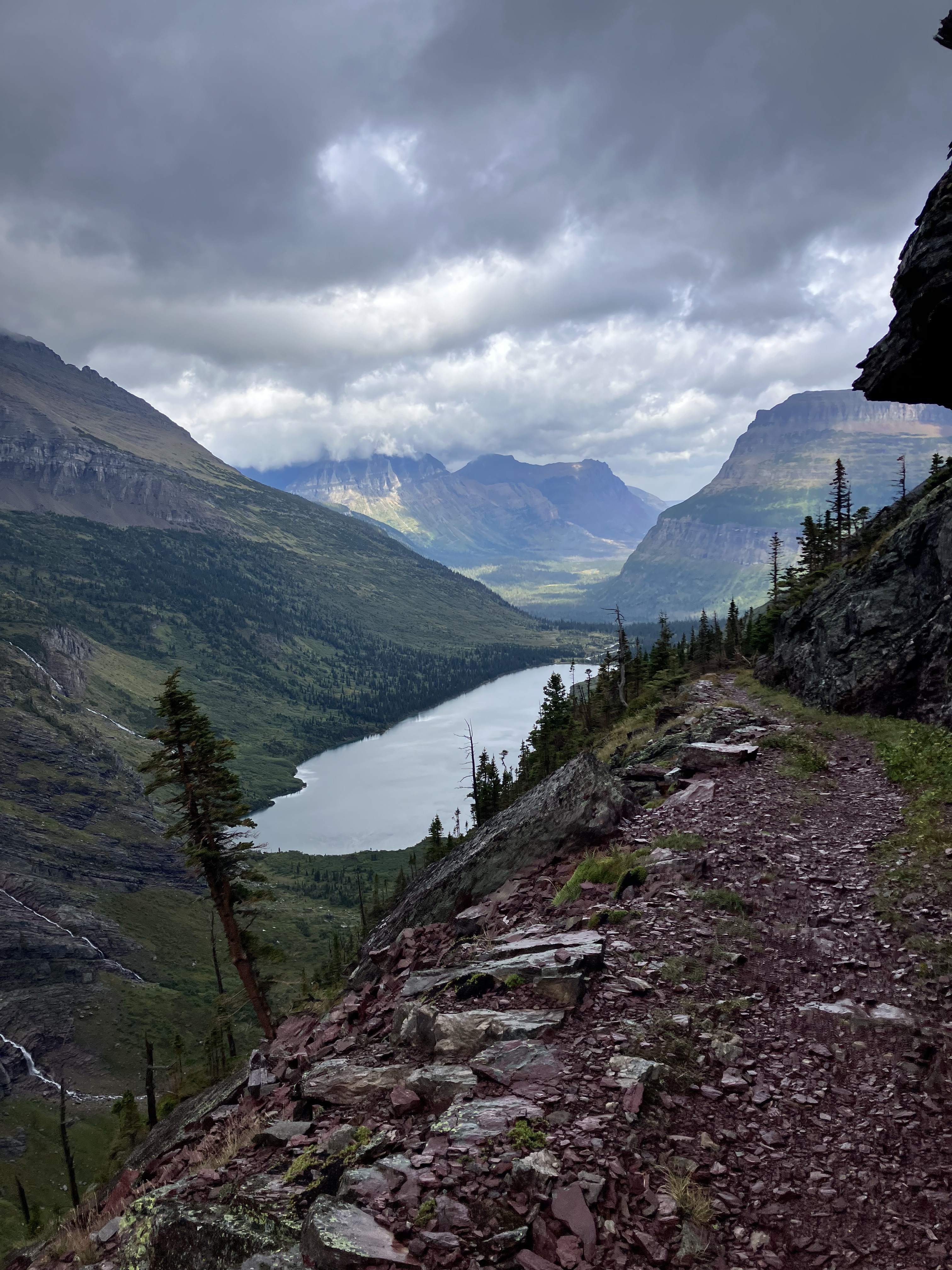


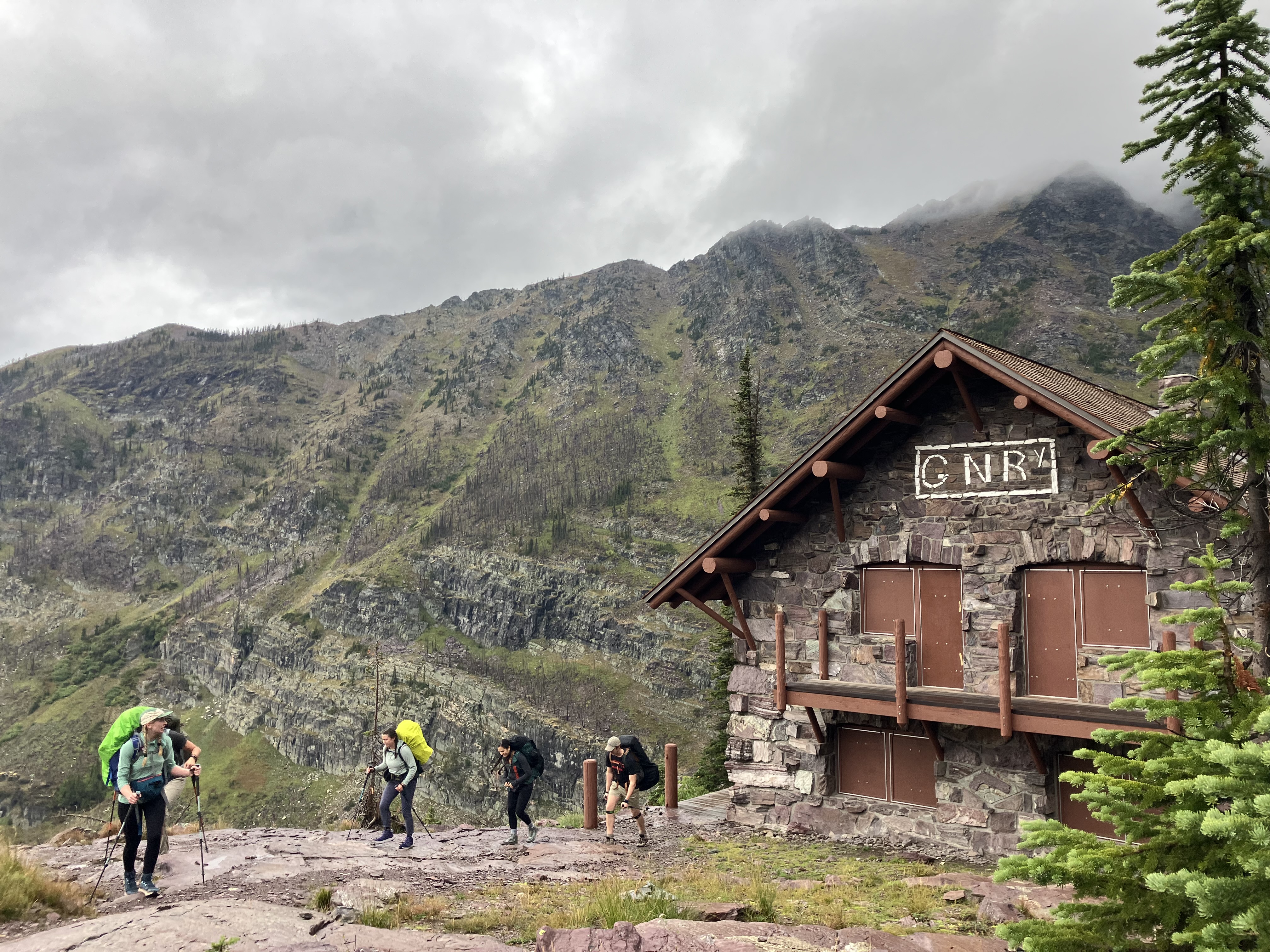
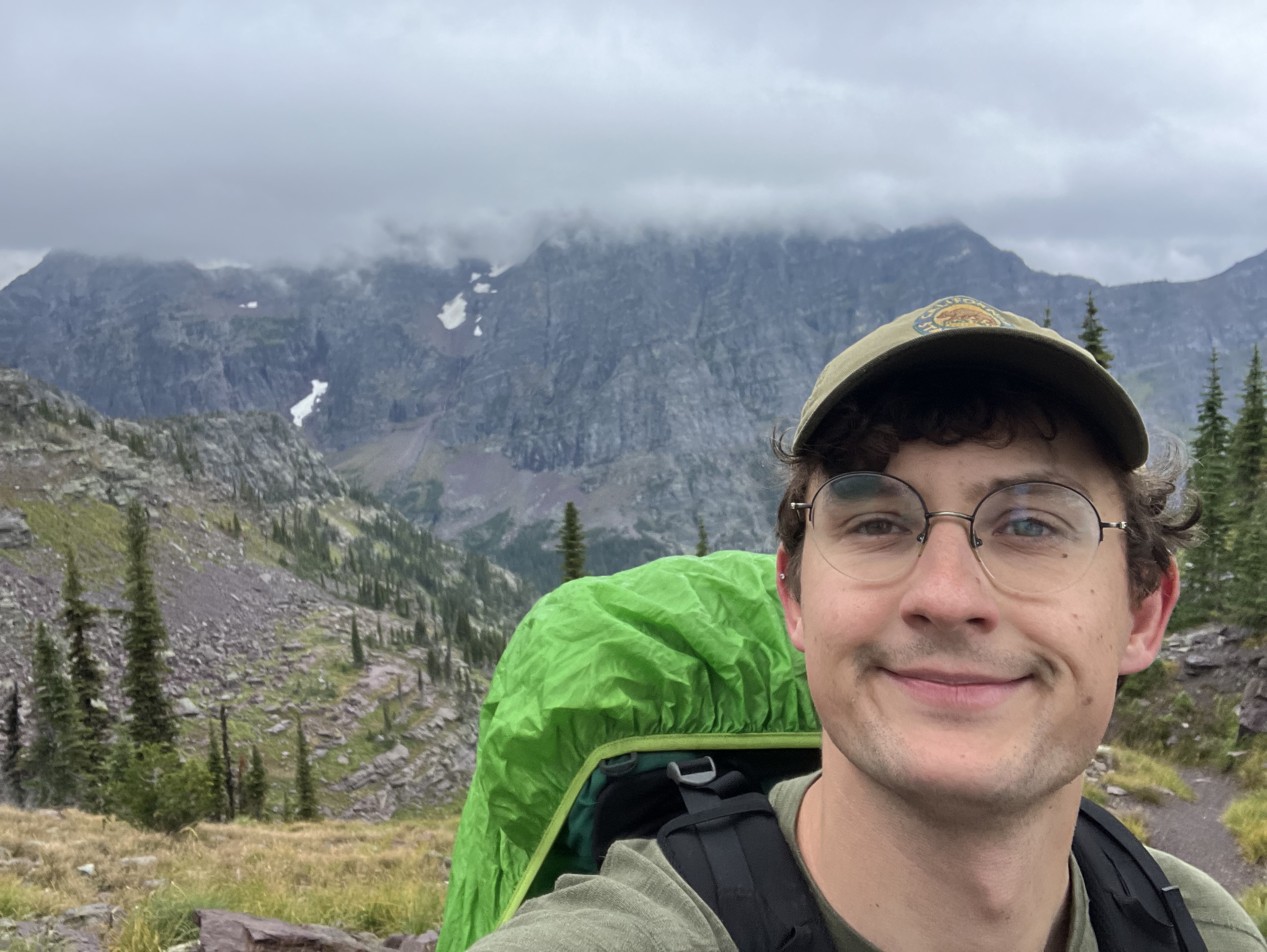

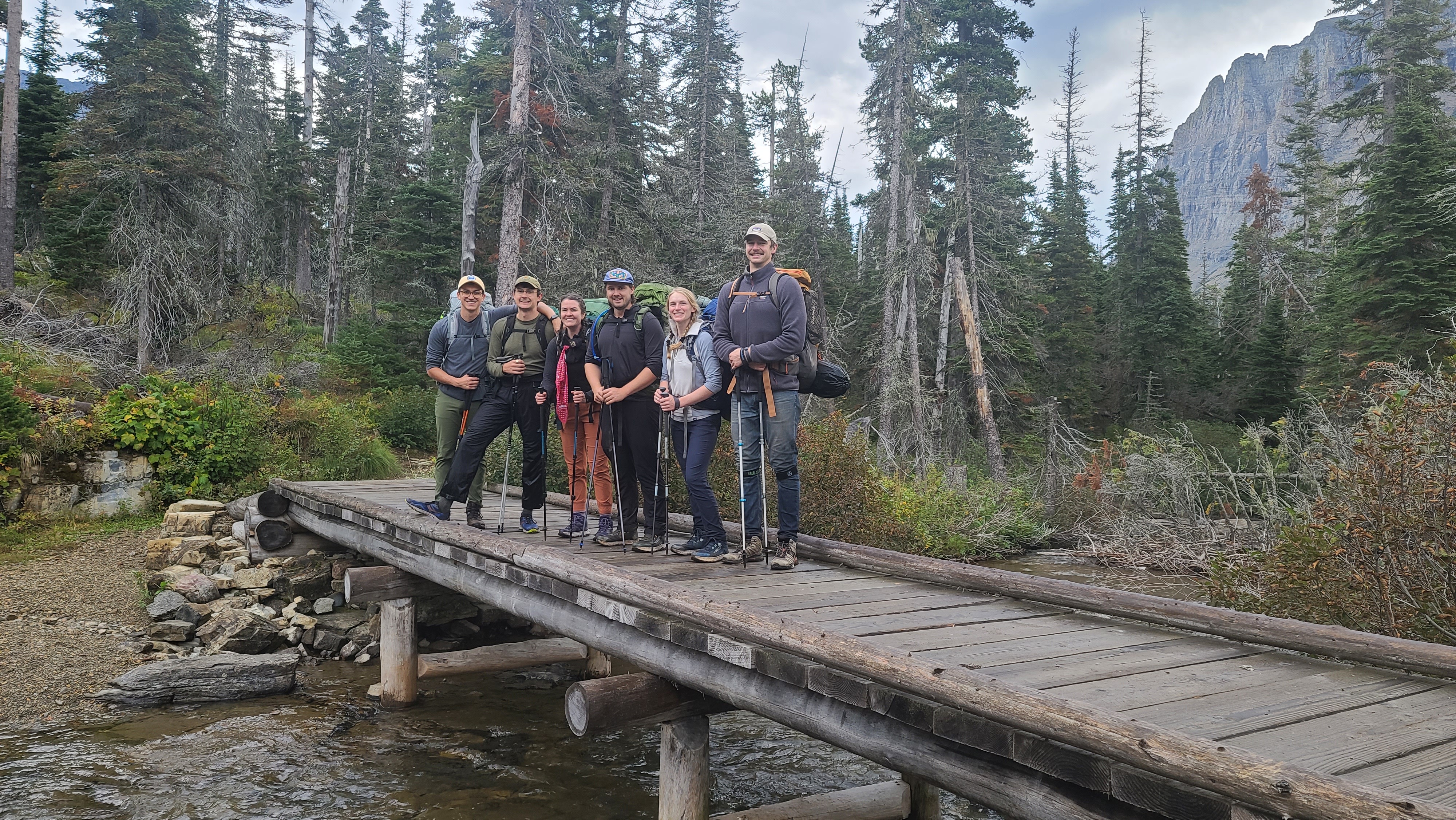
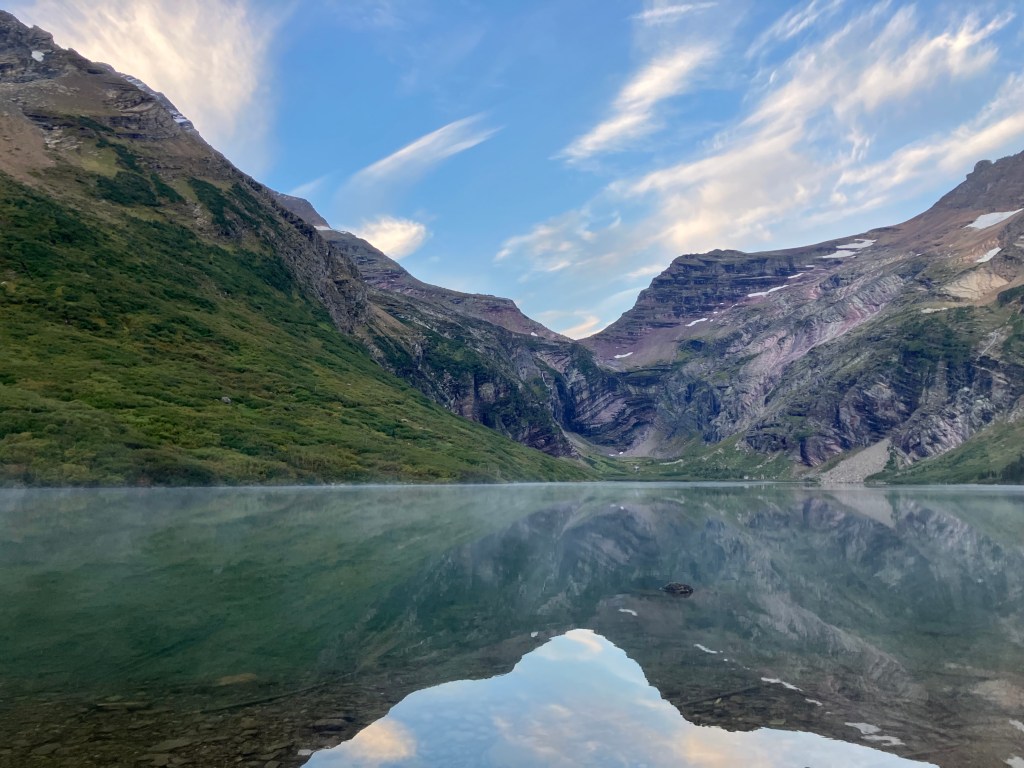
And boy was it gorgeous. Highlights included a very friendly group of three mountain goats, incredible morning views of Gunsight Lake, poking around the historic Sperry Chalet built by the Great Northern Railway, and just generally excellent time with the crew. Retrospectively, it wasn’t ideal to start the trip with 3500+ feet of elevation over 6 miles, and going west to east meant a net uphill, but it really was worth it.
I also didn’t love that we got two straight hours of rain (and a bit of thunder) coming down Gunsight Pass, but that’s the sort thing that happens when you do a back country trip. The weather never really does what you want it to, especially in the mountains, and if you wait for the perfect weather to get outside you’ll be waiting all your life.
Would I Do It Again?
In a heartbeat, though I would definitely plan something before Labor Day next time around (our final day in the park was the last day the shuttle was running for the season, and the weather wasn’t that great). And maybe I’d even spring for the $14 shuttle into the park, though probably only if I had an entry pass already paid for. And while I’m extremely grateful to have had this experience, I’m also just left a little frustrated with how needlessly difficult it is. I’m sure that Xanterra has some kind of franchise to operate the shuttle from West Glacier Amtrak to the Apgar area, but it’s ridiculous to me that this isn’t a free service.
The Parks Service already recognizes that a shuttle is needed to alleviate congestion and improve access, and they mention the train as a way to get to the park, but rely entirely on a private company to link their shuttle with the best way to get in. Extending one or two trips a day into West Glacier would make the park far more accessible not only for intrepid train travelers, but also just for the general public. If it’s easier (or cheaper) to park outside the park, take the bus, and then drive away later, people will take that option. But it’s clearly not their yet for Glacier – so instead people fight over surface parking lots in sensitive Alpine ecosystems.
It’s also mind-boggling to me how limited non-car access is to National Parks and other back country camping options in general. One of the primary reasons that people live on the west coast is stuff like proximity to nature, but there are exceedingly few transit options to fulfill any of this. In Portland, Forest Park is the jewel of our excellent public parks system but only one* trailhead is reasonably accessible by bus.
*technically, more are if you take the bus along Highway 30 towards St. Johns, but the 16 has a horrible schedule and it will involve an unmarked crossing of a five lane highway.
For back country options in a National Park (a slightly contrived thing, but other back country camping tends to be less accessible by transit – not more) via “normal” transit, the only other options are Hurricane Ridge in Olympic (pretty good seasonal service on Clallam County Transit from Port Angeles), New River Gorge (tri-weekly Amtrak service on the Cardinal), and the Grand Canyon (lots of private bus options between both Flagstaff and Phoenix). Yosemite, Zion, and Acadia are also reasonably accessible by transit but suffer from being either very remote from major cities (Zion, Acadia) or slow and expensive even by the standards we have here (Yosemite). Rocky Mountain is technically accessible, but requires a reservation on a seasonal hiker shuttle to get from Estes Park to a trailhead. In short, even when the transit exists it’s usually bad enough that you almost wish it didn’t. Parks with great access by transit (Indiana Dunes, Cuyahoga Valley, Gateway Arch, etc.) don’t offer quality back country experiences.
While researching the current state of public transit connections I stumbled upon this illustrative article from Outside Online about an Amtrak journey to 12 national parks. In it, they manage to mention the closest rental car location to each train station nearest the park (outside of Channel Islands), while only mentioning public transit connections to the parks for three (Olympic, Yosemite, Gateway Arch). Paid shuttles get a few more mentions (Glacier, Crater Lake), while somehow taking a bus from Cleveland to Cuyahoga Valley doesn’t get a mention (despite the GCRTA #77 serving the park just fine!). Not to mention that the author of the article talks about going from Ventura to San Diego to get to Tucson on Amtrak, instead of the obvious transfer in Los Angeles. Just deeply unserious stuff.
Maybe you find this to be all a bit silly, but I love doing things in the back country. Day hikes are nice, but lugging a tent and food out into the woods for a nice weekend away is something I cherish, even as I question the underlying ethics of it all. But with the current state of transit options, I’ll almost always be tied to a car in order to fulfill this need. But it doesn’t have to be like this.
When Olivia and I were in Switzerland, we took a regional train from Lugano to Biasca for a day hike. We had planned on doing an alpine hut excursion, but the hut we had hoped for was already booked and the logistics of the trip just didn’t quite line up. The day hike itself was nice, especially since so much of our trip was centered around city tourism, but part of the reason for it was to understand how Switzerland manages both robust transit options and an excellent outdoors culture.

I think an aspect of it is a different conceptualization of wilderness exploration – one which is less dogmatic about wild places being untarnished by human hands and more focused on the physicality of alpinism. But there’s also a level of focus on rural connectivity which is nowhere to be seen in mainstream US discussions about transit. Load up any video, tweet, or blog post about high speed rail and there will be some guy in a city talking about how we need to connect up our big economic centers to facilitate growth, or enable more flexible trips, or to get flights out of the air. This is all fine and dandy, but it’s not the primary reason why I enjoy travel by train.
Even if our current state of rail travel in the US almost categorically precludes the sort of urban-rural trip that’s routine in Switzerland, the experience of riding a train through small towns on the Hi-Line in northern Montana, through the small Wisconsin towns on the old Milwaukee Road, or of course into and around Glacier Park in Montana still evokes something. It may be naked sentimentalism for a time when travel by train was the de facto way to move, but I feel that it’s also rooted in a desire for the rural and wild lands of my imagination to be more accessible to all. But as long as that access requires car ownership, I’m likely to own a car even if I’d prefer not to.


 City Hikes
Leave a reply to Unpacking the Backpacking Pack – City Hikes Cancel reply