

If you’re like me you get a visceral enjoyment out of seeing a good 15 or 20 minute neighborhood analysis. If you have no idea what I’m talking about, a 15 minute neighborhood is the idea that you should have all your basic needs for everyday life – grocery stores, cafes, libraries, parks, a good bus stop, etc. – within no more than a 15 minute walk from your home.
I’m not entirely sure how old the concept is, but an early (to me) example of this kind of analysis is the 20-minute neighborhood analysis for the 2011 Portland Portland Plan1. I’ll get into my issues with this report, and essentially all subsequent reports later on, but for now we can just enjoy a fairly well documented public report with a robust outline of what they did. Where the analysis, and by extension the 2011 Portland Plan falter, isn’t so much in the analytical rigor – I would describe it as “no stone left unturned” – but is instead in the tacit assumptions made. To illustrate this, let’s consider the cornerstone of neighborhood access: the grocery store.
What is a Grocery Store Anyways?
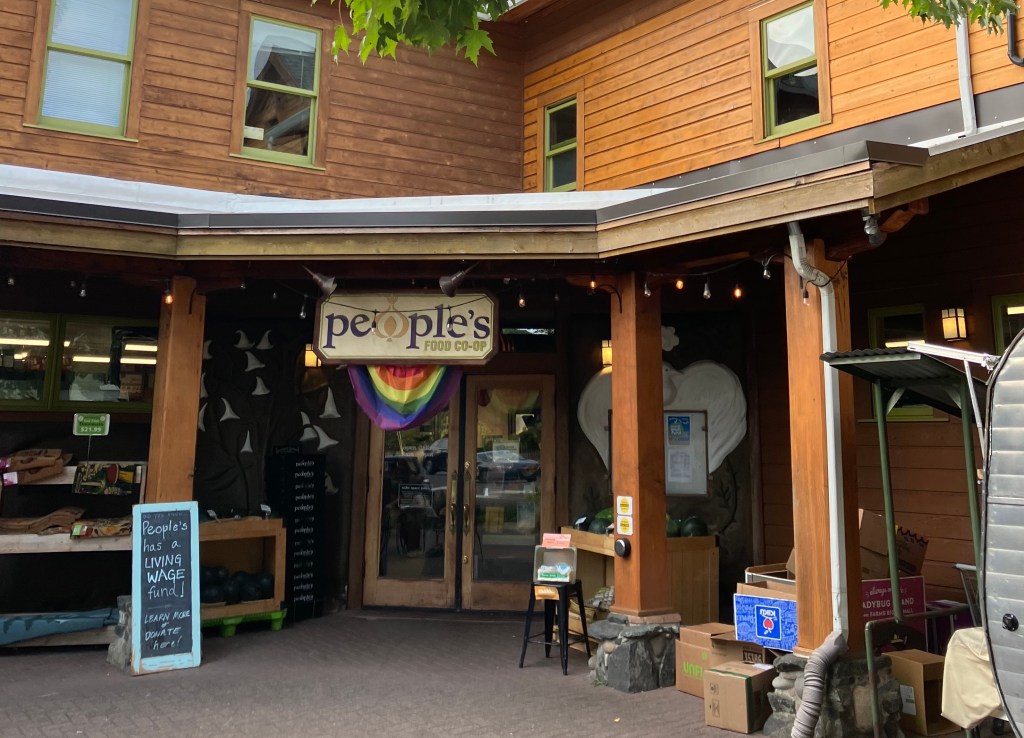
This may sound like a silly question – it’s a place where you can buy produce, cereals, grains, probably meat, toothpaste, batteries, cleaning supplies. It’s a one-stop shop for your weekly needs, but is generally focused around food. Since everyone eats, having a grocery store within a 15 minute walk is a real boon for eating well. One may even call it a right.
I obviously agree. We all deserve to have healthy, fresh, and culturally specific foods available to use in our day to day. But there are issues when you consider what counts as a grocery store. Returning to Portland in 2011, there is no clearly articulated definition of a “grocery store”, so we are forced to infer what they mean by looking at examples.
All Fred Meyer, Safeway, and QFC locations count – as do New Seasons and Whole Foods. Both People’s and Food Front (RIP) are included, as is Fubonn on 82nd. Missing are places like Talarico’s on Hawthorne (a bona fide produce stand) and smaller ethnic grocers like Boo Han on 82nd. The document references the phrase “full-service grocery” – something which probably should be defined. I’ve seen 10,000 square feet as a benchmark in researching this, and the city’s current data set for grocery stores includes a full service flag2.
But this dataset doesn’t include any ethnic grocers as full-service – not even places like Fubonn which are certifiably huge. If that data is used to inform any sort of public policy, and full-service is used as the benchmark for what a neighborhood needs, then the only word you can use to describe that analysis is “racist”. Thankfully, the 2011 Portland Plan seems to have partially avoided that, but the inclusion of small co-ops with the exclusion of small ethnic grocery stores with no real dialogue as to why still rubs me the wrong way.
But the purpose of this exercise isn’t to shame a report that’s nearly 15 years old. It’s to consider what it means to define “grocery store” or “supermarket” as the benchmark for neighborhood access, and who gets to decide what counts.
A Brief History of the Supermarket

In the 2011 Portland Plan, the ultimate goal was to get 90% of Portlanders within a half-mile of “a location that sells healthy food”. To do this, they talk a whole lot about grocery stores, followed by a brief bit how they also need to encourage “alternatives to traditional grocery stores” (emphasis added). The supermarket as we know and hate it today wasn’t invented until 19163 (the same year my Grandfather was born), and didn’t reach Portland in a modern form until 1931 (the same year my Grandfather turned 15).
Whats more, the advent of the supermarket – with its one-stop shop nature and typically massive parking lots – essentially killed the former urban food distribution ecosystem4. Previously, shoppers would have gone from a dry grocer, to a produce stand, to a butcher, and to a baker all in separate buildings (but most likely within a short walk). This kind of system is still operational in many parts of the world – which is part of why every travel blog known to man tells Americans that “people here shop for groceries way more often, sometimes every day!”
I think it’s important to note that as a result of this specific history, supermarkets and supermarket-based shopping patterns, tend to be strongly oriented around a car. Even when a supermarket is physically close, the American grocery shopping habit of stocking up for a week at a time means that you kind of need a car to transport all that food. But if the entire genesis of urban accessibility revolves around a 15 or 20 minute walk, measuring grocery store access via walking when only out of touch yuppies with a blog insist on walking to the grocery store feels a bit odd.
And this is before we even get into the fact that not all grocery stores provide the food that everyone needs.
And What About Cultural Food Deserts?
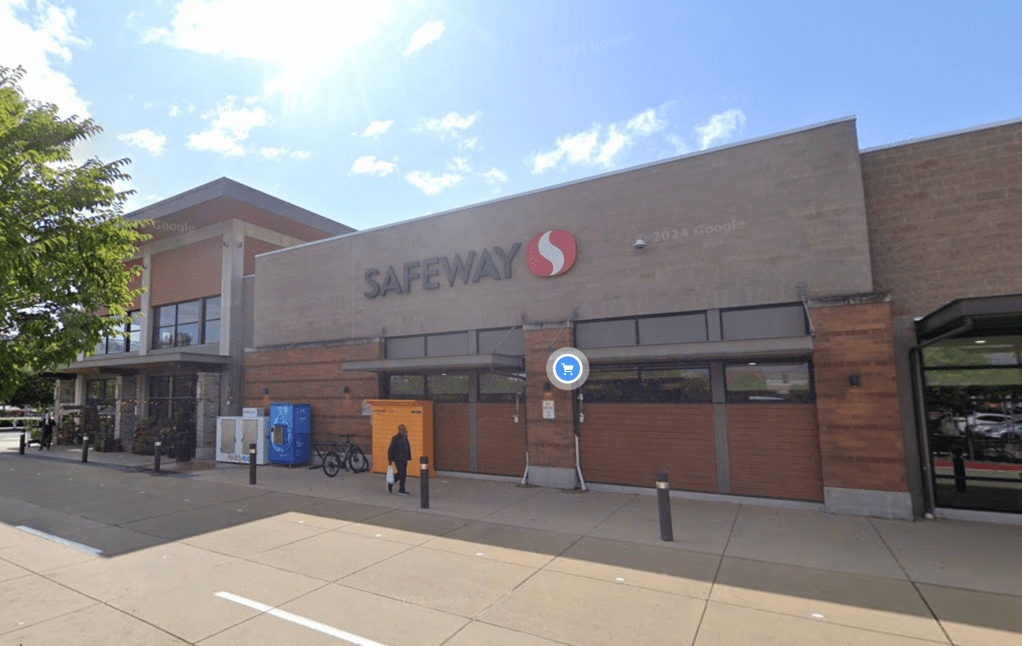
In a world where supermarket megachains are shuttering stores and leaving literal food deserts in their wake, the idea of whatever they have on offer not being right for you feels a bit glib. But it’s a real challenge that people face, and it’s not one that should be dismissed out of hand.
Here’s a quick anecdote about my life relating to this. No move is easy, and Olivia and I deeply miss Portland, but one of the big boons of moving to Seattle (and Beacon Hill specifically) is that Olivia has easy access to Mexican food stuffs. I won’t pretend to have some well-written conclusion about what this all means to her, but it’s something that’s meaningful not just from a personal and cultural standpoint, but also from a practical standpoint. If the best way to eat is cooking your own food, the best way to cook is by cooking what you know. If you live in a place where you can’t get the things to make the thing you know, I think it’s fair to say you’ll cook less and be generally a bit worse off.
Is this something that can be measured? Sure, but you won’t find the answer in an ACS table, or in a slick map that leverages OpenStreetMap data. Whether or not people are satisfied with their access to the sort of food they need to sustain themselves is a question two people living in the same place can answer differently. Sure, analyses like close.city5 are useful tools, but they can never fully articulate the complexity of urban life at the individual level.

But I don’t want to single out this one cool tool as being “wrong”. I think it’s a nice broad overview of accessibility. And the fact that the developer of the tool has a specific, quantifiable definition of “supermarket” makes me like it even more. But if you think this definition – minimum of two aisles of fresh produce and two aisles of home goods – is flawed6, how exactly should you proceed?
Analysis, Assumptions, and the Death of Nuance

As someone who takes great joy in doing little data analysis things, I know first hand that the vast majority of analyses use flawed data and tell only a partial story. This doesn’t mean that they aren’t useful, but making a map or infographic (and especially an interactive one) creates a certain veneer of objectivity. Not many people will read the methodology, and fewer still will seriously consider the drawbacks to the route chosen. But these are ultimately the most interesting parts of any analysis.
What someone assumes can tell you a lot about the result before you even start. A walkability analysis starts by presupposing that people will walk to fulfill their daily needs, then continues by defining what those needs are for everyone. Yes, there is room for nuance, and they all still tell interesting things about the place they are analyzing, but if we fail to recognize what those assumptions actually mean, we come away with an incomplete picture about the places we live in.
Even something as seemingly simple as shopping for food has different meanings in different cultural contexts. Is there something fundamentally wrong with using an essentially American lens to analyze access to food? Not entirely, but the bare minimum would be clearly defining terms so readers can do what they will with the analysis. The more responsible thing to do is include some kind of dialogue about why decisions were made, and what might be missing as a result. I find this to be most obviously relevant for food/grocery stores, but it extends to things like parks as well. What counts as a usable park space greatly varies across age cohorts, cultural backgrounds, and personal preference.
And this kind of thing shouldn’t be buried in a technical appendix – if the analysis informs decisions, the assumptions and drawbacks should be obvious!
We Have to Change Our Culture to Change Our Environment
The point of this post originally was to talk about how grocery stores as they exist in the US are almost by definition antithetical to a walkable neighborhood. As usual, I’ve veered somewhat haphazardly off course, but a key point remains to consider: does it matter if you can walk to a grocery store if everyone drives anyways?
There’s an old comic that I vaguely recall featuring something three panels of what an urban, suburban, and rural family do when they find themselves out of eggs while baking something. The urban family pops down to the the local shop, the rural family heads out to the chicken coop, while the suburban family frets about how they’ll have to get in the car and fight traffic for 15 minutes each way. This is the sort of case where, even if you still normally drive to the store for your weekly haul, it’s really nice to be close to a grocery store: when you forgot to get something, or you ran out unexpectedly.
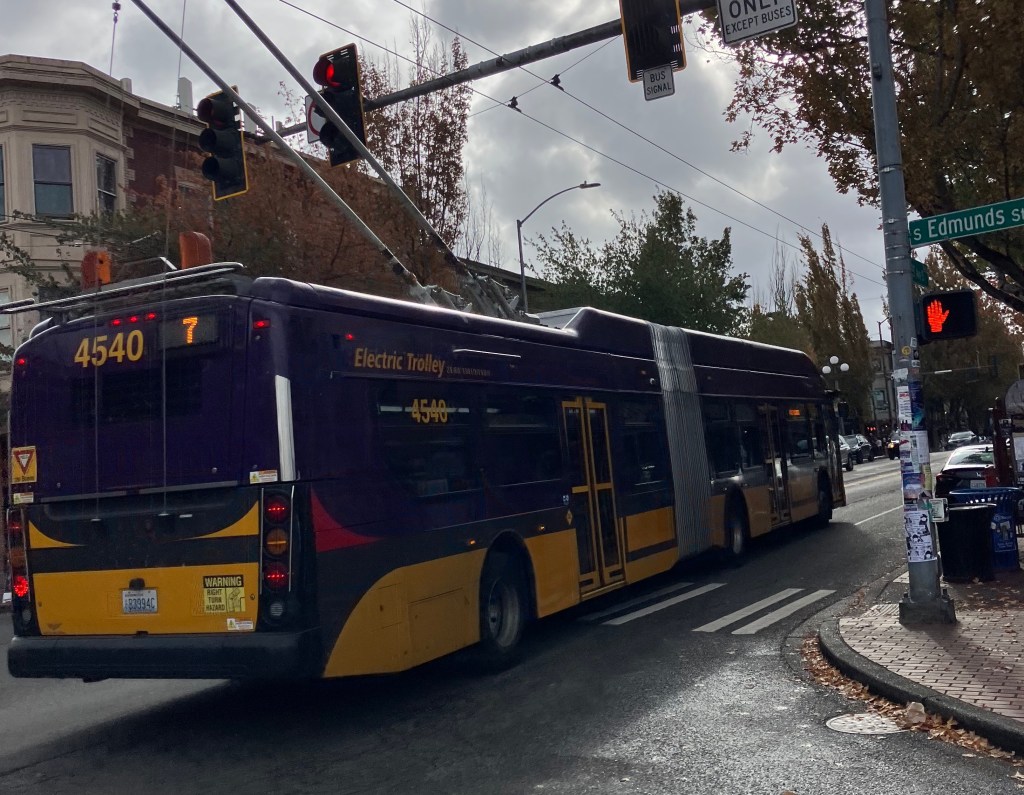
Clearly, no matter what your normal habits are, there are benefits to being physically close to potential places you can get fresh food. We do most of our grocery shopping at the Central Co-op in Capitol Hill, but yesterday we needed eggs in a pinch so I hopped on the 36 a few stops to the Hilltop Red Apple. Having choices is great, and that’s part of why I think living in a city is good.
But still, if the normal shopping pattern is driving, stores will be further apart and larger. Driving is faster, and if you are already driving it makes some sense to save yourself another trip by stocking up. If we truly want healthy food within walking distance for everyone, we have to make that the market imperative – not just a nice to have. This isn’t a suggestion to regulate the supermarket out of existence, it’s a suggestion that the our cultural norms create the physical reality we live in over the long term. If you want walkable neighborhoods, you have to walk to places in your neighborhood.
I realize this sounds a little on the “personal responsibility politics” front for a self-described lefty, and that you would be right to point out all the structural reasons why people can’t do this – cost, time, other obligations, apartments in walkable neighborhoods are pricey. But if you have the time, money, or wherewithal to change habits and make different decisions, I think it’s worthwhile to consider the role that your choices play in recreating an unjust and unfair society. It may be drops in the bucket, but you know what they say: drops of water turn a mill, singly none, singly none.
Footnotes
- Full methodology with nice pictures available here: download link ↩︎
- Here’s that dataset, filtered for full-service and open ↩︎
- It gives me some pleasure that Piggly Wiggly was the original supermarket, and the only Piggly Wiggly I think that I’ve ever been to is in Sauk City (this one), where that same Grandfather lived most of his life. ↩︎
- The rise of the supermarket also coincided with the rise of nationalized food supply chains and what we would generally describe as “industrial agriculture”. ↩︎
- It’s worth pointing out that this tool was originally developed for Seattle, and pretty good data here. Looking at Portland, I immediately recognize glaring omissions based on their own criteria (Fubonn and Sheridan Fruit Company are not in the supermarket section). ↩︎
- To be clear, I think the inclusion of home good is whats flawed here. ↩︎

 City Hikes
Leave a reply to adventurepdx Cancel reply