
Over Valentine’s weekend, Olivia and I took the trip up to Bellingham. We had never been before1, and found a very cute B&B to stay at2. Since it’s car-free 2026, we made our way there via local transit, and took the Amtrak Thruway bus on the way home. It was surprisingly easy to get to Bellingham from our place in South Seattle – “just” four buses and one light rail train. Here’s a brief trip summary:
- Bus #1: Metro Route 36 to 5th/Jackson. 10 minutes.
- Train #1: Link 2 Line, Chinatown/International District to Lynnwood. 5 minute transfer, 36 minutes.
- Bus #2: Sound Transit 512, Lynnwood to Everett. 6 minute transfer, 25 minutes.
- Bus #3: Skagit Transit 90X, Everett to Mount Vernon. 25 minute transfer3, 40 minutes.
- Bus #4: Skagit Transit 80X, Mount Vernon to Bellingham. 25 minute transfer, 45 minutes.
Sure, there’s a fair amount of waiting around involved in a trip like this. But it also cost Olivia and I collectively $9 to go about 100 miles. Hard to beat that value!
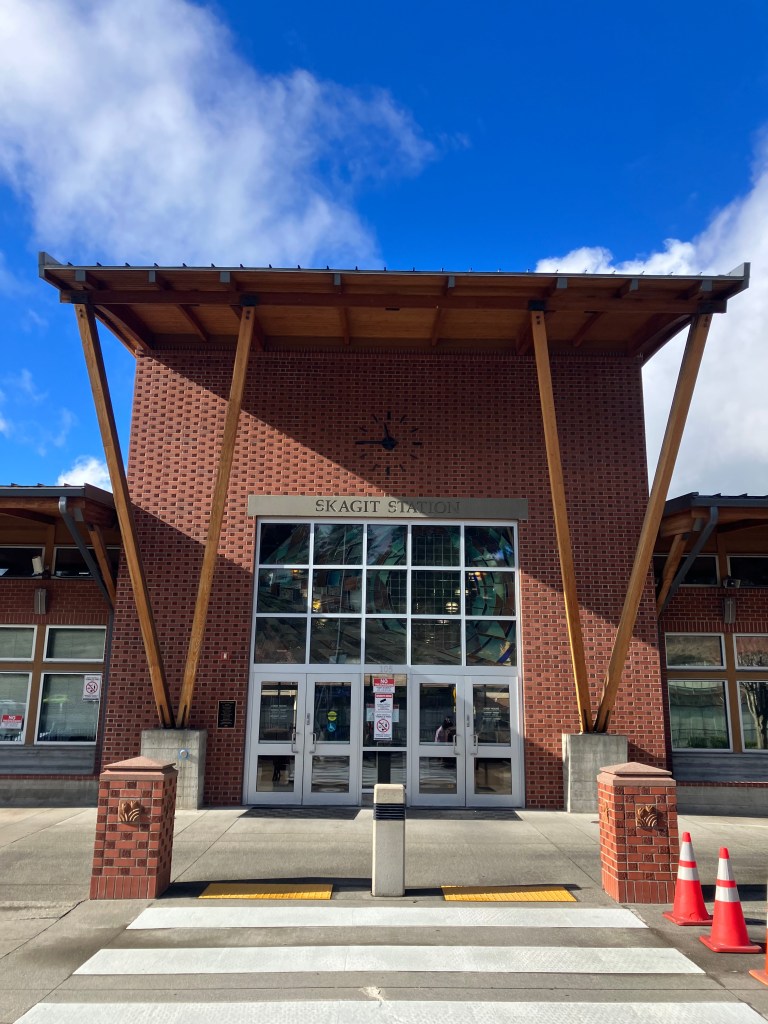
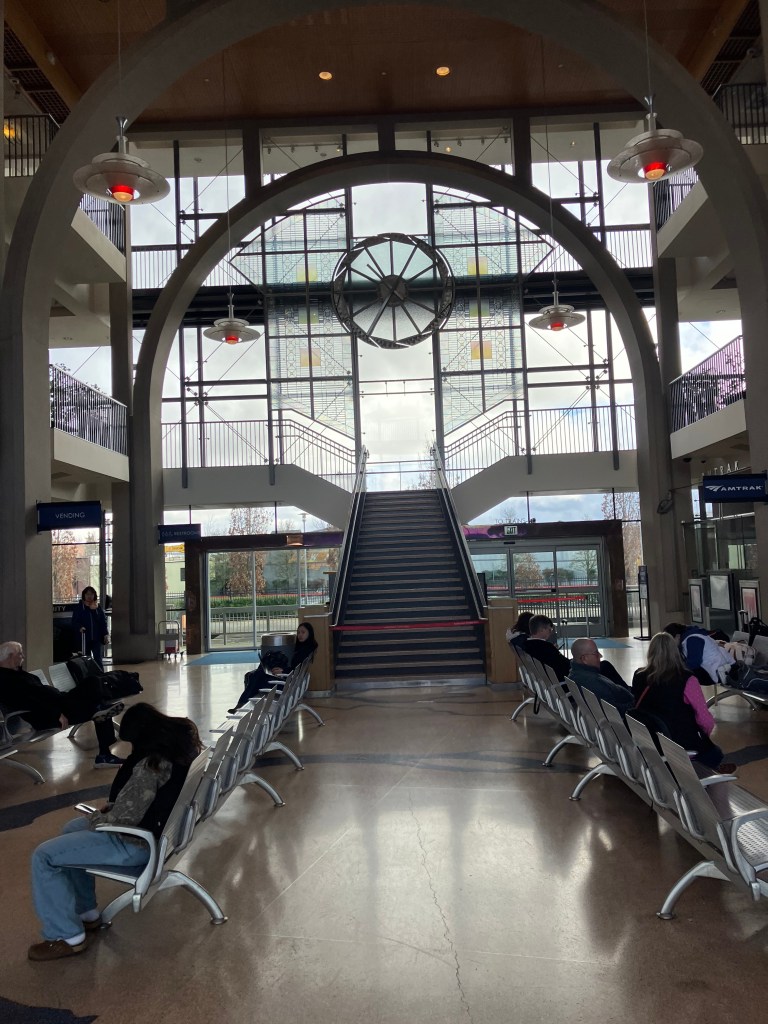
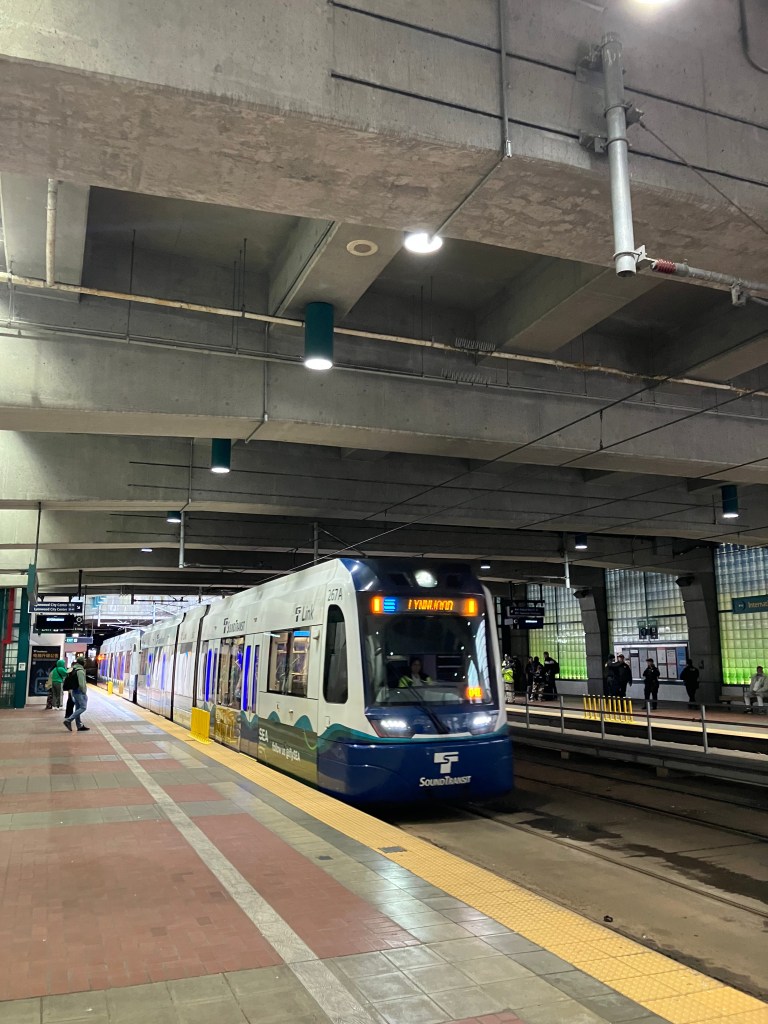
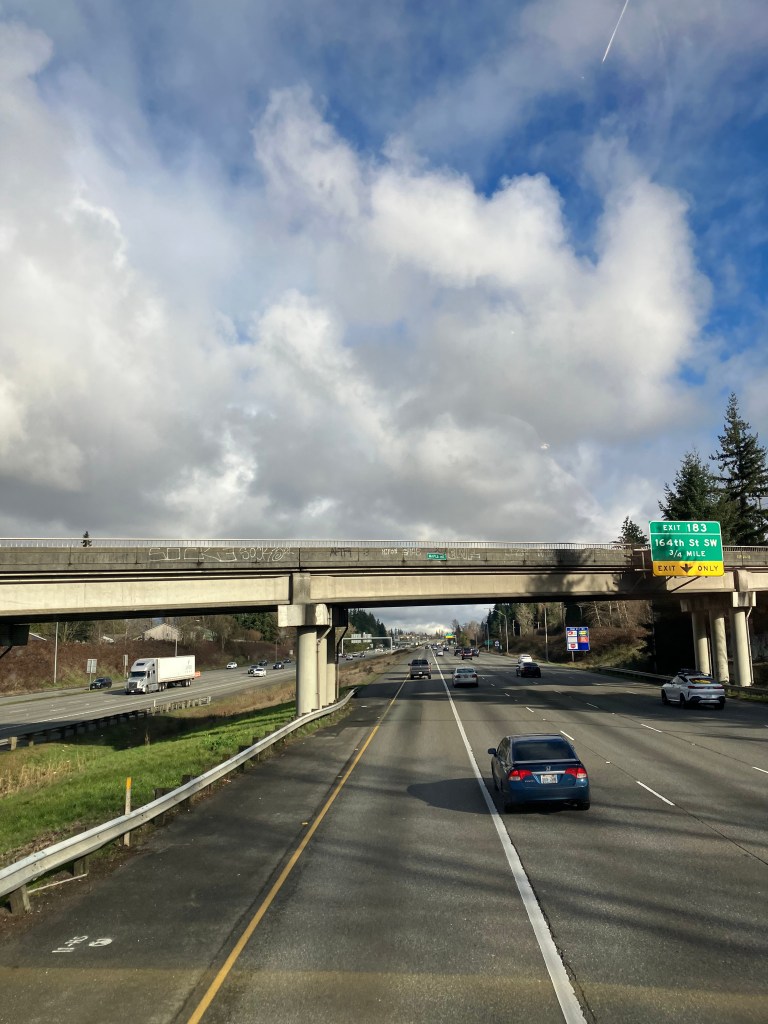
But it’s about more than just value. When you do a trip like this, you’re never the only one, and it’s always interesting to be part of that kind of journey. Most of the folks who took the 90X with us also took the 80X to Bellingham, and a fair few of them were also on the 512 (and one was even on our Link train too!). Seattle to Bellingham is generally poorly served by Amtrak trains – 2 trains a day, $45 per person per way4 – so it’s not a surprise, but it’s exactly this kind of trip that needs more investment in service.
Since Olivia and I have decided to try out living without driving, our options for weekend getaways and hikes have been significantly reduced. But I want to stress that it’s still entirely possible to do those things, you just need to know how to plan it. So how did I find out that Skagit Transit runs regional buses that allow for fairly seamless Everett – Bellingham journeys? Well, it was from a Miles in Transit video, but in general I plan these sorts of things by starting with bus routes and working backwards.
For this, I find using OpenStreetMap’s Transport Map layer to be extremely useful. It shows all bus routes5, which you can then identify and use to plan a more specific trip. You can also use a service like Google Maps, but for most buses run by small operators you’re going to need to consult the schedules to ensure you know the best time to leave. I’d say a trip like this usually involves about an hour of research, but I’ve spent much longer planning more elaborate ones (like the Ampacking trip to Glacier6, or the forthcoming Olympic National Park local bus backpacking trip I have cooked up).
But enough about that. How was Bellingham? Well, it was lovely.
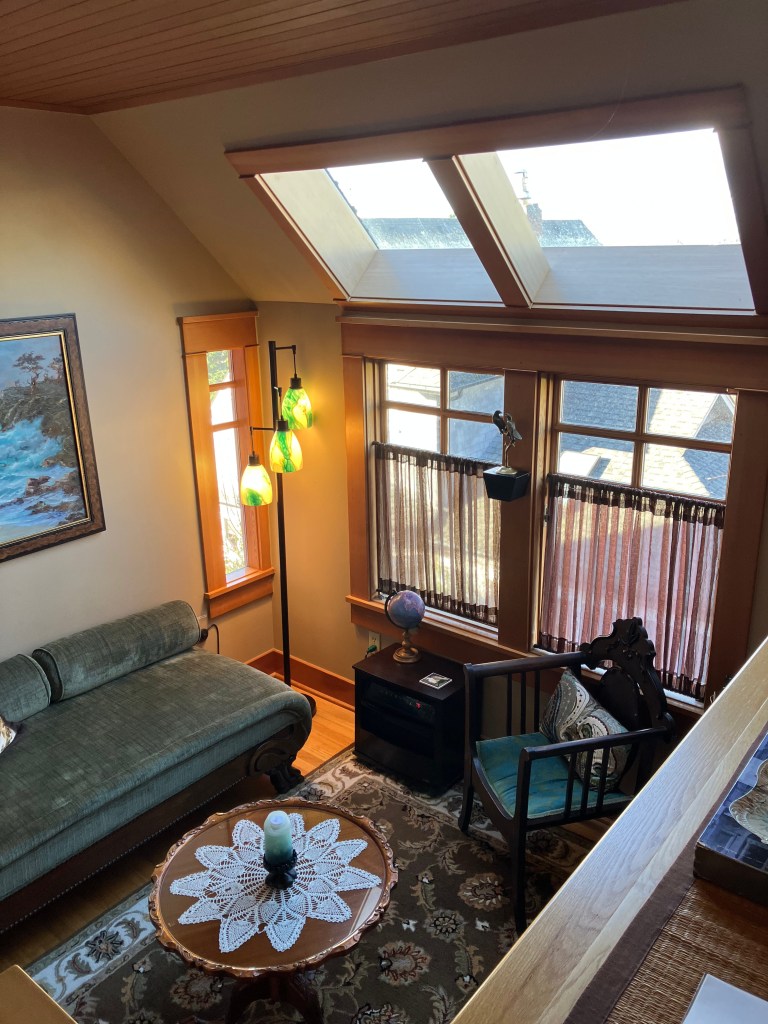
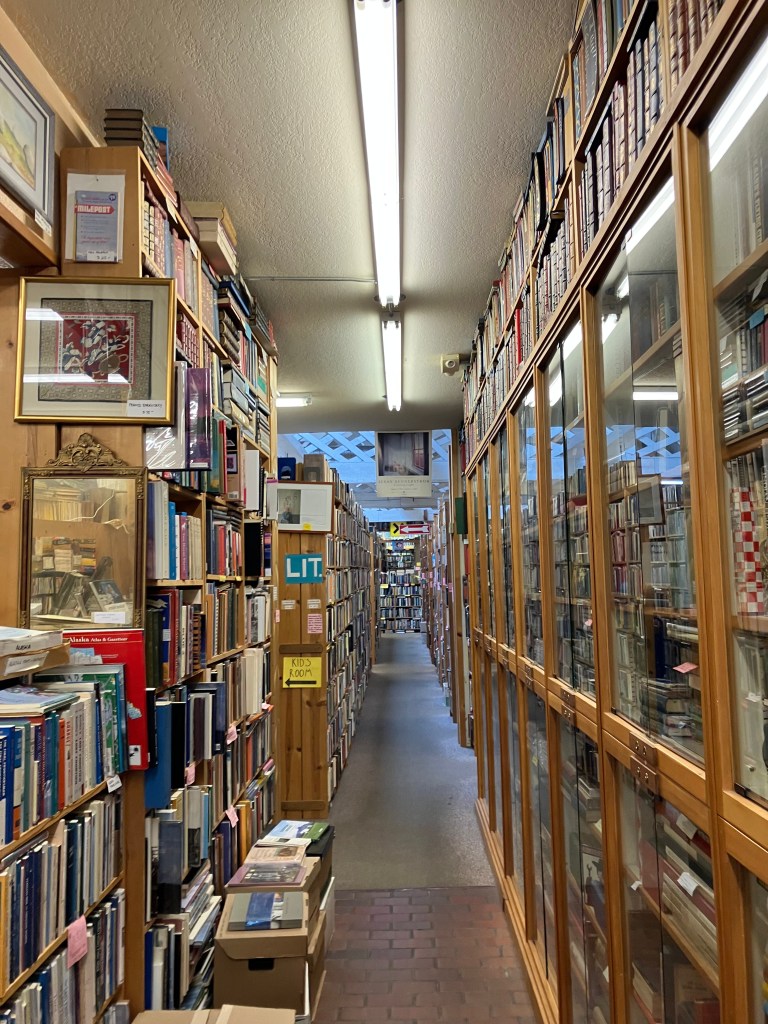
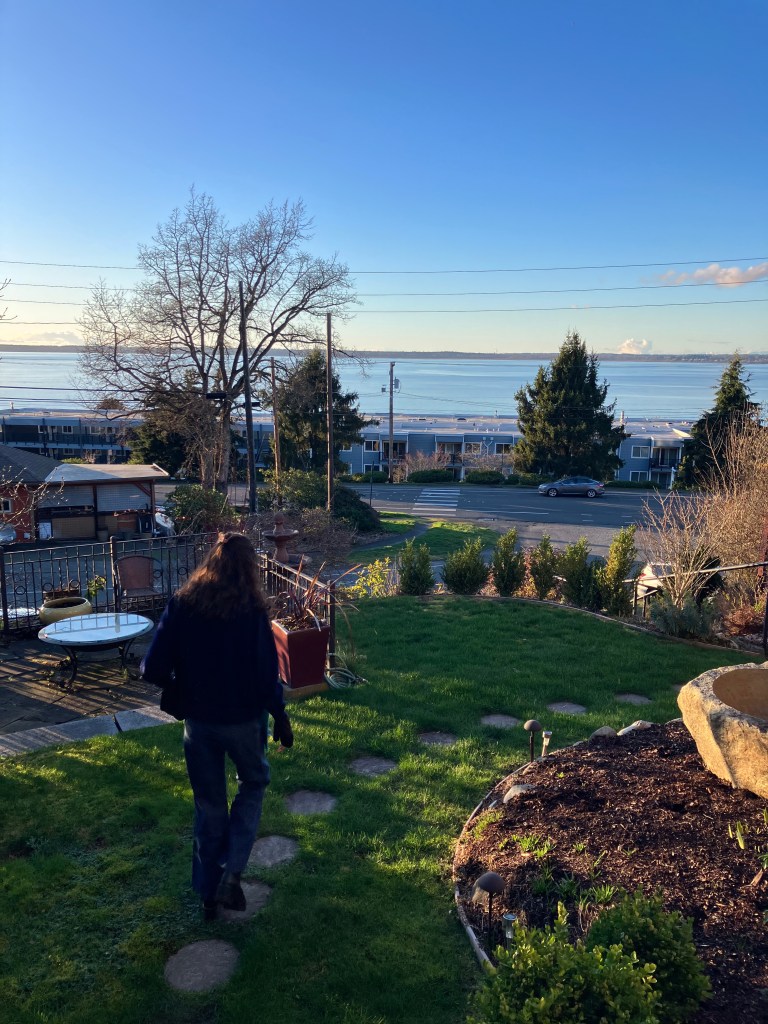
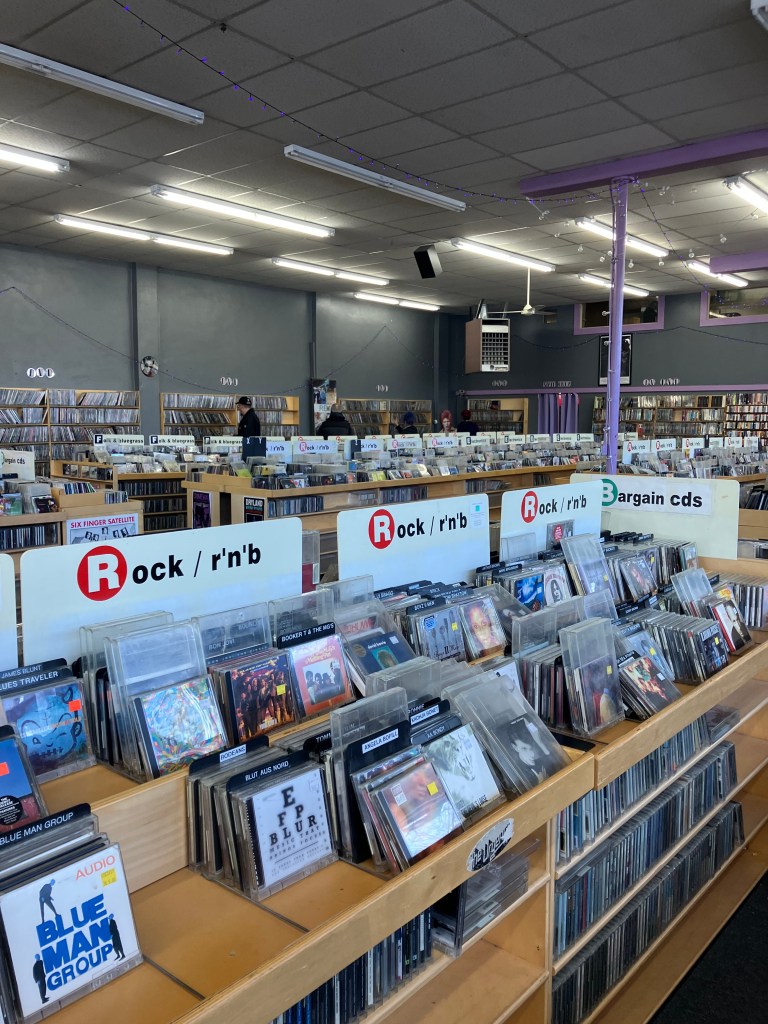
Of course, we found the local record store and what might be the best bookstore (outside of Portland) that I’ve been to since my all-time favorite Downtown Books Bought and Sold in Milwaukee. Henderson’s Books in Bellingham has a truly mind-bending number of books, and most of them were cheap too. And our B&B was right by the water, and the weather wasn’t half bad either. The highlight might have been The Black Cat (shout out to my coworker Casey for the rec), but I didn’t take any pictures of it. It’s in a cool old building and the drink I had was lovely.
My only real complaint was that the buses only run half-hourly at best on weekends in Bellingham, and they stop running at like 10 PM. I understand that from a practical perspective in a city where transit ridership isn’t exactly high and folks don’t really stay out that late. But I think it points to a narrow conceptualization of what transit is at the societal level in Bellingham. There’s good service from neighborhoods to downtown and WWU on weekdays during working hours, but middling service at other times.
This kind of narrow concept, where transit is something you use for work but nothing else, has been bumming me out lately. Because there are so many more trips than just work ones – only 15% of daily trips were commutes pre-Covid – and if we want transit to work in the long term, peak-hour and commute trip focus isn’t going to be enough. Transit needs to work for shopping, visiting friends, going to bars, and visiting other places too. But enough about that (for now).
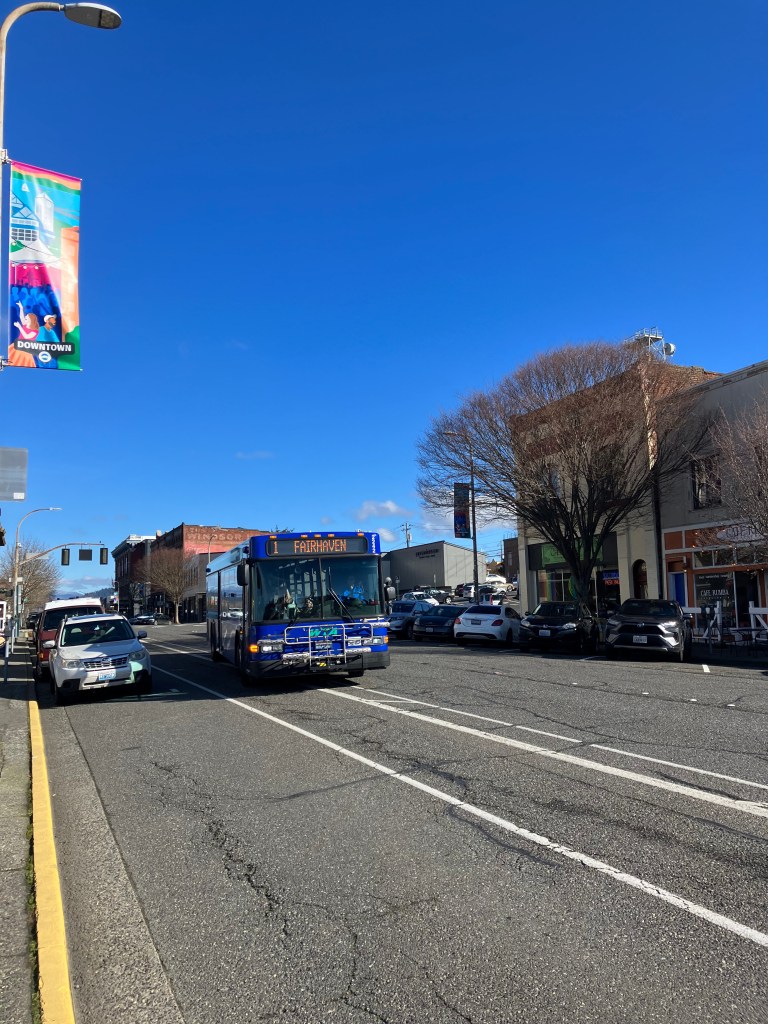
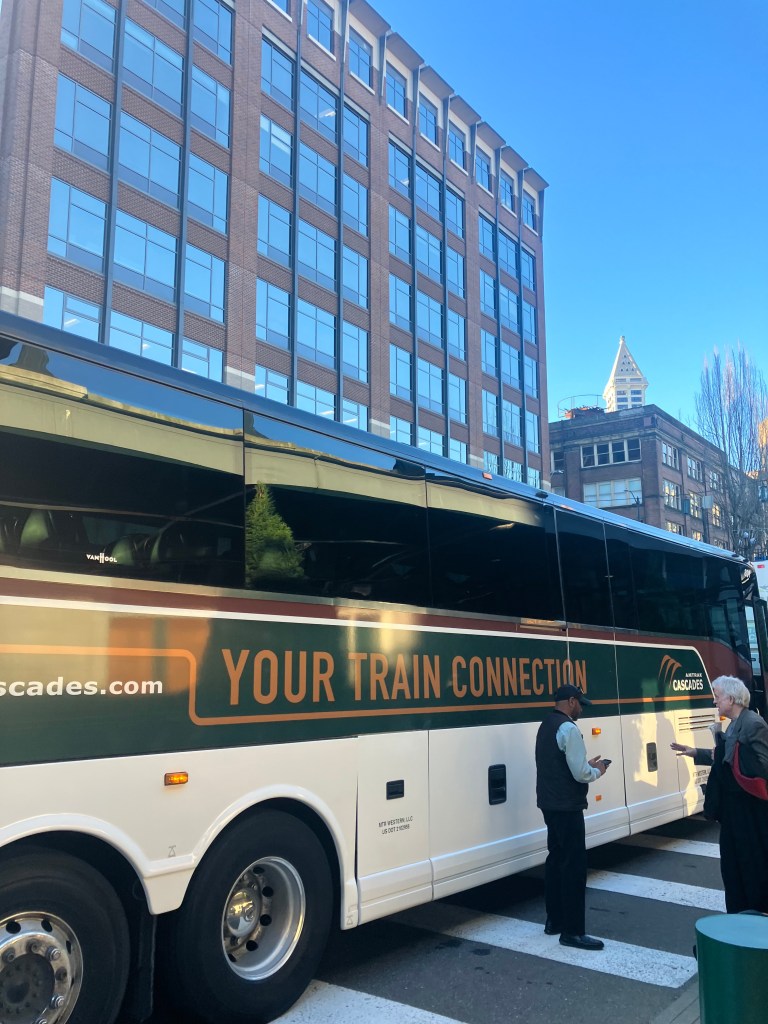
Getting back home was easy, since our workhorse route for the trip (the WTA Route 1) took us right from our B&B to the Amtrak stop. The Amtrak Thruway bus is a bit cheaper than the train, but still a bit steep compared to the local ways at $19. Of course, those local routes don’t take you over the I5 Ship Canal bridge in North Seattle and that is a square on my transit bingo card I made myself for my birthday party…. so it was worth it.
Parting Thoughts
Over all, I had a really nice trip and I know Olivia did too. And it’s more fun to do this kind of thing on public transit, even if you aren’t some kind of transit aficionado. Did we save money? Depends on how you do the accounting. At 70¢ per mile and 200 miles, that’s $140. But if you only counted the marginal cost of wear and tear and gas, it’s probably more like $407. All told, we spent about $50 on transportation for the weekend, but we could have easily spent just $30 ($36 if I didn’t have a free ORCA card from work). I’d call it cheaper than driving.
But for me, it’s really not about proving that this is some rational thing to do if you just use the latest Generally Accepted Accounting Principles to minimize your transportation spending in the long term. Using transit is fun and interesting, and above all makes me feel like I actually see the places on the way to my final destination. Stopping off for a while at Everett Station, getting a glimpse of the Skagit Valley Co-op, and even something as mundane as the Lynnwood Transit Center break up the trip in ways that help me conceptualize Western Washington.
It’s like taking Amtrak from the PNW to Wisconsin. Is it practical? Not really. Is it cost-effective? If you squint, but you kinda have to squint hard. Is it justifiable for environmental reasons? Probably, but it feels pretty marginal. This generally puts me at odds with the litany of voices in the domestic transportation world, claiming that they would take transit now if it was faster, more frequent, or more convenient8. And it even puts me sort of at odds with the growing number of voices talking about transit as climate action. I want those things too, but my reasons for riding the bus are essentially unrelated.
I do it because it makes sense to me – because transit networks are the fundamental basis by which I conceptualize places. And to that end, I find it important to ride local buses because it makes me feel like the places between Seattle and Bellingham are real, filled with other people who also ride the bus. Maybe that is an unremarkable observation, but everywhere I look I see “new” tech sold specifically because it further alienates us from our neighbors. Or a federal government that is overtly fascist and anti-urban to its core, imagining that diverse communities of strangers cannot find common ground to live happily and productively as friends. Riding the bus helps me feel like I’m actively participating in a society that rejects those notions.
This adds a certain richness to my life, but the lack of options does as well. Others have written at length about the value of constraints on your life, so I won’t go into gruesome detail here, but relying solely on transit narrows my options while also making those remaining options more enticing. If I want to go hiking, I’m mostly limited to Seattle parks and Issaquah. Is that such a bad thing?
My answer is a strong no. Seward Park has old-growth forests which rival anything I’ve seen at a National Park. And the transit-accessible hikes in Issaquah are nothing to scoff at either. Perhaps this has to do with my belief that human society is always in dialogue with the natural world, and that wilderness is just as much of a human creation as anything else. You can call me annoying, or obstinate, or anything else, but it’s simply true to say that my life has not gotten worse in any way by refusing to go on hikes that I can’t ride the bus to.
If you live in a place that has good public transit, it can provide you with everything you need to live your life, but it can’t provide you with a one to one replacement for being a driver. You will have to change things about your travel patterns, and you will be at the mercy of the bus schedule. You may even have to organize your social circles around when and where the buses run, and how late. I find all of those challenges to be interesting, and a source of enrichment. Maybe you would too!
Thanks for reading, ’til next time.
Footnotes
- Okay, technically we stopped for breakfast after a weekend in the woods in November 2021, but we were distracted by the epic flooding we had survived (if you’re into satellites and weather forecasting, here’s a blurb my Dad wrote about those floods – featuring field reporting from me and Olivia!). ↩︎
- That you had to call and make a reservation at! ↩︎
- The eagle eyed reader will notice this was a longer than needed wait. I’m an anxious person so I maybe had us leave the house earlier than we needed to ensure we’d make this 90X (it runs every 2 hours on Saturdays) ↩︎
- A note here, the lowest ticket I can find any day in the future is $28 per person per way, but $47 is the usual price (even months ahead of time). Amtrak usually increases the price of the trains in specific tiers depending on how many tickets have been bought, so my impression is that $28 is the low price, and $47 is the medium one. Given how far in advance you can look and see the $47 tickets, it’s pretty obvious that this is a well-used service. In 2024, it got more ridership than Seattle-Olympia, despite seeing 1/3rd the service. ↩︎
- That exist on OSM as relations. This is not always accurate or up to date, but it is a good starting point. ↩︎
- Which you can read more about here 🙂 ↩︎
- Crucially, this assumes that we won’t replace our car when it craps out. If we were to do that, I’d have to factor in how much sooner the 200 miles of driving would have brought us to the fiscal cliff of “financing a car”. I don’t think we would replace our car if it stopped working. ↩︎
- Relevant Onion article too. ↩︎


 City Hikes
Leave a reply to cityhikes Cancel reply