A few years ago, I watched a video where City Beautiful claimed to ride all modes of transit in Seattle in about 4 hours. At the time, I didn’t really think much of it. It was a fun little video, and Dave from City Beautiful is a great producer. But now that I’m an honest to god transit rider in Seattle with a degree in urban planning, I have a few thoughts.
The biggest issue is definitional. The original video claims seven modes – commuter rail, bus rapid transit/express bus, light rail, ferry, streetcar, local bus, and monorail. But as an honest to god trolleybus aficionado, I can’t just let that go. Seattle is one of just four cities in the US that has trolleybuses, and if you’re going to call the RapidRide F of all buses “express”, surely we can count the best mode of transit ever invented.
Don’t believe me? Let’s consult the National Transit Database (NTD) then.
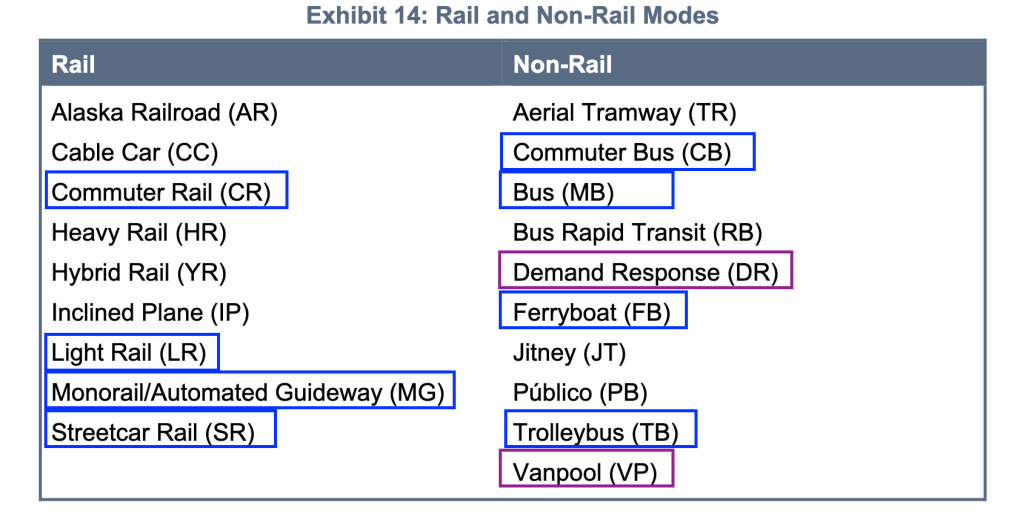
You may notice that bus rapid transit (RB) is not included. This is likely because the NTD requires that at least 50% of the route run in separated right of way dedicated for transit in peak hours1. At least one RapidRide line fits this definition2, but I believe that transit agencies have some leeway in deciding this kind of thing. It’s easier to report all bus data rather than separate just one line. Only 20 agencies classify any active bus route as RB in the latest NTD data3.
Worth pointing out here as well – Seattle is the metro area with the second most unique modes of transit offered behind only San Francisco. If only we would have kept our cable cars into the 21st century as a tourist draw4.
The two modes in purple – demand response (DR) and vanpool (VP) – I elected not to do. When I was first mulling this over, I was living in Issaquah and I actually could have joined a vanpool in order to get that one done. But that was too silly, even for me. And while all three county-level agencies in the Seattle area offer a demand response service open to the general public, the one time I tried to use it in Pierce County it was a 45 minute wait and I just wasn’t up for that.
This left me with eight modes to do with my definitions that line up with the federal transit planning bureaucracy. I’ll call this a speed run, but I am fully aware that I did not take the most optimal route. I wanted to leave from work, so starting with the water taxi wasn’t possible for me5.
Mode 1: Streetcar
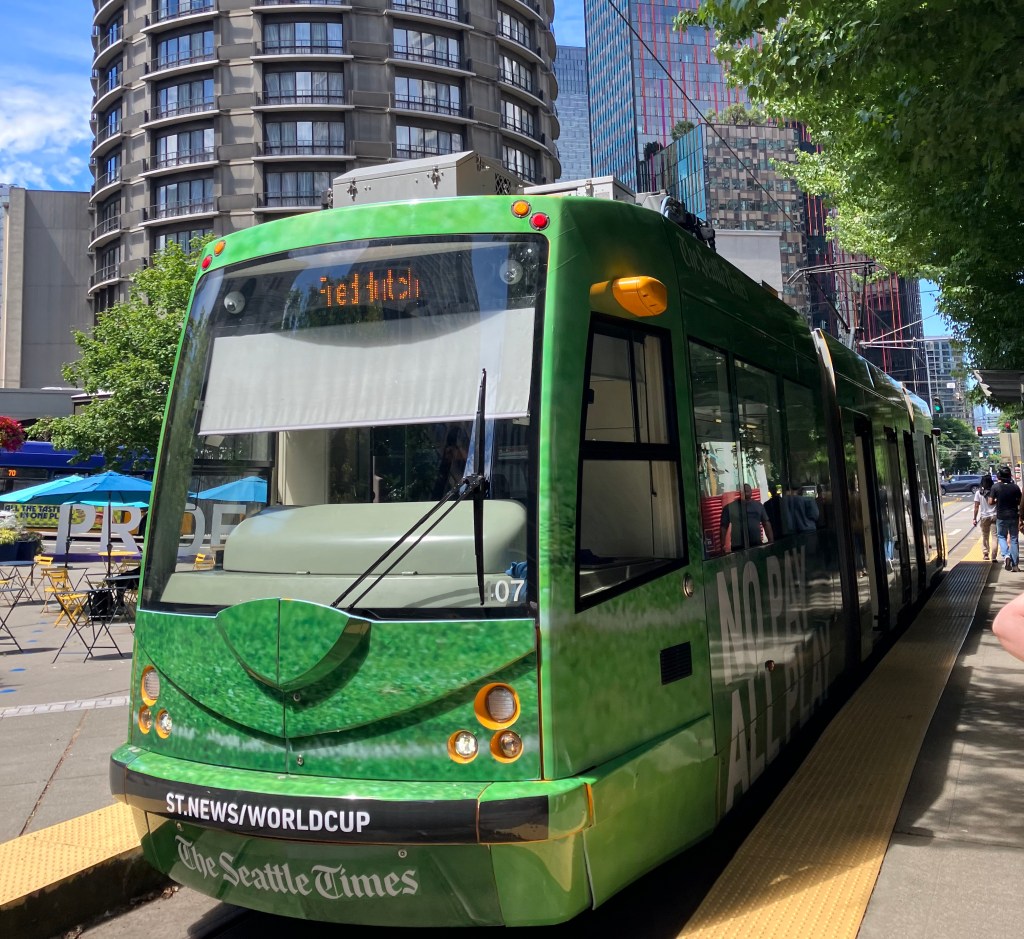
My office is in the Denny Triangle, so it was an easy walk around 2 PM to the SLU streetcar. I’ll save a full autopsy of the line for another day, but suffice to say I think it’s a bad piece of transit infrastructure. It’s short, unreliable, expensive, and mostly serves the offices of one of the most profitable companies in the world.
The ride I took was uneventful. Just two stops, and nothing else to report. Moving on!
Mode 2: Monorail
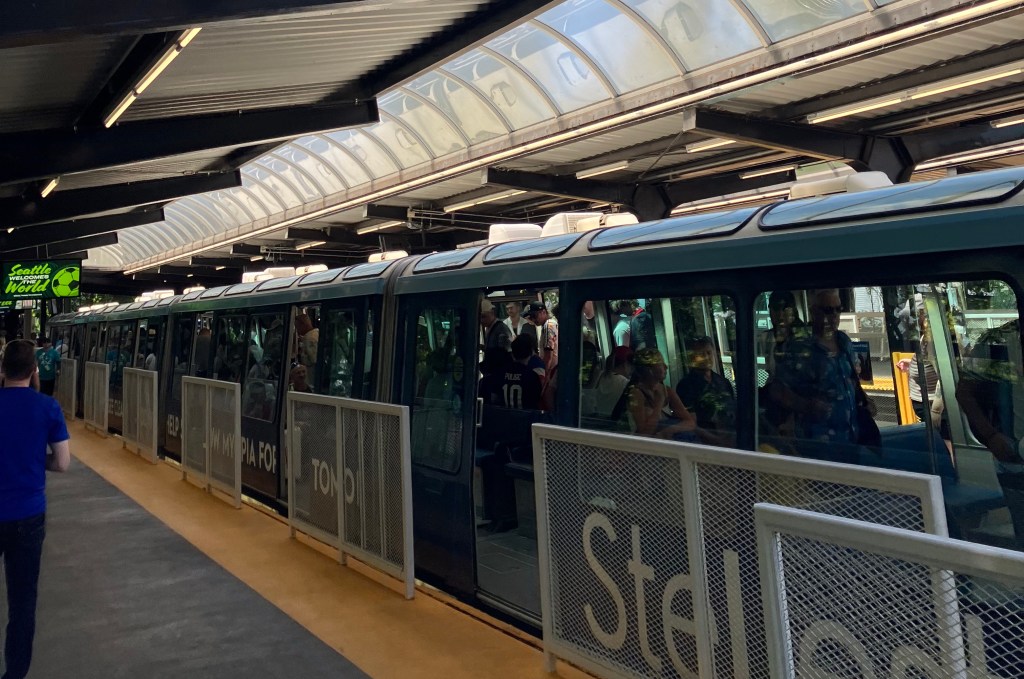
Maybe the biggest difference between my adventure and the original City Beautiful one relates to the monorail. In that video, it was close to peak Covid and the monorail was relegated to a novelty item. It still is a novelty, but it also is a genuinely useful part of the transit network in Seattle. It’s less than 5 minutes from Westlake to the Seattle Center – noticeably faster than the buses that serve a similar route.
Believe it or not, it wasn’t always destined to be a San Francisco cable car situation. In the late 90s, voters in Seattle approved a monorail plan (in addition to the already funded Link) that promised elevated rapid transit extending from Ballard to West Seattle via downtown (sound familiar?). That’s also a story for another day though.
Ultimately, the monorail represents a big “what if?” for transit in Seattle. Unlike our neighbors to the north in Vancouver, our World’s Fair gadgetbahn6 remained as it was then. They got the SkyTrain, we get 60 year old trains without AC serving two stops. Hard to say who came out ahead.
Anyways, my ride on the monorail was scenic but warm. It was very busy at the Seattle Center when I got there, with at least a two or three trains worth of people waiting. I walked 2 minutes to catch a bus that was busy, but not packed.
Mode 3: Trolleybus
Ah the trolleybus. Seattle retained their trolleybus system when most other cities ditched them through dumb luck, steep hills, and a municipally owned electrical utility. The dumb luck was all around the timing of when trolleybus infrastructure was abandoned relative to the oil crisis of the 1970s. Seattle, likely on account of it’s very cheap electricity at the time, kept it’s trolleybus infrastructure operational long enough that when the oil crisis came, it wasn’t too hard to do some reinvestment to keep it running.
And it’s still around today in part because when the time came to replace the entire fleet in the early 2010s, battery electric buses weren’t really viable. Of course, long time readers of the blog will know I’m a fan of the 2011 King County Trolley Bus Evaluation Study, but again dumb luck played a role. If that evaluation had been done in 2019, I think there’s a chance the recommendation would have been a little more in favor of battery buses.
But undercutting all of this is the existence of Seattle City Light. As is the case in San Francisco, having a publicly owned utility that can sell cheap electricity at cost to the transit system makes the trolleybus a lot more attractive. And the steep hills don’t hurt either, as anyone who has ever been on a diesel bus struggling up Queen Anne can attest.
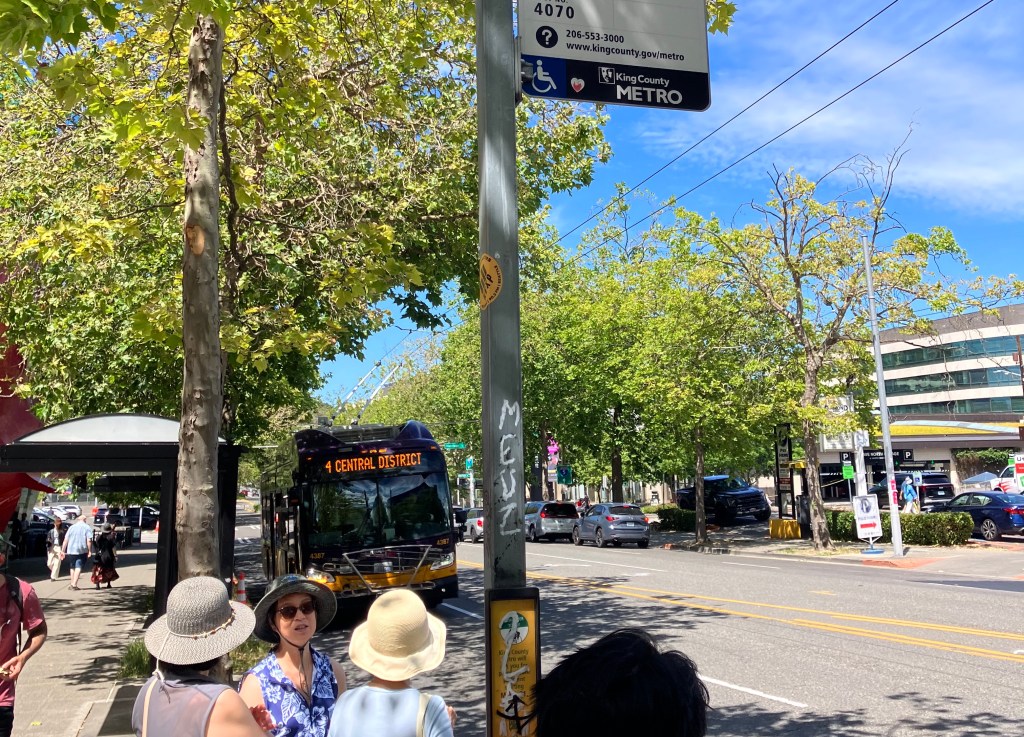
That’s enough trolleybus propaganda for now. My ride for these purposes was the 4 – the first trolleybus route I ever rode in Seattle (since Mark and Shelby used to live on it). It was busy, on account of the World Cup. I’m not sure anyone else on the bus was excited about the fact that it was a trolley.
Mode 4: Commuter Bus
Here we arrive at a contentious point. Should all Sound Transit Express buses be classified as Commuter Buses? Looking at the definition provided by the NTD, the answer is a clear no. At least 5 miles of closed-door service. While my bus of choice on this journey, the 554, manages this by virtue of the 5.8 mile ride between Eastgate and the Issaquah Transit Center, the same cannot be said of at least some other Sound Transit Express Routes.
The 542? Longest distance between stops is 3.3 miles (Evergreen Point to Montlake). The 550? It may have a 5.5 mile gap now, but before the flyer stop at Rainier was closed in advance of East Link construction, it had no gaps over the 4.2 miles between there and Mercer Island. And don’t even start on the 522, which hasn’t had a gap longer than the 1.1 miles between Lake City Way and 85th and the Roosevelt Link stop since the Northgate Link opening truncated it to Roosevelt.
And beyond the length of closed-door service, the NTD frames a commuter bus as one that “operates predominantly in one direction during peak
periods”. Most Sound Transit Express routes are all day routes. But I digress, as we are concerned with how the data is reported, not with how the data should be reported.
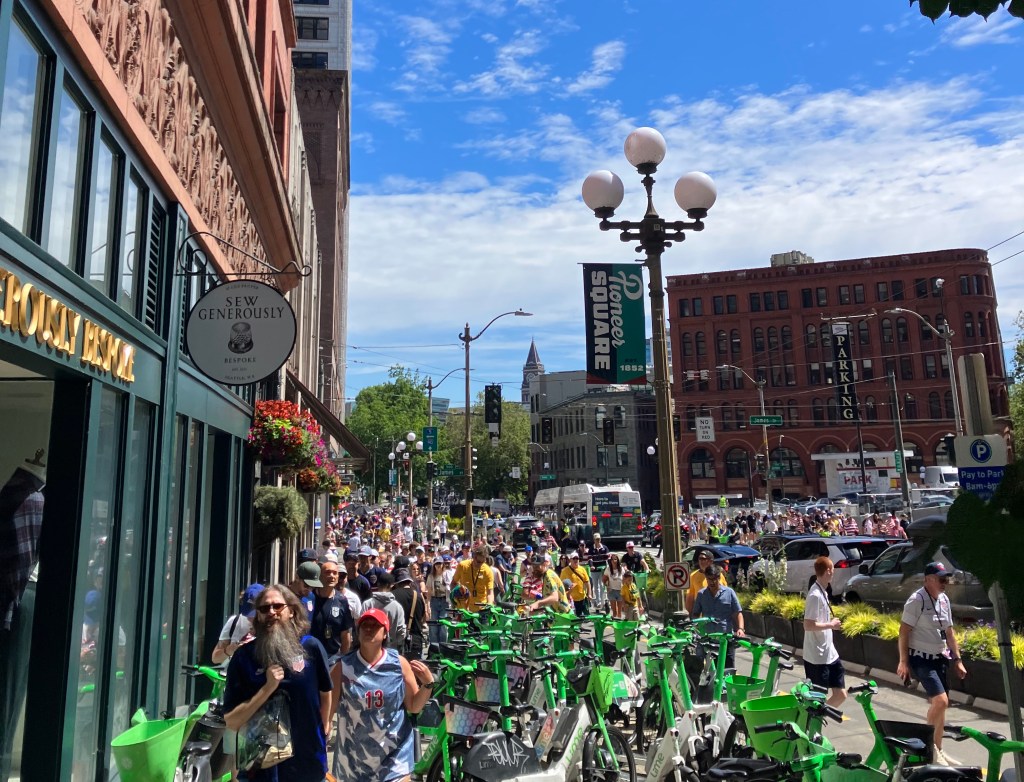
Anyways, traffic on 2nd Avenue was predictably awful for buses at 2:30 PM after a World Cup game that ended at 2 PM. Since the powers that be have decided that the 20 or so buses per hour that ply 2nd Avenue only need a peak-hour bus lane, I only rode the 554 a measly stop before deciding to leg it the rest of the way to King Street Station for my next mode.
Mode 5: Commuter Rail
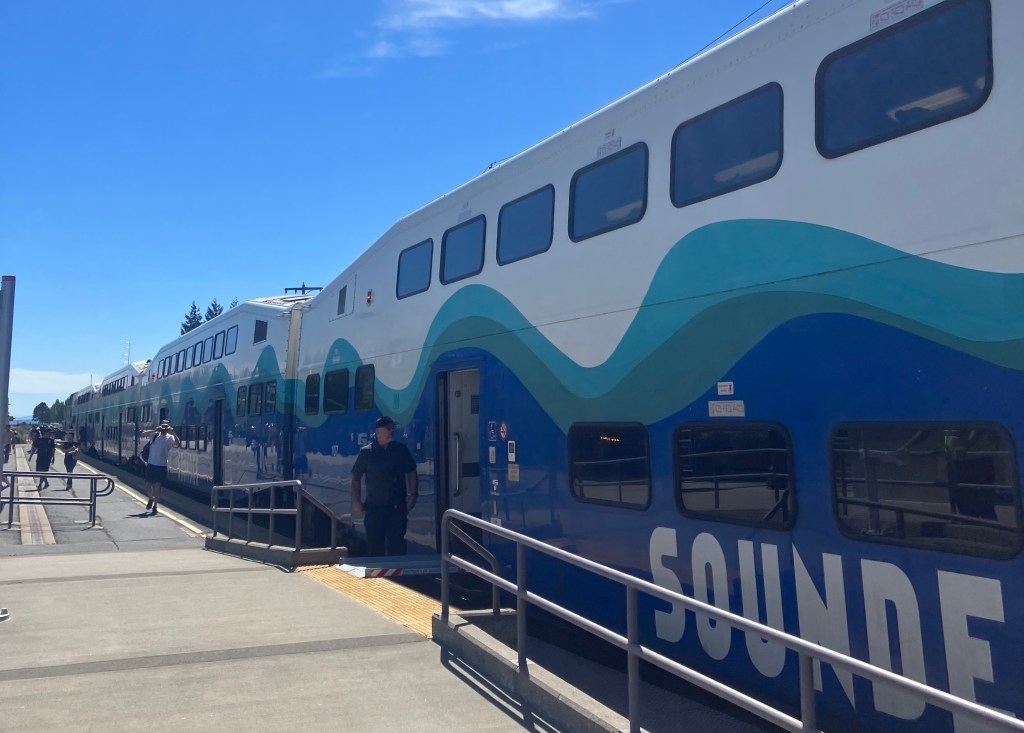
There’s no ambiguity here. Sounder is a cut and dry commuter rail, and now my decision to do this on the day of a World Cup game may start to look like a good one. Instead of doing the boring old Sounder S Line to Tukwila, I opted for the four trips per direction per day N Line. I had never ridden it before, and it was surprisingly not much slower in a relative sense.
It’s a much pretty ride if you can look past the existential horror of 30+ miles of sensitive coastal environment being penned in by a rail line. I managed that relatively well, and enjoyed seeing the herons and cormorants in the water and the beachcombers out at what seemed like quite a low tide.
I know that the Sounder N Line is met with derision by transit advocates. It’s very expensive to operate on a per-rider basis; even people who don’t moonlight at fiscally conservative but socially progressive balk at the sheer magnitude of the line’s subsidy. Here’s one way to highlight this: from 2001 to 2025, the Sounder N Line has carried just over 9 million passengers7. Sound Transit paid a whopping $258 million in 2003 for a 99 year easement to run the trains8. Just the cost of track slots works out to $28 per rider9.
I don’t bring this up to rag on the line – public transit doesn’t exist to make money. But commuter rail is generally a bad investment, at least if it’s commuter rail in the US sense. We should have frequent, regional-level, main line passenger rail – it just should be for more than downtown commuters.
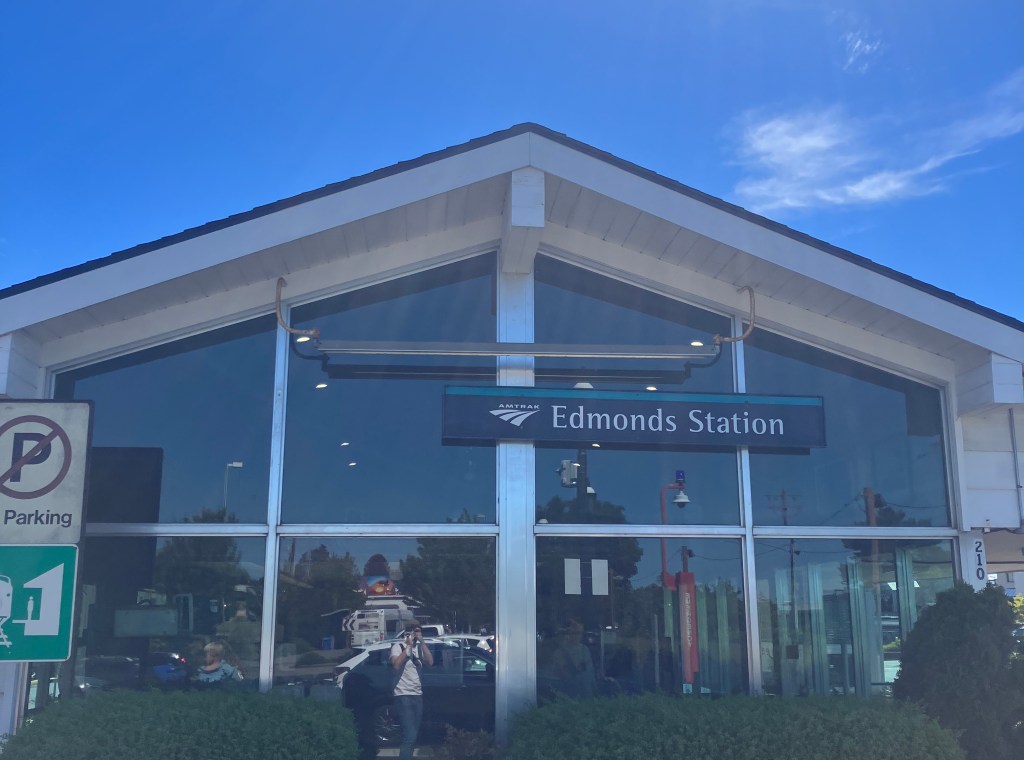
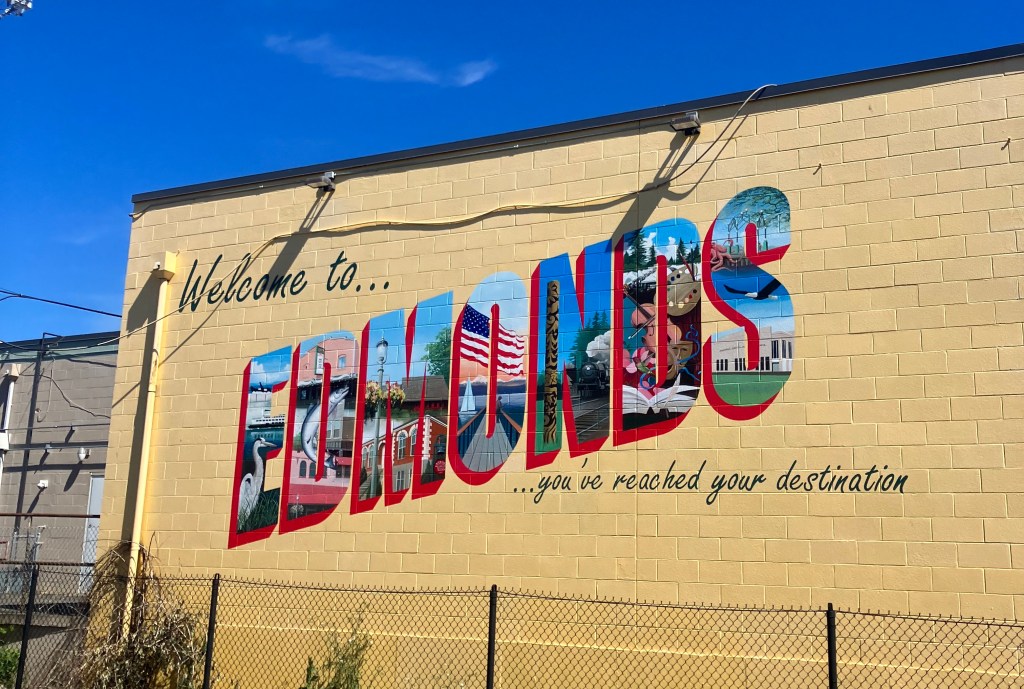
Anyways, I had a nice ride. And I thought Edmonds was pretty cute – it reminded me of Encinitas. But it was on to the next mode.
Mode 6: Bus
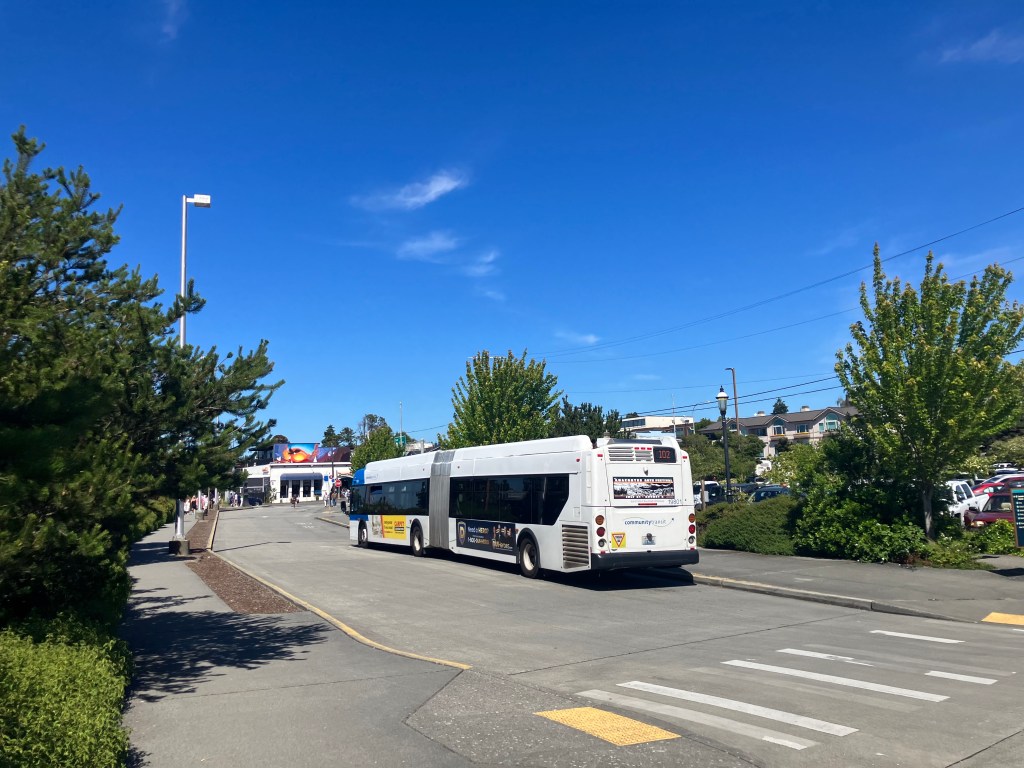
My local bus for this trip was the Community Transit 102. It’s one of three buses that connects Edmonds with the Lynnwood Link station, and I was excited to see very comfy seats in side. I’ve been meaning to write a post about my love of comfortable bus seats and the sad state of comfort on US buses relative to those abroad, but the Seattle region does okay on this10.
There isn’t a lot to report here. It’s a bus in the endless expanse of Seattle suburbia. There’s strip malls, car dealers, single family homes, apartments, and a lot of cars with one person in them. Community Transit is a good agency in my book, but I can’t get behind the Snohomish County burbs.
Mode 7: Light Rail
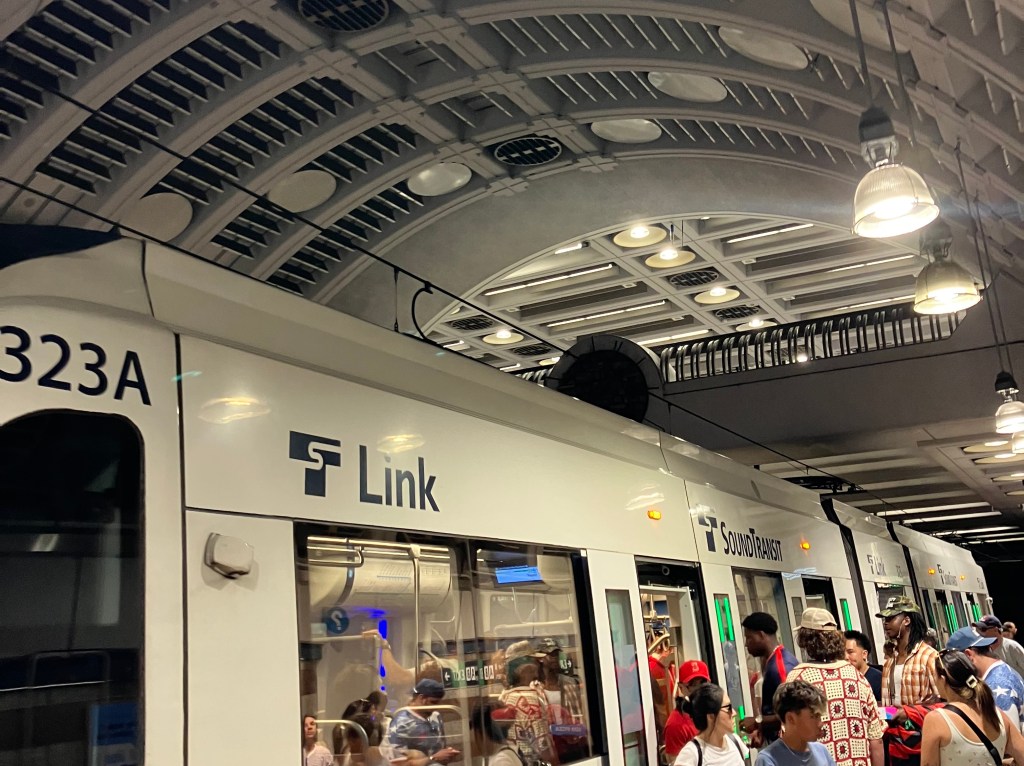
My penultimate journey was one I’ve done few times before11: the Link from Lynnwood to downtown Seattle. It’s always pleasant and speedy, even if it’s mostly just following I5 or in a tunnel. The day of my trip also coincided with a Mariner’s game, so there were lots of baseball goers on board.
While an autopsy of Link is beyond me today, I think the current line north of downtown Seattle is potentially the best section of transit infrastructure built in the US in the 21st century12. It’s so fast, the trains come every 4 minutes during most of the day, and it really is just a joy to ride. I may have the beginnings of an eternal beef with Sound Transit, but credit where credit’s due, I like the current Link system a lot.
Mode 8: Ferry
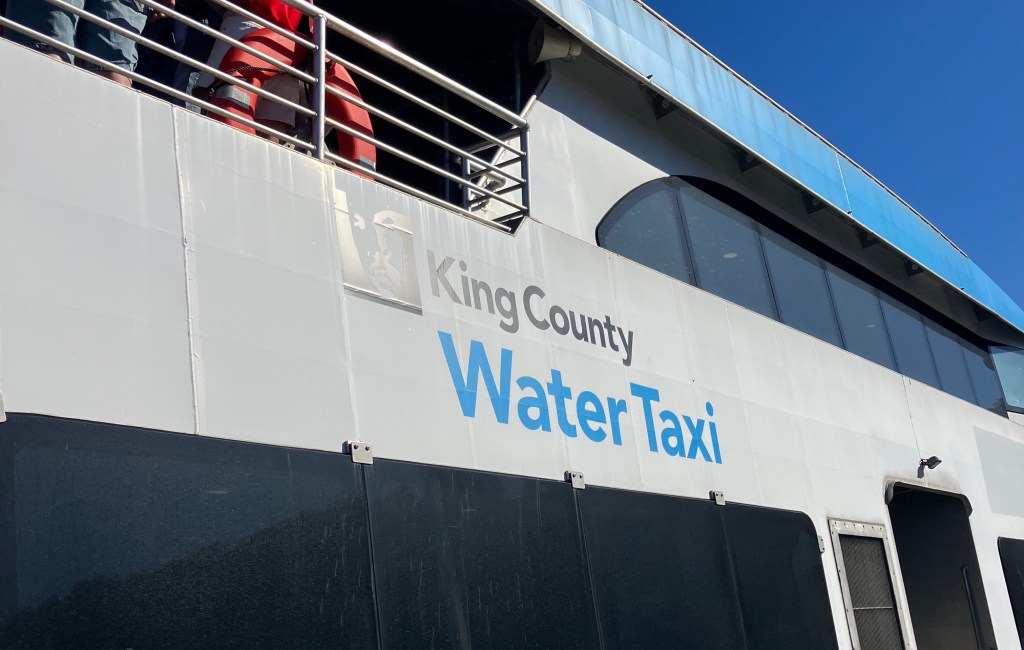
My final mode was the trusty ferry. Back in Portland, the only ferry service I could ride was the lovely but not really convenient Canby ferry13. Here in Seattle, I’m spoiled for choices. As someone who considers himself fond of ferries, it’s very cool to live in a city where riding a ferry is a pretty normal thing to do.
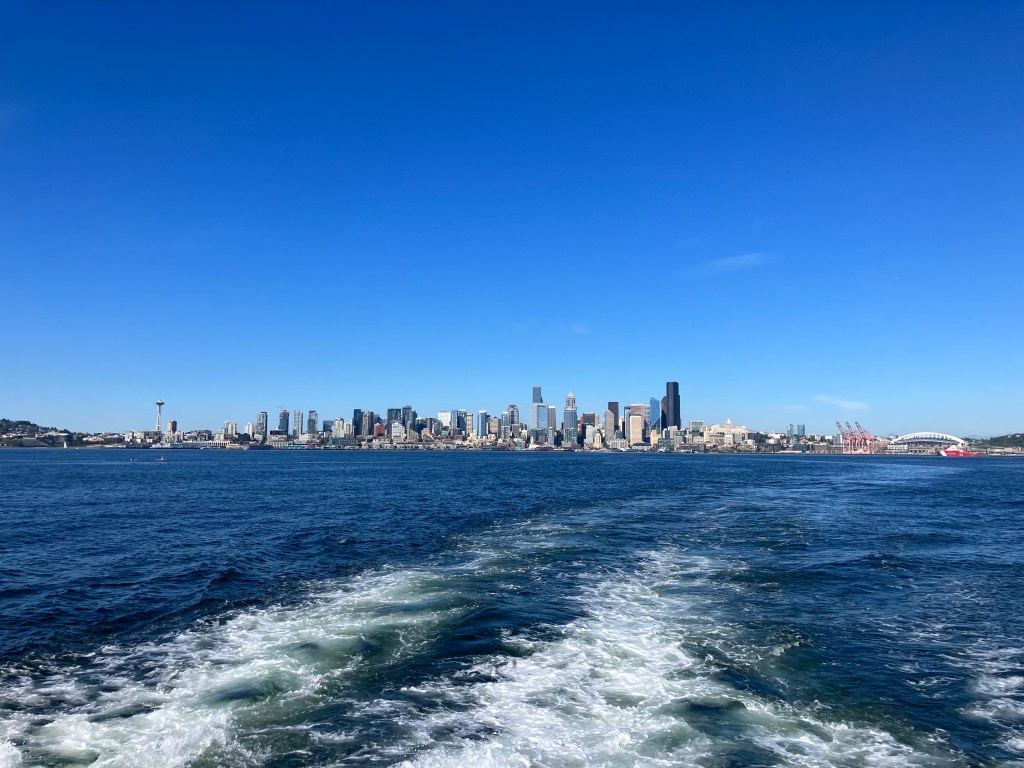
The West Seattle Water Taxi may not be the most useful piece of transit infrastructure for me personally – I’m rarely going to the part of West Seattle it serves – but it’s hard to be upset by the views of the skyline and the sheer vibes a good ferry offers. And since my day of choice happened to coincide with two major sporting events, Metro was running extra service. Even better!
Parting Thoughts
My whole excursion took 3 hours and 13 minutes. You may say “that’s an awfully long time to just ride transit for fun”, and it is. But it’s fun to see the place I live this way, and it’s nice to have time to reflect on what makes Seattle a unique place to live. But really, by riding every mode I can reflect on the social values that are imbued in each.
I can ponder the 2000s and 2010s view of streetcars as a tool for economic development, I can mull over paths not taken by the Seattle Monorail Authority, I can relish in the joy of riding a trolleybus, and I can consider why people look down on the bus. Even though I’m quick to gush about the joy of riding a train, I’ve found myself thinking over the last piece more often than not.
Just yesterday, after my adventure was over, I got a few beers with Mark in Uptown. He made a passing comment about his surprise that I didn’t ride the light rail more. I gave a reasonable and not entirely false account of the fact that it’s really just faster to ride the 36 or 60 since we live just far enough away from the station. That’s true on the surface level, but in a psychological sense I think I identify as a bus rider because I feel like they imminently practical and deeply underrated.
And this was why I did the whole thing in the first place. My issue with the original City Beautiful video was that I felt he didn’t accurately represent buses. Would it even be possible for someone to do this and forget to do a rail mode? I doubt it. But the trolleybus didn’t register and the nuances between different types of buses was sorely under-articulated, even coming from an urban planning professional. If that doesn’t speak to our cultural aversion to buses, what does?
But above all, the experience of riding around Seattle on transit during a very busy day where tons of sports fans were using it (maybe for the first time) was a treat. And on my Route 4 trolleybus ride, I got to help a soccer fan get back to Westlake without waiting for a gameday shuttle, I got to overhear a Chicagoan talk about how they used to get to school on the L, and I got to see the city at its best – filled with people enjoying a beautiful early summer day.
Thanks for reading, ’til next time.
Footnotes
- Honestly, looking at the list of agencies I think they are prettttty fast and loose with that rule and it’s more like a guideline. ↩︎
- It’s the G, and you already know we love her ↩︎
- If you’re curious: LTD (Eugene), MBTA (Boston), Connecticut DOT, MTA (New York), Richmond VA, MARTA (Atlanta), Suncoast Transit Authority (Tampa), Miami-Dade County (Miami), Central Florida RTA (Orlando), Birmingham AL, Madison Metro, RTA (Cleveland), Metro Transit (Twin Cities), Interurban Transit Partnership (Grand Rapids), IndyGo (Indianapolis), Central Oklahoma Transportation and Parking Authority (OKC), Albuquerque, Fort Collins CO, AC Transit (Oakland), and LA Metro ↩︎
- Ironically, San Francisco also has “official” BRT in the form of AC Transit’s service but I’ll point out, similar to Seattle, no Muni route is designated as RB. I am fairly sure the 49-Van Ness qualifies in all ways but one (branding). If we’re calling the the OKC lines “BRT” with it’s basically no bus lanes but branding, I don’t even know what to say anymore. ↩︎
- The Transit Bandit did this for his much faster but still not inline with the “correct” modal definitions. ↩︎
- “Gadgetbahn” is a pejorative used by transit advocates to refer to new technical solutions that are better solved by existing tech and some political will. The Shweeb is a classic example (why on earth did they name it the Shweeb???!) ↩︎
- Sourced from Wikipedia ↩︎
- That cost may also include 4 years of operations. But still! (Source) ↩︎
- It’s set to be sunset in 2033 once Everett Link opens (I would not bet on that happening in 2033, but I digress). Even with unrealistically optimistic passenger growth, it will remain about $20 per rider just for the easement costs. Sound Transit got fleeced by BNSF. ↩︎
- Outside of King County Metro anyways. I love those buses but man they are not designed for comfort. ↩︎
- Including on my trips to Sultan and Bellingham ↩︎
- Honorable mention to the D Line extension in LA ↩︎
- Great vibes though, highly recommend. And yes, it’s technically in the Portland MSA. The only ferry that can claim that! ↩︎


Leave a comment