In a surprise to no one, I’ve been following the upcoming city council decisions on the Seattle Transit Measure very closely. For the unaware, the Seattle Transit Measure was born out of the Great Recession era bus cut proposals, as a failed tax increase for King County Metro county-wide led to a Seattle-specific measure1. It’s be renewed a few times since – the latest in an 80/20 vote that is literally the largest landslide in Seattle ballot measure history.
Since Katie Wilson is mayor instead of Bruce Harrell, the initial proposal from the Mayor’s Office was a 0.3% tax – double the existing Seattle Transit Measure’s 0.15% that passed 80/20. Of course, it still has to go via City Council, which means everyone’s favorite and least favorite people get to throw their grubby little hands all over it.
Much of the discussion has been around the obviously bad amendments – the ones that slash the tax to 0.2% in the name of “affordability”, despite the fact that the cost savings for the average Seattleite of $30/year are both minimal and likely to be eaten up by the cab you need when you miss the last bus home. Or the one calling for certain types of reserves to be redirected towards marginally related capital projects. Or the one adding additional security to buses in addition to what Metro already provides.
I’m obviously against all the bad amendments and always have been. But when I testified to council on Monday (read about that here), I found that there was a lot of interest in supporting Amendment 10. Dear reader, I regret to inform you that I have a nuanced take about why this specific amendment to a transit measure isn’t a good idea. But lucky for you, exactly why it’s bad is interesting beyond just the specifics of this one tiny little piece of policy being considered in Seattle.
First, the text of Amendment 10: King County Metro is to prioritize routes that “directly connect existing and planned Regional Centers, identified in the City of Seattle’s Comprehensive Plan, with downtown Seattle and light rail stations“.
And second, some important specific context before we generalize. This amendment was introduced by Ballard’s own Dan Strauss. If you follow Seattle politics, you know he is an honest to god Ballard guy and often will talk about how getting between where he is in Ballard and downtown can be 45 minutes or more2. Since Ballard is a Regional Center, but it looks bad to say “prioritize my district for this one”, we end up with the amendment to prioritize regional centers
What is a Regional Center Anyways?
I know what you’re thinking – clever self dealing pork barrel Dan, what’s next representing Pennsylvania’s 9th?3 But the reason I think it’s gotten a broad base of support amongst urbanists is more than just naked self-interest. The City of Seattle draws from the Puget Sound Regional Council’s framework where Regional Centers are supposed to be “locations of the region’s most significant business, governmental, and cultural facilities and are planning for growth” (emphasis added).
This planning for growth is really why planners and urbanists are excited about this amendment, as it means better transportation in the places attracting more density. And on the surface, I am pretty strongly in this camp too. But the bus to hell running through Ballard isn’t about intentions or lofty ideas; it’s about how these ideas can lead to bad outcomes.
Seattle has eight Regional Growth centers, though five of them are contiguous with each other and represent greater downtown. You may notice that none of them are south of I-90.
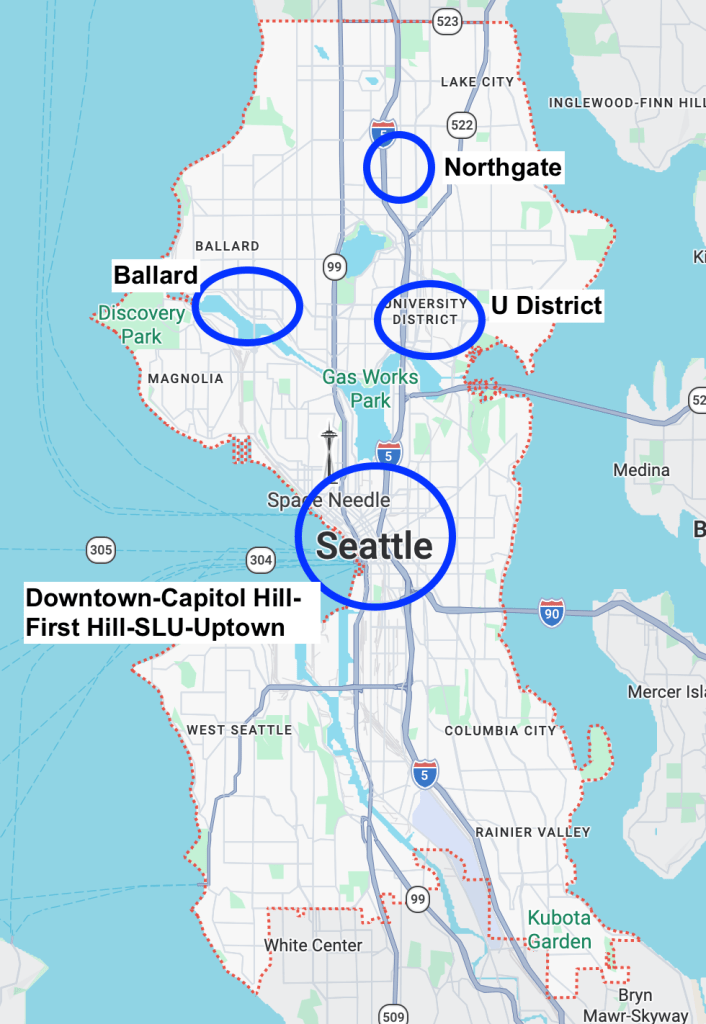
On the one hand, this isn’t a surprise as South Seattle isn’t exactly know for its regionally significant businesses. But returning to the text of Amendment 10, the Seattle Transit Measure is directing investment into routes that directly connecting a Regional Center with downtown or a Link station.
Based on this definition, and thanks to Uptown’s inclusion as a Regional Center bus routes like the 24 and 33 (which serve leafy and wealthy Magnolia) are included, while bus routes like the 50 and 128 (which serve poorer parts of West and South Seattle) are not. Of course, Regional Center is not the sole criterion by which investment is considered, but it’s not hard to imagine this making some sort of difference on the margins.
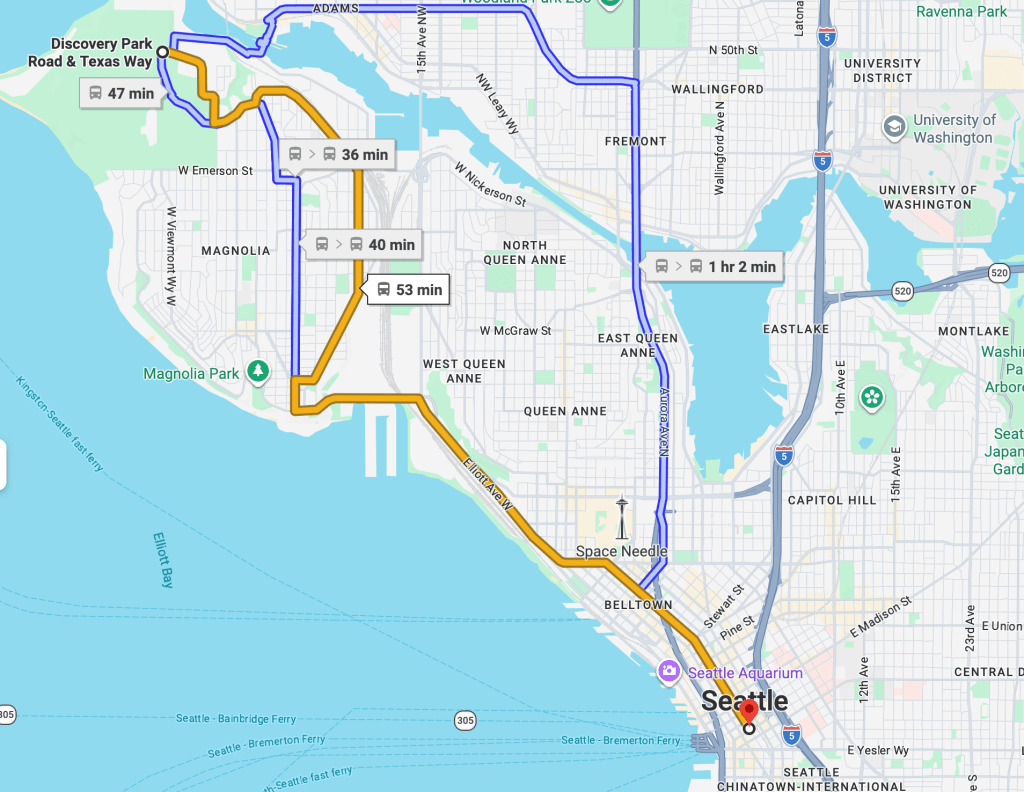
And that’s the rub: this rule if followed as written won’t work as intended. Because of the topology of bus routes in Seattle, a route can directly connect a Regional Center with Downtown Seattle, but still be essentially a low density coverage route. Other routes, like my trusty 36 miss out on qualifying for this because the First Hill Regional Center ends 250 feet away from the bus stop at 12th and Jackson. To be clear, the 36 is a great bus and isn’t one that really needs more investment, but the 14 going to Mount Baker could definitely use a boost and misses out for the same reason.
Ultimately, I think Regional Centers are a fine idea conceptually, but the boundaries are necessarily arbitrary and capricious. The 33 doesn’t connect Uptown with Downtown in a meaningful way, but it does technically serve both Uptown and Downtown. And it’s not just the 33 – a route like the 11 serving Madison Park is also eligible here (it connects Capitol Hill with downtown along with 9 other buses and the Link)4.
Instead of writing policies like this, our transit funding measure should leave specific routing frequency considerations to the professionals. They are already influenced by public opinion through the entire service planning apparatus, and likely have great ideas about how to best invest in bus routes that will yield good ridership results and improve high-quality frequent service coverage.
And we should be consistent. While this directive isn’t as obnoxious as pointless reports about running minibuses off-peak, it still consists of the City of Seattle attempting to micromanage an aspect of King County Metro’s service planning. Metro already wants to serve high ridership areas. Why can’t we just let them do that?
Thanks for reading, ’til next time.
Footnotes
- As an aside, this was only possible under state law because King County Metro is the only transit agency that isn’t part of an existing Transit Benefit District, which allowed the City of Seattle to create their own. Or that’s my understanding of it. ↩︎
- This, along with a quote from a Sound Transit board meeting that I can’t find, makes me think he lives somewhere between 24th Ave NW and 32nd Ave NW as the 40 is sort of slow while the 17 doesn’t run much. ↩︎
- This is a reference to I-99 and how PA 9th Rep Bud Shuster used his influence to get a dubious Interstate designation for his home district in Central PA. Why do I know this? Because I’m my father’s son. ↩︎
- Other silly routes eligible for truly nominal reasons: Route 32: Uptown to U District via Interbay and Fremont does in fact count as written, even if there’s 90 faster ways to get between Uptown and downtown or a Link stop. The SLU Streetcar connects the SLU regional center with Downtown, never mind that walking is usually faster. Come to think of it, the C qualifies because of this connection, but the H (which terminates in downtown but doesn’t serve SLU) misses out. The list goes on, but it’s time for me to go to bed. ↩︎


Leave a comment