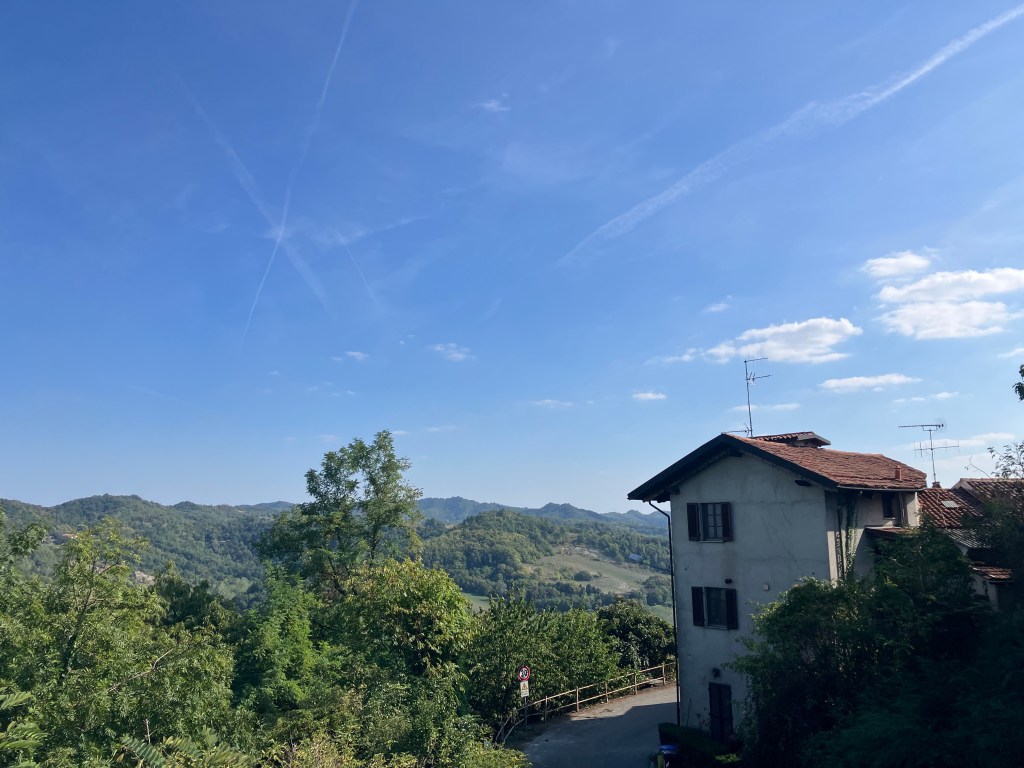
Olivia and I recently had the pleasure of attending a wedding in the hills outside of Torino. Needless to say, the wedding was beautiful – to an even greater extent than I expected – and we naturally made a bit of a trip out of it as well by heading to Bologna after the wedding. And even though I essentially have nothing but good things to say about Italy, I always get home from a long trip with thoughts.
I: Public Transit and Urbanism
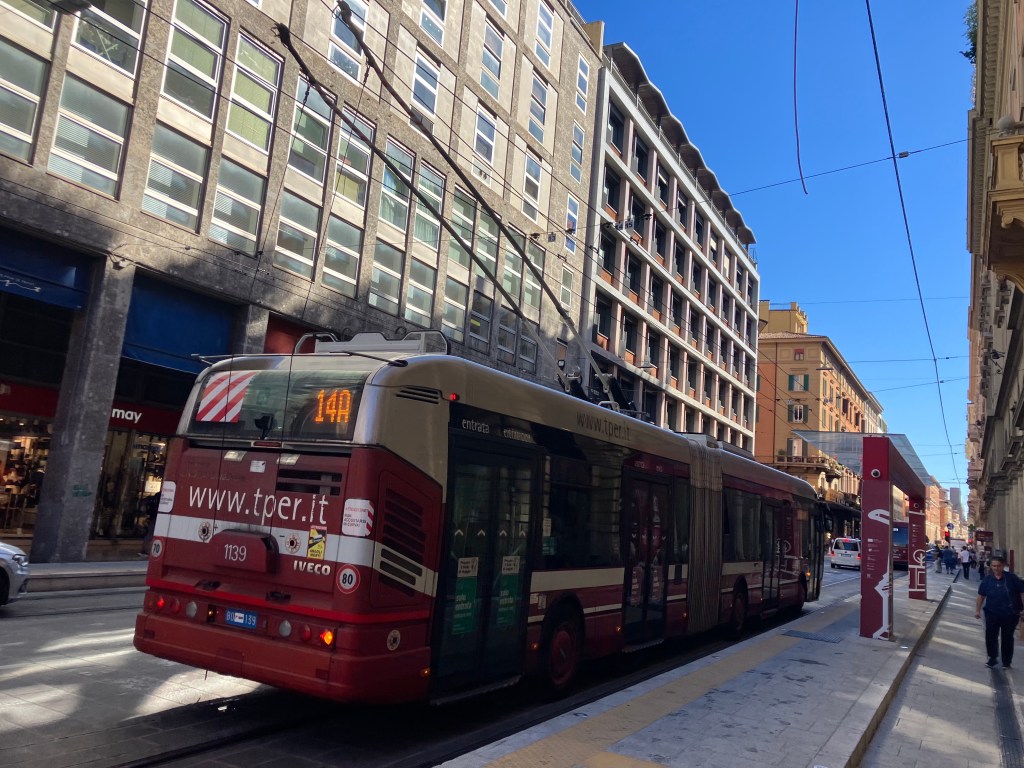
It wouldn’t be a trip to Europe without some thoughts about public transit and urban form. When I read superficial urbanist content online, the consensus is generally “Europe good, US bad”. This is true in many cases, but seeing as we live in Seattle (a US city with good transit) and visted Torino and Bologna (places that aren’t exactly known for world-class transit systems, though they are quite good), I felt that overall, the differences were relatively minor.
While the Torino Metro is incredible (4 minute headways!), it’s not wholly better than Link, which has more than twice as many stations1. And yes, Torino has an extensive tram network as well, but I didn’t feel like it was some radically better transit city than Seattle. The difference is really in suburban rail. Torino (and to a lesser extent Bologna) have extensive suburban rail networks that run much more often than our dinky old Sounder.
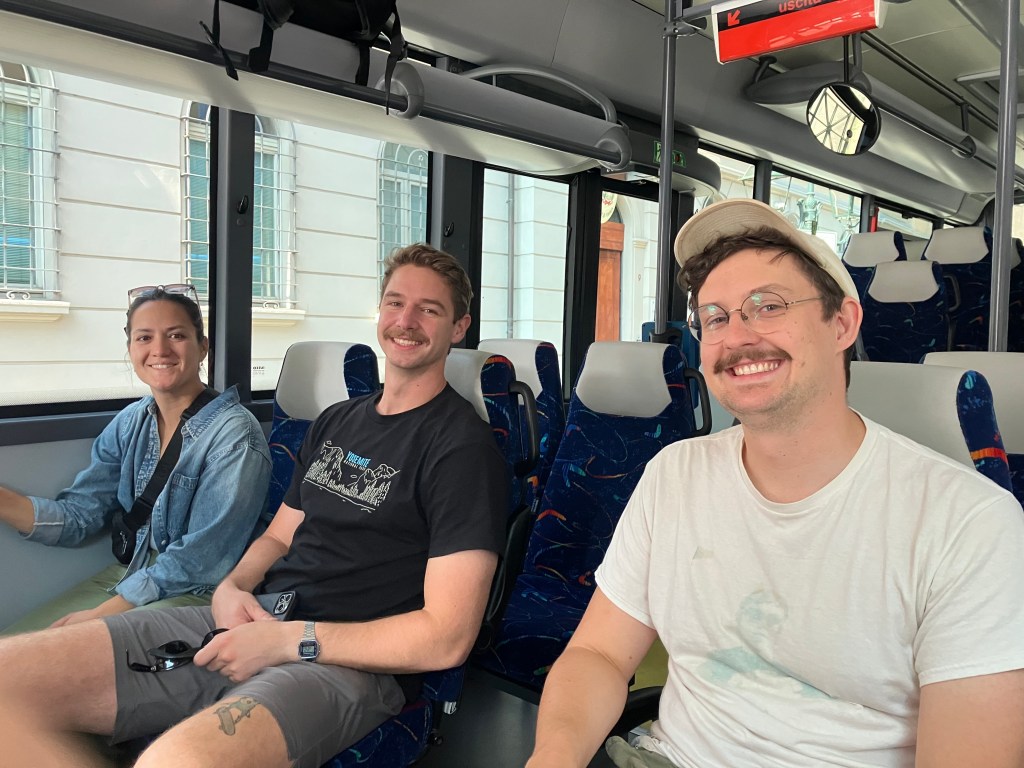
So while getting around the cities we visited was easy (but not really that much easier than getting around Seattle), the fringe journey we made from Torino to the wedding venue in the hills is the only thing I felt we did that was without comparison in the US. The bus we took from Chivasso Stazione down towards Casalborgone (Route 3107) simply does not exist anywhere in the US2.
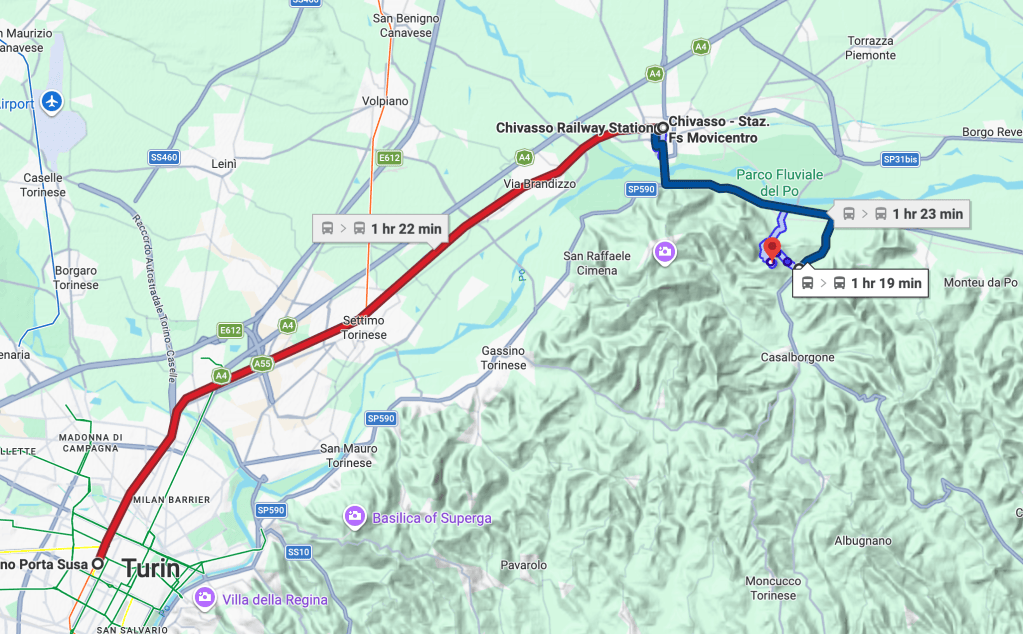
While I’ve written previously that the Seattle area does have some services like this3, they almost all stick to the main roads that connect major suburbs. Casalborgone is a town of less than 2,000 people that was the destination of the bus we rode. And despite the pretty rough schedule (~6 trips a day), there were about a dozen other people who took the bus with us.
It’s this kind of rural transit service that I find so compelling about Europe. Yes, there are aspects of urban transit that Europe does better than the US – namely better priority for transit in general4 – but small local buses connecting little towns with bigger towns fill me with a joy that I struggle to articulate. My two cents is that having a main line rail network that has actually usable service is a prerequisite for making buses like this work, and Italy’s rail network is both extensive and well-used.
I also found the settlement patterns in rural areas to be fascinating. In the US, its taken as a fact that rural means you’re far away from people. Suburbs in the US are designed around the idea that people can and should live as far apart from each other as possible. City Councilors in suburban cities in the US act like smaller setbacks would be some kind of moral hazard.
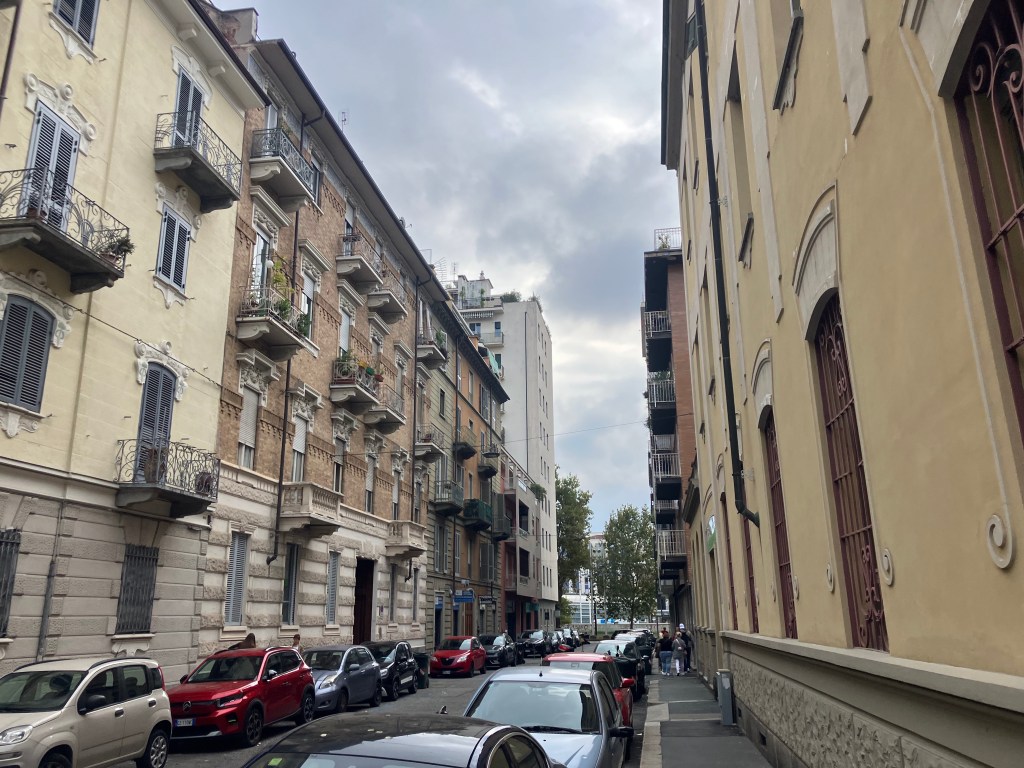
Meanwhile, in Italy, there’s old homes on country roads built with zero side setbacks and their society hasn’t collapsed5. We built our society on the basic assumption that we shouldn’t ever have to rely on anyone else for anything, and then wonder why everyone feels so lonely here. What lessons are there to be learned from all this? Well I guess it’s mostly that the issues that plague cities in the US are in large part reflections of our shared culture. Much of urbanist discourse and policy centers on technical solutions: tweaking land use codes, changing the MUTCD, debating the legitimacy of inclusionary zoning.
But what’s clear to me is the success of those tweaks is ultimately contingent on a culture that will accept them. On this front, I think we collectively have a lot of work to do in the US. Traveling to Italy fills me with hope, if only as a place where people who live in the country still ride buses (because they exist) and development patterns are dense (because they’ve always been that way).
II: Food
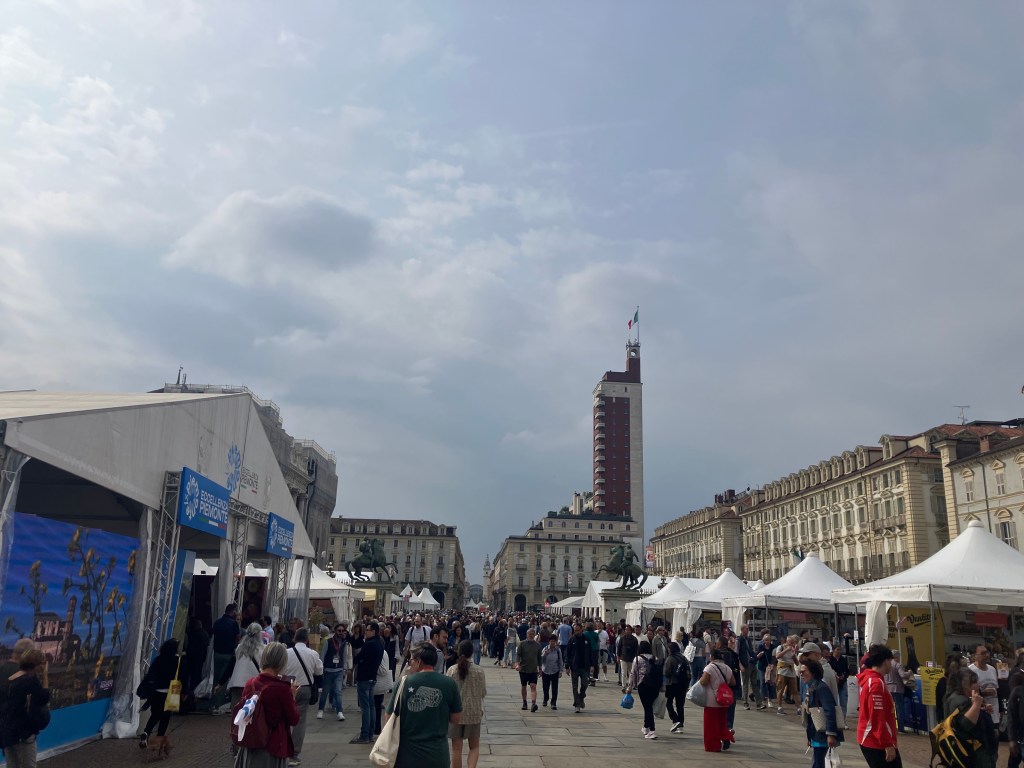
It’s probably a cliché to comment on the quality of food in Europe, but I’m not above commenting on clichés. As is the case with urbanism and transit, the question is: does the food reflects the culture, or does the culture reflects the food?
Perhaps its not worth disentangling this question. After all, how a people eat is deeply tied to who they are and what they value. Europe’s preference for the protected designation of origin system – the system that ensure that all Parmigiano Reggiano is produced within Emilia Romagna6 – means that local food systems inherent to specific regions survive. This kind of thing is an anathema to our American absurdist free-market principles.
And while I am high on protecting local food systems, there are aspects of Italian (and by extension, European) food culture that I find sort of frustrating. Even if American culture isn’t as open to other people as it imagines itself to be, the sheer variety of food cultures on offer in the US is something I always find myself missing when I travel abroad. In Seattle, you can hardly throw a stone without hitting an East Asian or East African restaurant. In Italy, it’s trattorias as far as the eye can see7.
So while I think there’s a lot that we can collectively learn from how Italy approaches food – from eating less, to eating more slowly, to always eating together – I don’t think there’s an easy solution to be found in their literal approaches to food at a systematic level. The protected designation of origin is a good system, but its one developed in the context of a place where the continuity of the people on the land is a given.
We should recognize that, in the US and much of the Americas, the continuity of the people on the land was explicitly disrupted by Euroamerican colonization. Our equivalent local food systems – those of the Indigenous people of North America – are often on life support, and are facing continued environmental and political pressures. Our first step towards having sustainable food systems needs to begin with a recognition of what foods are inherent to the people and the land. We cannot directly transmute European food culture to this place, nor should we want to, but we can find inspiration in the broader idea of ensuring that our local food traditions are preserved.
III: On Tourism
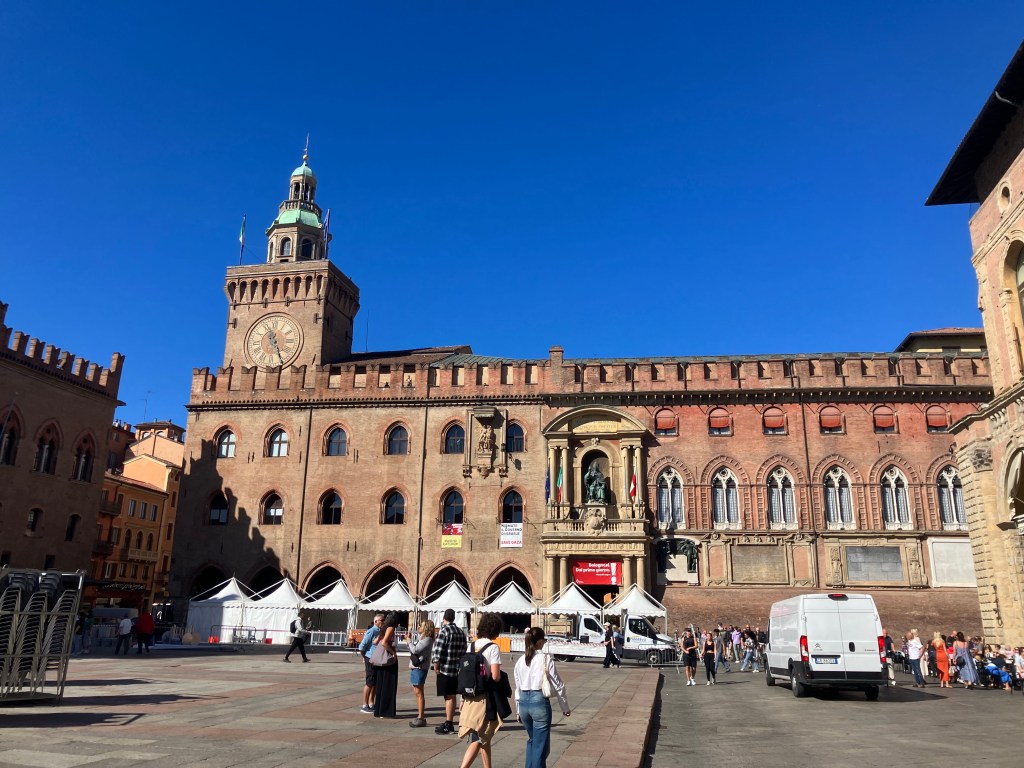
It’s hard to understand Italy without talking about tourism and overtourism. While I tend to see more headlines about overtourism in Spain these days (and particularly Barcelona), the dynamics were palpable. The airports were madhouses chock full of travelers; the old central core of Bologna was rife with hop on-hop off tour buses.
There’s a certain irony in commenting on this as someone who has only experienced Europe a tourist. But it is something worth considering, particularly as it relates to urbanism and the lessons that Americans take home from their European vacations. Tales of Disneyfication and overtourism are most poignant in the pedestrianized old towns8 and structuring the entire economy around tourism should always be understood as a risk.
The issue as hand is that a lot of the places that Americans visit in Europe are essentially pastiches of their former selves, now cynically marketed towards tourists of all places. The question that need answering are “who is the city for?” and “who gets to make decisions?”. I don’t have the answer to that question in any of the places I’ve visited in Europe. The nuances of local politics are hard enough to understand in places that I live and speak the language, much less in places abroad that I only visit in passing.
So I guess this is to say that I’m sensitive to the issues of overtourism, but unclear on how to act. Bologna (and Emilia-Romagna as a whole) seems to have a fairly diverse economy, which I suppose lessens the issue. Maybe its history of left-wing politics has insulated it from some of the worst offenses in places like Spain (though to be fair, it’s not like Spain doesn’t have a similar history to Italy on this front). But that’s all ultimately speculative, and I left Europe feeling that I would prefer to take fewer, longer trips to fewer places over shorter, more frequent ones to more places. Being a tourist is ultimately quite boring to me, and I dislike only having surface-level understandings of place.
IV: On the Dangers of Superficial Lessons
I enjoyed our trip to Italy, and I’m overjoyed that I had the opportunity to go. But my feeling is still one of caution in applying lessons. To an American tourist, Italy is an ancient place with a culture as old as our collective memory. But in many ways, Italy is a new idea, and there is more complexity and diversity than you’re likely to realize. Especially in the north of Italy, political fragmentation was the norm from the 5th century all the way until the middle of the 19th century.
It’s easy to look at something like the (excellent) Italian railway network and conclude that such a well-organized and run railway network is a result of careful centralized planning in a relatively small unified cultural area, but as is always the case there’s about 200 caveats to that. When the railways were first built, they were often being built by different political entities (as it predated Italian unification). Perhaps its fair to say that railway building was a big part of that unification project, but the current high quality of Italian trains is the result of hundreds of years of effort9.
But these are not lessons you take away from riding the Frecciarossa. It’s easy to look at any place in the world and conclude that if we only model our own society based on what they have now, that things would be better now. This sounds great, but it ignores the ugly truths of how other places got to where they are now. It wasn’t all bread and roses that built the modern Italian railway network after all.
My feeling is that the surface-level impressions I have of Italy provide only surface level value; as heuristics, examples, and anecdotes. There is always value in being shown another way of being, but to implement that in earnest requires more than just wishing and pointing out how nice it is to sit at a table outside of a café in the core of an old European city.
To shape the world in the imagine of your choosing necessarily means negotiating the real-world tradeoffs inherent with any political project. We can’t change the fundamental culture of the US all at once, and our painfully individualistic culture is something that has to be considered during this process. This isn’t to say that everything needs to be couched in the language of rugged individualism to be successful, it’s more that we always need to meet people where they are.
Tons of Americans go on European vacations, which means that denser living, more walking, and functional public transit are not something people are unfamiliar with. But it may mean that they view these places as only a thing to visit and not a legitimate other way to live (in the sense that they wouldn’t want to live that way). Not that I’m immune to proselytizing, but I think the primary purpose of quips like “Americans be like: let’s walk on vacation in Europe and then drive our Ford F-150 to the store 0.1 miles away at home” is to proselytize about how much smarter we (as urbanists) are than everyone else.
Most people when confronted with the profound contradictions inherent in our society and in their own lives respond with a shrug. It’s a lot of work to change the world and I understand the impulse to not be bothered. But the more I learn about places I visit, the more I realize that the things I like are the result of some kind of political struggle in one way or another. But unless you seek out those lessons, you’re unlikely to find them.
In many ways, this can be ameliorated simply by knowing people in the places you visit. Local knowledge can be easily exploited by the global tourism market10, but having a friend or two to visit will always make gleaning the “why” of any place a whole lot easier. And I think the act of trying to earnestly understand the places you live in and visit is the broader thing that matters. I’m not sure I know vastly more about Bologna, Torino, or San Sebastian da Po11 than I did before visiting, but I feel curious enough to read more for the next trip over.
Parting Thoughts
My skepticism for lessons to be learned from Europe is not something that began on this trip – I’ve written about it before12 – but I still left our trip to Italy feeling inspired. Not by the flashy pedestrian squares or high speed trains, but by the rural bus routes, the center-running bus/tramways of Torino, the extremely good bus priority of Bologna, and the joy of a main line rail journey from Torino to Chivasso. Sure, the pedestrianize squares and high speed trains also are great, but I get the feeling that they wouldn’t be possible without the less immediately flashy pieces.
On our last trip to Europe in 2024, I found myself struggling to articulate these feelings. Of course I had an incredible time, but there’s a certain melancholy I feel when traveling places so far away. I find Europe to be a beautiful place filled with so many poignant lessons, but in my heart I can only ever be someone who is from the US. If I’m away for too long, I find myself needing the idle chatter so easy to find anywhere here.
If to dream of a better world first involves imagining what it may look like, then I think that we could all stand to take more European vacations. But if creating a better world means really knowing and loving a place and people for all their faults and finding a way to horse-trade our way to a brighter future, we could all stand to take fewer.
I found this piece from Kea Wilson at Streetsblog USA to be illuminating. We need to have both the ability to imagine new places and the skill to shape policy to craft them. Europe in many ways plays a prominent role in inspiration, but typically little in the way of implementation. I would say if we want to take inspiration on results from Europe, we need to also consider how they got there – and reckon with how our collective culture around the past may frustrate any efforts to enact change in that way.
The US is a place that is at constant war with its own past. Outright denial of the role that the genocide of Native peoples at the hands of the government and White settlers (my – and likely your – ancestors) is still commonplace. I see too many stories about how US cities used to look (more compact, better transit) that fail to reckon with the violence associated with building them. European cities share this history, but in much less obvious ways (i.e., they financed, perpetrated, and benefited from colonial projects but most European cities are hundreds if not thousands of years old).
The parts of Europe I find worthy of praise are intertwined with the same colonial legacy that exist in the US. The railways were financed and built by governments engaging in behavior that can only charitably be described as unscrupulous. The cities may not be built on stolen land per se13, but the industrial might of Northern Italy is just as intertwined with global capital as anywhere else. Maybe the difference is that the folk traditions of Europe have had more staying power in the places they’re from, which has meant the cities have been more insulated from the whims of whatever is trendy.
If US cities were built in the idealized image of European ones, then promptly knocked down to accommodate the automobile we can acknowledge the issues with the latter while also tempering our desire to recreate the former. My feelings when I travel to Europe are that it’s worth doing, but that my home will always be North America. These travels fill me with a desire to participate in an authentic culture of “here”, even as I recognize how “here” is tied to many “theres”.
Thanks for reading, ’til next time.
Footnotes
- To be fair, Torino is building a second line to the Metro which will also run every 4 minutes and will bring the station count in line. ↩︎
- There may be equivalent services in New Jersey oriented towards peak hour commutes to New York, but probably not. I’ll admit I didn’t do an exhaustive search to back up this anecdote. ↩︎
- Which you can read more about here ↩︎
- Relevant piece by Marco Chitti. ↩︎
- Though to be fair, I don’t think the state of politics in Italy is worth celebrating at the moment (or maybe ever?) ↩︎
- Yes, I am aware that the definition of the Parmigiano Reggiano DOP and the borders of Emilia Romagna are different, but it’s a fine heuristic. ↩︎
- There is a little more variety than this (particularly for Middle Eastern/North African food), but they were all very “Italianized” to my eyes (i.e., serving pizza and pasta too). I know this catering to the local food tastes exists in the US too, it just felt even more prominent to me in Italy. ↩︎
- A brief piece on this if you’re curious to read more ↩︎
- If you’re curious about this, I highly recommend this piece by Marco Chitti. ↩︎
- Looking at you, Intrepid ↩︎
- Honestly, why didn’t I look at the Wikipedia article for where we stayed earlier? Apparently Napoleon stayed in the castle and a tree (still standing) was planted in his honor. Would have been cool to see that! ↩︎
- Which you can read about here ↩︎
- I mean Bologna was a Roman colony and surely the Roman empire can be considered a violent colonial state, but we should also acknowledge that more than 2,000 years passing probably matters. ↩︎


Leave a Reply